

The Measure of a Mason
MASONIC LIFE
The Measure of a Mason
Living the Lessons Beyond the Lodge Room
Freemasonry asks a great deal of us, but perhaps its most important lessons are also among its simplest: treat others with respect, govern our passions, listen before judging, and remember that the men around us will not always think exactly as we do. That can be easy to say inside a Lodge room. It can be much harder to practice outside of one.
We live in a time when political disagreements can quickly become personal, religious differences can create distance, and social media seems almost designed to reward the sharpest response rather than the most thoughtful one. It is increasingly easy to sort people into camps and decide that someone who sees the world differently must somehow be less reasonable, less moral, or less worthy of our respect. Masonry asks us to resist that temptation.
A good Mason does not have to agree with every Brother. He does not have to share another man's politics, religion, philosophy, or view of the world. In fact, one of the strengths of the Craft has always been its ability to bring together men who might otherwise have very little in common. The important question is not whether we agree. It is how we treat one another when we do not.
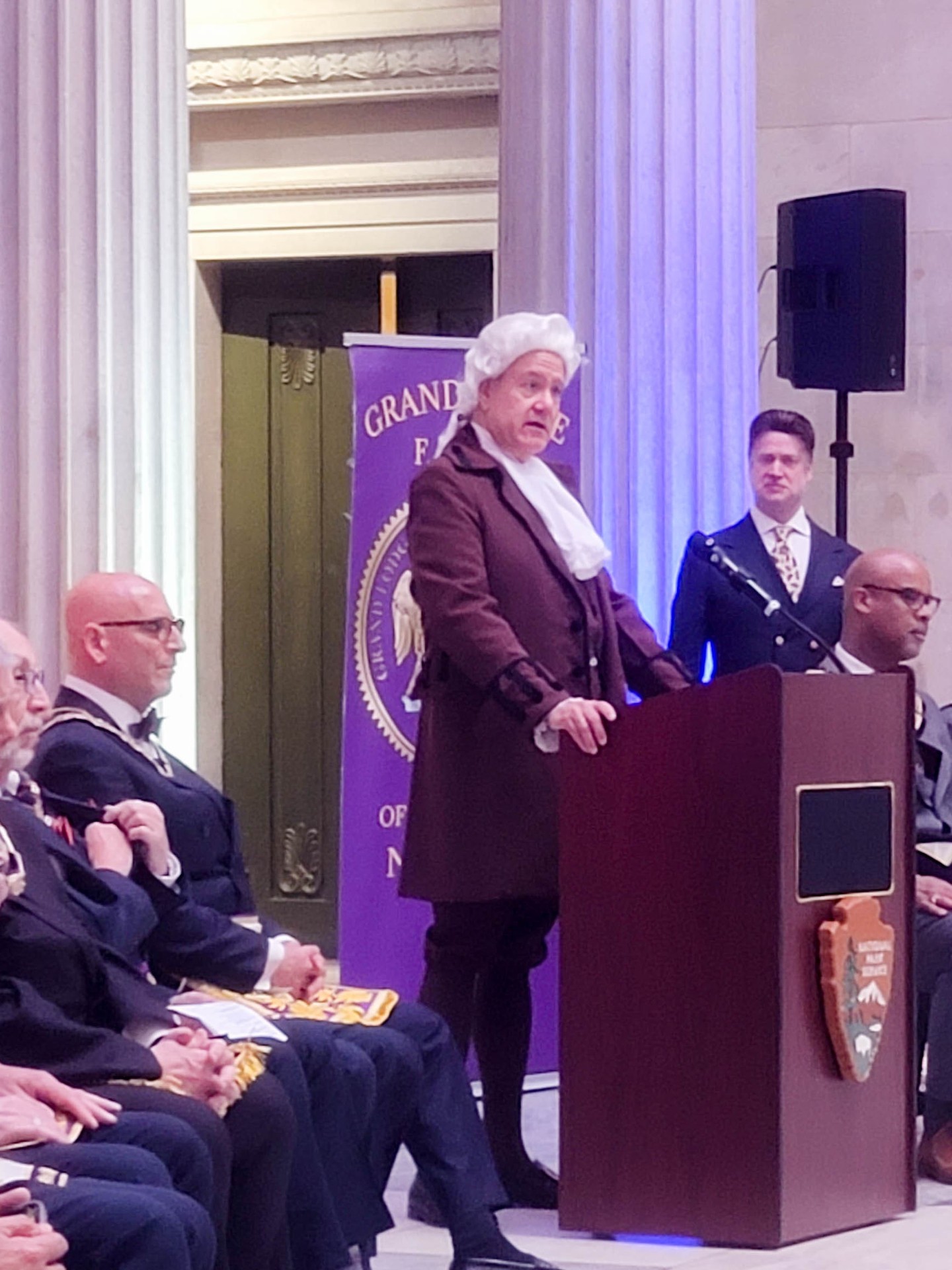
Photo: Re-enactment of George Washington's Inauguration, April 2026
There is a difference between conviction and intolerance. A man can believe deeply in his own principles without needing to belittle someone else's. He can argue his position without questioning another man's character. He can listen without surrendering his own beliefs. That requires patience, humility, and sometimes restraint. Those are Masonic virtues too.
Knowing the Words, Understanding the LessonS
We rightly take pride in good ritual. Learning our work, delivering it well, and preserving it for the next generation are important responsibilities. But being able to recite every word perfectly is not the same thing as understanding what those words are trying to teach us. A Brother may occasionally stumble over a line and still understand its meaning completely. Another may know every sentence from memory but struggle to apply those lessons once he leaves the Lodge room. The goal should be both: to preserve the words and to live the principles behind them.
The lessons of Masonry were never intended to remain inside our ritual books or within the four walls of a Lodge. They are supposed to influence how we conduct ourselves in the rest of our lives. How do we treat the coworker whose political opinions irritate us? How do we speak about someone of another faith? How do we respond when a stranger challenges something we believe? And perhaps most revealingly today: how do we behave online?
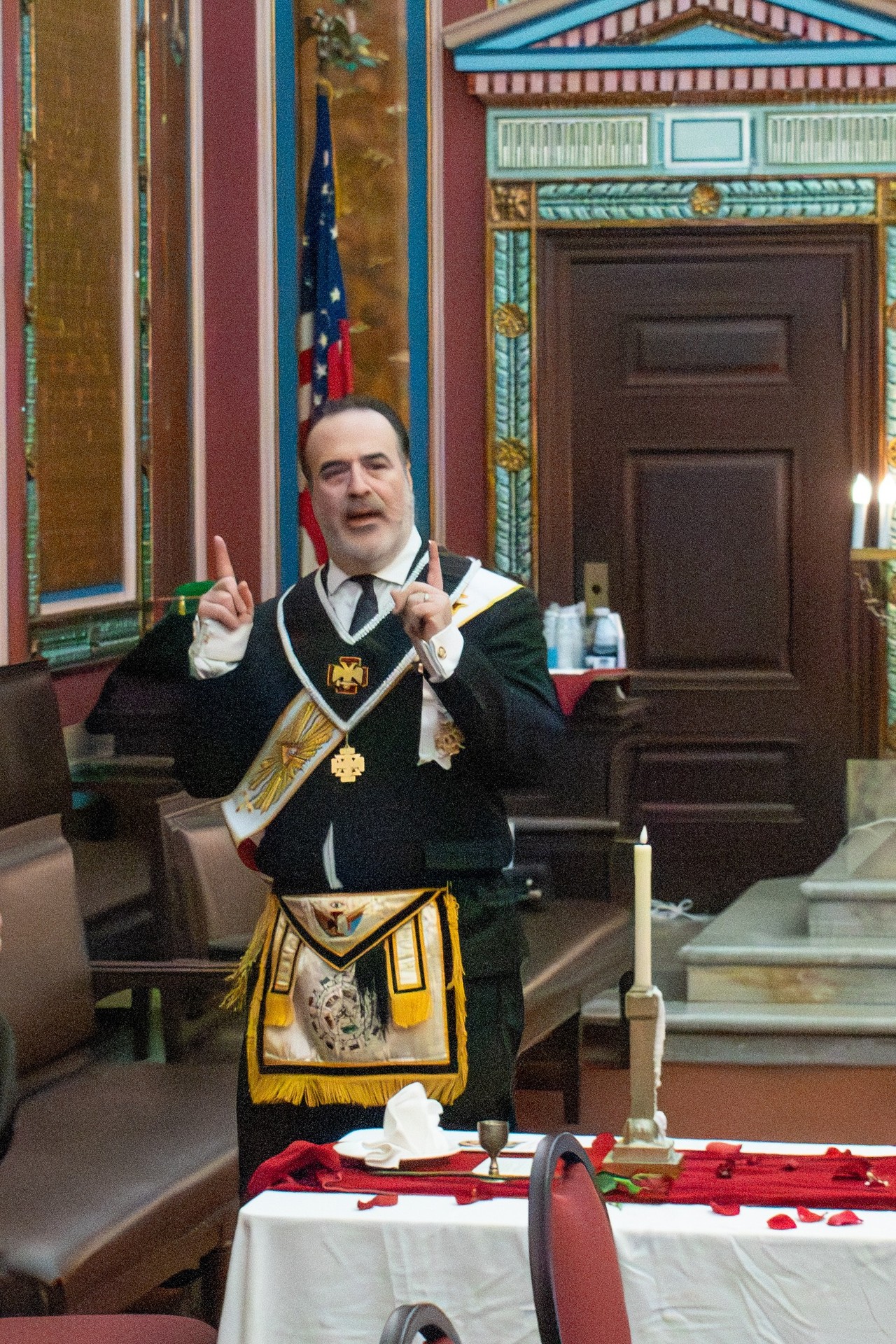
Photo: RW James Gregg speaking at the Valley of New York City Ancient Accepted Scottish Rite Feast of the Pascal Lamb, 2026
Masonry Does Not End When the Meeting Closes
Social media can bring out a version of ourselves that we would never display across a Lodge room. Behind a screen, it becomes easier to mock, insult, dismiss, or assume the worst about someone. The distance between people makes it tempting to forget that there is another human being on the receiving end. Before posting or responding, it may be worth asking a simple question: Would I speak to this person this way if he were standing in front of me?
For a Mason, perhaps there is another question as well: Does this reflect the principles I claim to value? That does not require silence. Masons are entitled to opinions, including strong ones. We can participate in public life, advocate for what we believe, disagree vigorously, and speak honestly. But disagreement does not require cruelty. Conviction does not require contempt. And tolerance does not require us to abandon our own beliefs. It simply asks us to recognize the dignity of another person who has arrived at a different conclusion.
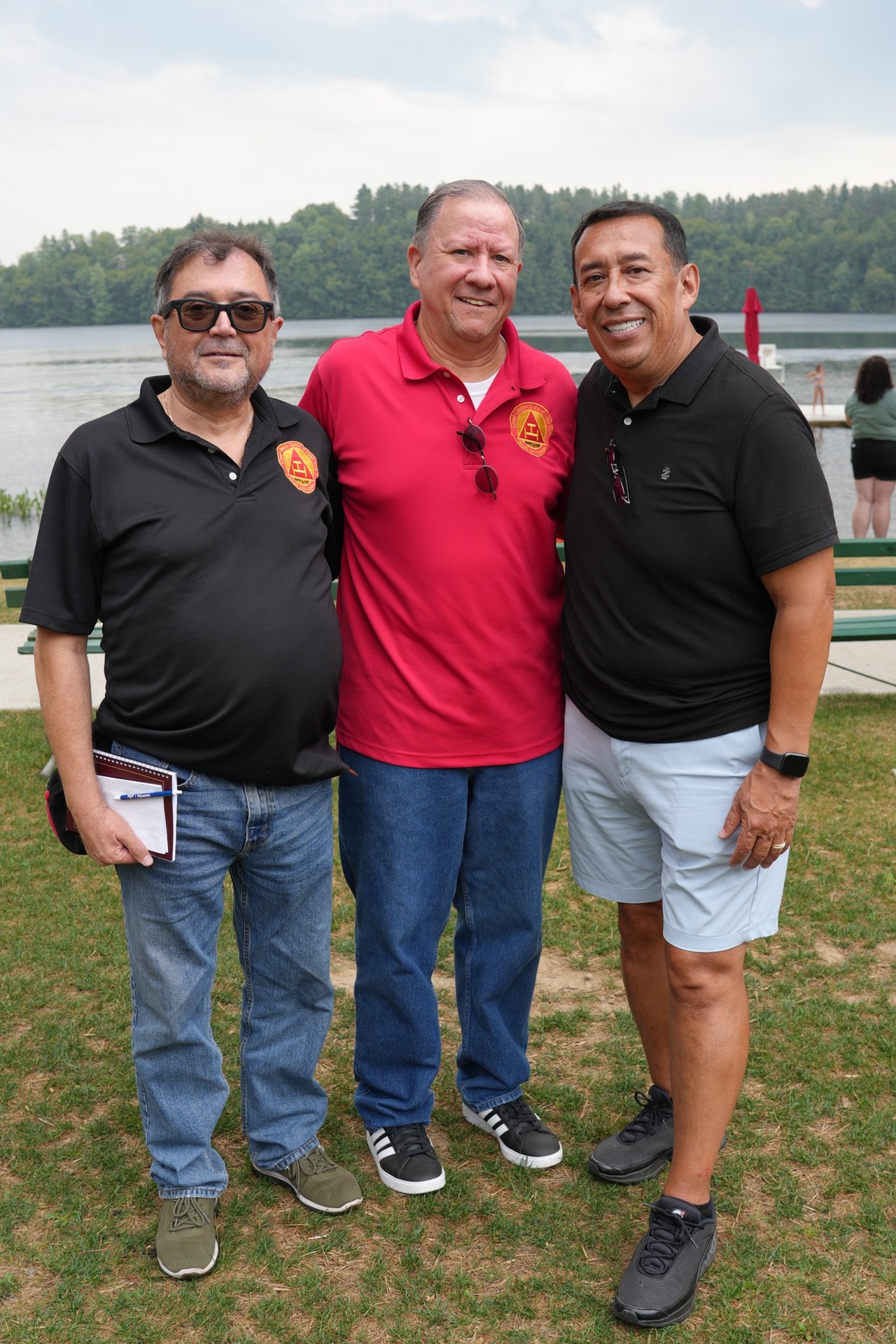
Photo: Brothers gathering at the 2025 Grand Master's Day at Camp Turk and Academie Esoterica (GLNY)
The Work Continues Outside
Ultimately, being a good Mason cannot be measured only by attendance, titles, offices held, or proficiency in ritual. Those things may tell us something about a man's involvement in Masonry. They do not necessarily tell us how well he practices it. The better measure may be found in the ordinary moments no one applauds: showing restraint when angry, offering kindness when it would be easier to criticize, listening to someone with whom we disagree, admitting when we are wrong, or treating another person with respect when there is nothing to gain from doing so. That is where the lessons of the Craft become real.
We will never all vote alike. We will never all worship alike. We will never all see every issue the same way. Nor should we expect to. What we can expect of ourselves is something more fundamental: that disagreement never becomes an excuse to forget our shared humanity or the obligations we have accepted as Masons.
Our ritual gives us the words. The world outside the Lodge gives us the opportunity to prove that we understood them.
Written by: WB Ian M. McHugh
Past Master, Master's Lodge No 5, Albany, New York
Article was orginially published in the Albany (New York) Masonic Temple Newsletter (September 2026 edition)


