
MASONIC BOOK REVIEW
The Craft of Compassion
Finding Universal Truth
in Nathan the Wise

Nathan the Wise (Nathan der Weise) is a dramatic play written by Gotthold Ephraim Lessing (1729–1781), one of the most influential figures of the German Enlightenment. Lessing was a philosopher, playwright, critic, and theologian who championed reason, religious tolerance, and moral development over dogma and inherited authority.
Writing during a time of intense religious conflict and censorship, Lessing believed that no single religious tradition could claim exclusive possession of divine truth. Instead, he argued that faith should be judged by ethical action, compassion, and humanity rather than doctrinal correctness. Published in 1779, the play represents the culmination of Lessing’s philosophical thought.
The story is set in Jerusalem during the Third Crusade, a period marked by conflict among Judaism, Christianity, and Islam. The central character, Nathan, is a wise and wealthy Jewish merchant known for his compassion and moral clarity.
The plot revolves around Nathan’s interactions with:
- Saladin: The Muslim sultan.
- A Christian Templar knight.
- Recha: Nathan’s adopted daughter.
While tensions arise from religious differences and unresolved identities, these conflicts gradually give way to understanding and reconciliation.

The parable asserts that the truth of a religion is demonstrated not by origin or doctrine, but by ethical living. As the story unfolds, it is revealed that the characters are part of the same extended family, symbolizing our shared human origin beneath religious divisions.
“The true ring cannot be identified by claim alone. Instead, each son must prove the ring’s power through a life of love, kindness, and moral action.”
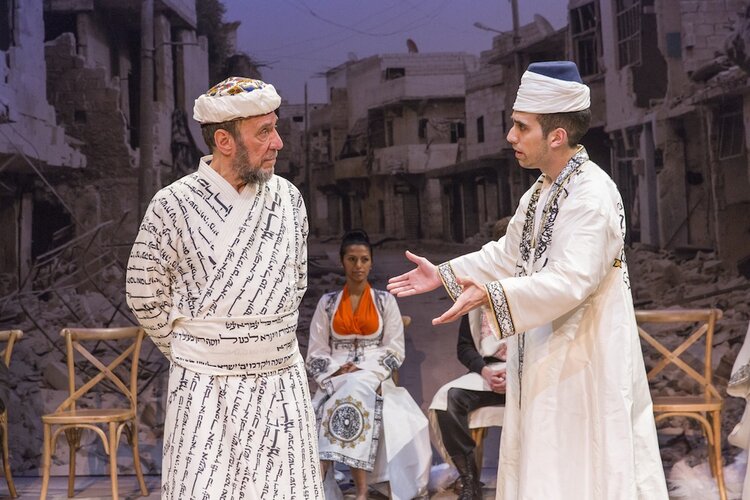
I have come to understand that Christianity was God’s first embrace of me, a necessary beginning. Yet love, by its very nature, expands. To see God reflected in other traditions is not betrayal, but delight. God rejoices in expansion because God is expansion.
In this way, the play offers a deeply Masonic lesson: faith is a living process, proven through gentleness, tolerance, humility, and charity. This is perfectly embodied in a conversation between Saladin and the Templar:
Saladin: My young friend, when God chooses to do good through us, we should not appear indifferent to it, even out of modesty.
Templar: But everything has so many different faces, and sometimes I don’t understand how they can all belong together.
Saladin: Then you should seek the best in everything, and trust God who knows all things are connected.
One of the central lessons for me is that love is the means by which duality is reconciled. In Freemasonry, symbols point to duality—light and dark, East and West, silence and speech. Love does not erase difference; it unites difference without destroying it.
The symbol of the checkered pavement has become deeply personal to me. Life is lived not on one color alone but in the movement between light and dark. I experienced this “love in action” through chess with a Brother—a shared space for learning patience, loss, and return. Much like the Masonic process: persevere, reflect, and try again.
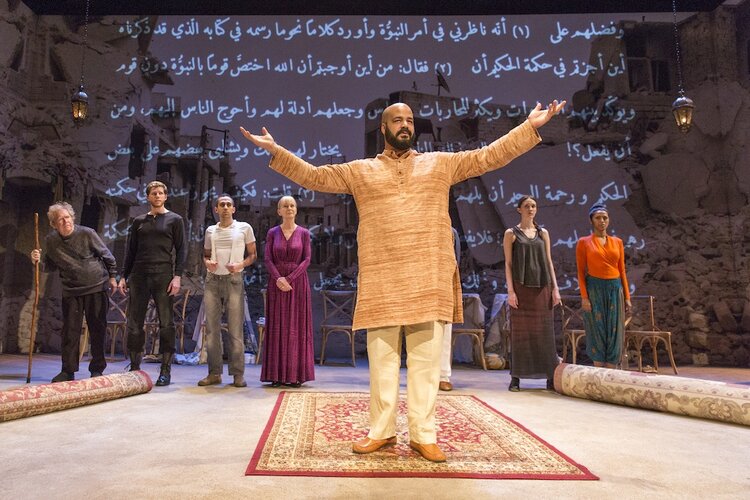
The question of truth—whether it is found within or received from without—has been one of my deepest struggles. Masonry teaches that truth cannot be imposed. Through experience, I learned how to hear that “still, small voice” within my heart. We do not awaken alone; we awaken with one another.
The judge’s charge in the play—to prove the power of one’s ring through love—captures the heart of the Craft. Faith is not about being right, but about being real. As a Freemason, every member of the human family that I meet is an opportunity to leave behind a fragment of that love.

Nathan the Wise arrived in my life by grace. It affirmed that Freemasonry is the lifelong practice of discovering unity in diversity. As Nathan says:
“Vie with each other to prove the power of your ring, through gentleness, tolerance, charity, and deep humility before the love of God. And if after a thousand thousand years the power of the ring still shines amongst your children’s children’s children, then I’ll summon you again before this judgement seat.”
The secret is simple, though never easy: love deeply, walk humbly, and trust the process.
Written by: Bro. Jonathan Kopel
Bro. Kopel is a MD PhD in his neurology residency in Washington DC. He is a member of Potomac Lodge #5 and Benjamin B. French Lodge #15 of the Grand Lodge of the District of Columbia, Washington, DC.
