
The Lodge as a Living Body
Stations and Places with a Purpose
A Lodge is often described as a series of stations and places occupied by officers who hold defined responsibilities. That description is accurate, but it misses something essential. A Lodge that is active, healthy, and engaged in meaningful work does not behave like a static organization. It functions more like a living organism. Each part serves a purpose, each role affects the others, and the whole depends on the proper operation of every part. When one element weakens, the strain is felt throughout. When all are aligned, the Lodge moves with clarity and purpose.
This is not a poetic comparison. It explains why Freemasonry places such emphasis on order, duty, and harmony. The human body demonstrates cooperation in a way that is immediate and undeniable. A Lodge reflects that same pattern. Its structure, its officers, and even the jewels they wear are not arbitrary. They reveal a system designed to function as a unified whole.

At the foundation of that system stands the Chaplain, who reflects the heart of the Lodge. In the human body, the heart is the first organ to form and the first to function. It establishes rhythm and sustains life before conscious thought or action emerges. The Chaplain serves a similar role. He anchors the Lodge in reverence and moral awareness, reminding all present that their labor must be grounded in humility before the Divine. His jewel, the Book of Sacred Law, reflects this truth. It is not merely a symbol of faith, but of the moral rhythm that gives meaning to every action. Without a healthy heart, the body cannot endure. Without moral grounding, the Lodge loses its purpose.
Closely tied to this foundation is the Secretary, who mirrors the nervous system. As the body develops, the nervous system establishes communication, memory, and coordination. It allows separate parts to function as one. The Secretary fulfills this role by preserving records, transmitting information, and maintaining continuity across time. He wears the jewel of Crossed Quill Pens, symbolizing more than record keeping. They represent the living memory of the Lodge, the constant flow of information that prevents confusion and preserves identity. Without this function, the body becomes disjointed. Without a diligent Secretary, the Lodge loses clarity and shared understanding.
No organism stands without structure, and in the Lodge that role belongs to the sideline Brothers. They correspond to the skeletal system, the framework that supports and protects all other functions. The skeleton forms early and remains constant even as other systems change. In the same way, the sideline Brothers provide continuity, stability, and quiet strength. They hold the Lodge upright across generations. They have no formal jewel, and that absence is fitting. Their strength lies not in ornament, but in support. Without them, the Lodge has no enduring form.

Structure alone is not enough. It must be reinforced and maintained, and that responsibility falls to the Marshal, who reflects the muscular system. Muscles give the body posture, strength, and discipline. They do not create purpose, but they make purpose possible. The Marshal’s Baton represents this controlled application of strength. Through alignment, formation, and visible order, he ensures that the Lodge does not merely understand discipline, but demonstrates discipline. Just as muscles prevent the body from collapsing into disorder, the Marshal ensures that the Lodge stands upright, disciplined, and ready to act with intention.
Photo: The Brothers (and their guests) of Mount Zion Lodge No 311, Troy, New York at a recent Awards Night program.
Movement, however, requires more than strength. It requires coordination. The Masters of Ceremonies fulfill this role, corresponding to the body’s sense of position, timing, and balance. Their jewel, the Crossed Swords, symbolize precision, readiness, and disciplined control. They guide transitions and maintain awareness, ensuring that every movement within the Lodge is intentional and properly executed. When coordination is present, motion appears natural. When it is absent, even simple actions become disordered. Their work ensures that the Lodge moves with dignity rather than confusion.
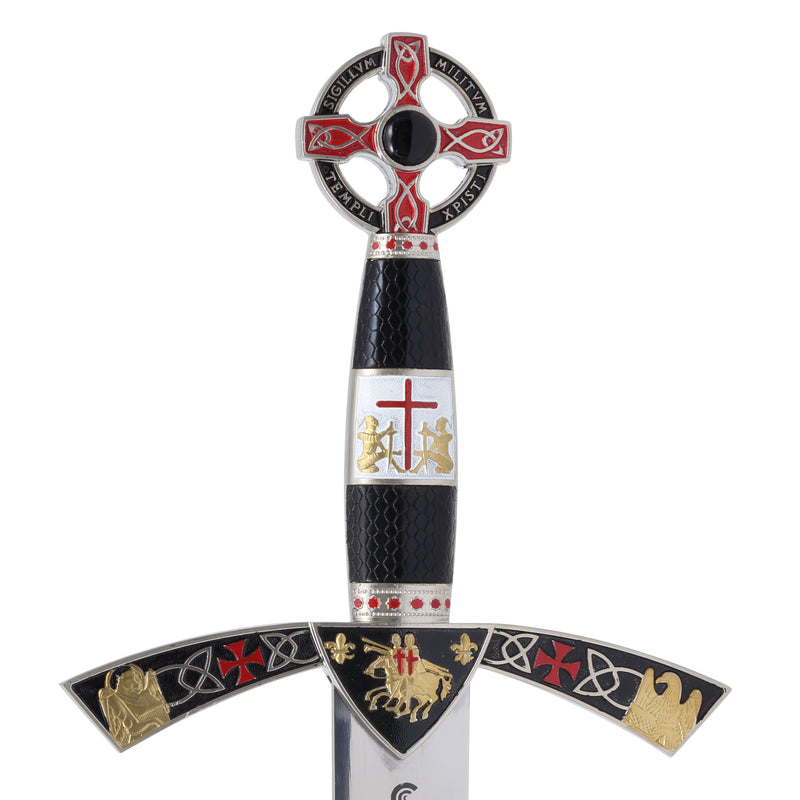
Every living system must protect itself. As the body develops, its internal systems begin to organize and require clear boundaries to safeguard what is forming within. The skin defines what is inside and what is outside, while the immune system guards against intrusion that could cause harm. The Tyler fulfills this same essential role in the Lodge. He safeguards the threshold, establishing a secure and respectful boundary in which the work may proceed. His sword symbolizes defense, vigilance, and the preservation of what lies within.
Through his steady watch, every internal function of the Lodge is able to operate without disruption. Without protection, even the strongest body is vulnerable. Without the Tyler, the Lodge cannot maintain integrity or focus.
(Editor’s note: The Tiler’s Sword [or Tyler’s Sword] is a ceremonial emblem in Freemasonry held by the Tiler, the officer responsible for guarding the entrance to a Masonic Lodge.

Within these boundaries, rhythm and balance are sustained by the Senior Warden, who corresponds to the respiratory system. Breath regulates energy, maintains equilibrium, and allows the body to endure. The Senior Warden’s jewel is the Level, which reflects this balance. It reminds the Lodge that all stand equal and that labor must be tempered with reflection. His role ensures that the Lodge neither exhausts itself nor loses momentum. Without steady respiration, the body falters. Without balance, the Lodge cannot sustain its work.
Complementing this is the Junior Warden, who reflects the digestive system. In human development, this system converts nourishment into energy, sustaining growth and maintaining vitality. In the Lodge, the Junior Warden oversees refreshment, fellowship, and morale, ensuring that every member is sustained and energized. His jewel, the Plumb, represents uprightness, a reminder that even in refreshment there must be discipline and purpose. His oversight ensures that effort does not deplete the Lodge, but instead contributes to strength and vitality. Just as the body transforms food into usable energy, he ensures that nourishment, both physical and social, is converted into the endurance required for meaningful work.
Supporting this system are the Stewards, who reflect the circulatory system. They ensure that nourishment and care reach every part of the Lodge. Their cornucopia symbolizes abundance, but their true responsibility is sufficiency and fairness, ensuring that resources and refreshment are shared so that no Brother is overlooked. Just as circulation sustains life throughout the body, the Stewards sustain the Lodge by delivering care, abundance, and support where it is needed.
The management of resources falls to the Treasurer, who corresponds to the body’s metabolic system, particularly the liver. Resources must be regulated, stored, and distributed wisely. The Treasurer’s crossed keys symbolize control, access, and responsibility. His work ensures that the Lodge remains stable and capable of fulfilling its obligations. Without metabolic balance, the body cannot thrive. Without proper stewardship of Lodge resources, the Lodge cannot endure.
The Deacons serve as the Lodge’s means of action, corresponding to the hands and feet which transform intent into action. They carry messages, guide candidates, and ensure that the intentions of the Lodge are put into motion. Their jewels, the Square and Compasses, associated with the Sun and Moon, symbolize guidance, timing, and direction. They reflect movement governed by light and awareness. Without limbs, the body cannot act. Without the Deacons, the Lodge cannot express its will.

At the head of this living system stands the Worshipful Master, who reflects the body’s highest executive function, often associated with the brain’s capacity for judgment and decision-making. In human development, this function matures last, depending on the proper formation and operation of all that comes before it, allowing the body to act with conscious purpose. In the Lodge, the Worshipful Master fulfills this role by drawing on the experience and understanding gained through service in every chair.
His jewel, the Square, symbolizes judgment shaped by that experience, aligning every action with principle. Just as the brain integrates signals from every system to ensure harmony and purposeful action, he unifies the Lodge and guides its work with clarity. Without this integration, the body acts without purpose. Without informed leadership, the Lodge loses direction.
Photo: WB Edmond Freeman, Past Master (2025), Hiram-Takoma Lodge No 10, Grand Lodge of the District of Columbia (Washington, DC)
Seen in this light, a Lodge is not a collection of titles or positions. It is a system designed for interdependence. Its Officers, its Members, and its Symbols all point toward the same truth: that strength comes from unity, and that purpose is realized only when every part fulfills its role. When the Lodge functions as it was intended, it does not merely meet, it lives.
Written by: WB Todd M. Paterek
Bro. Todd is Past Master, Lodge Education Officer, Northstar Coach, and Webmaster of Blazing Star Lodge #694 F&AM, East Aurora, New York.
