
Beyond Words
The Power of Symbolic Experience in Art, Ritual, and Healing
Across neuroscience, psychology, art, and initiatory traditions, a common insight emerges: human healing and self-discovery do not occur through explanation alone, but through symbolic experience.
The aesthetic triad—sensorimotor engagement, reward, and meaning-making—describes how an “aesthetic moment” arises when the body, emotions, and intellect are aligned. This moment creates space to be, to feel alive, and to encounter reality not as abstraction but as lived resonance. Art, ritual, and symbol work precisely because they operate in this integrated register, communicating complexity without prematurely reducing it to language.
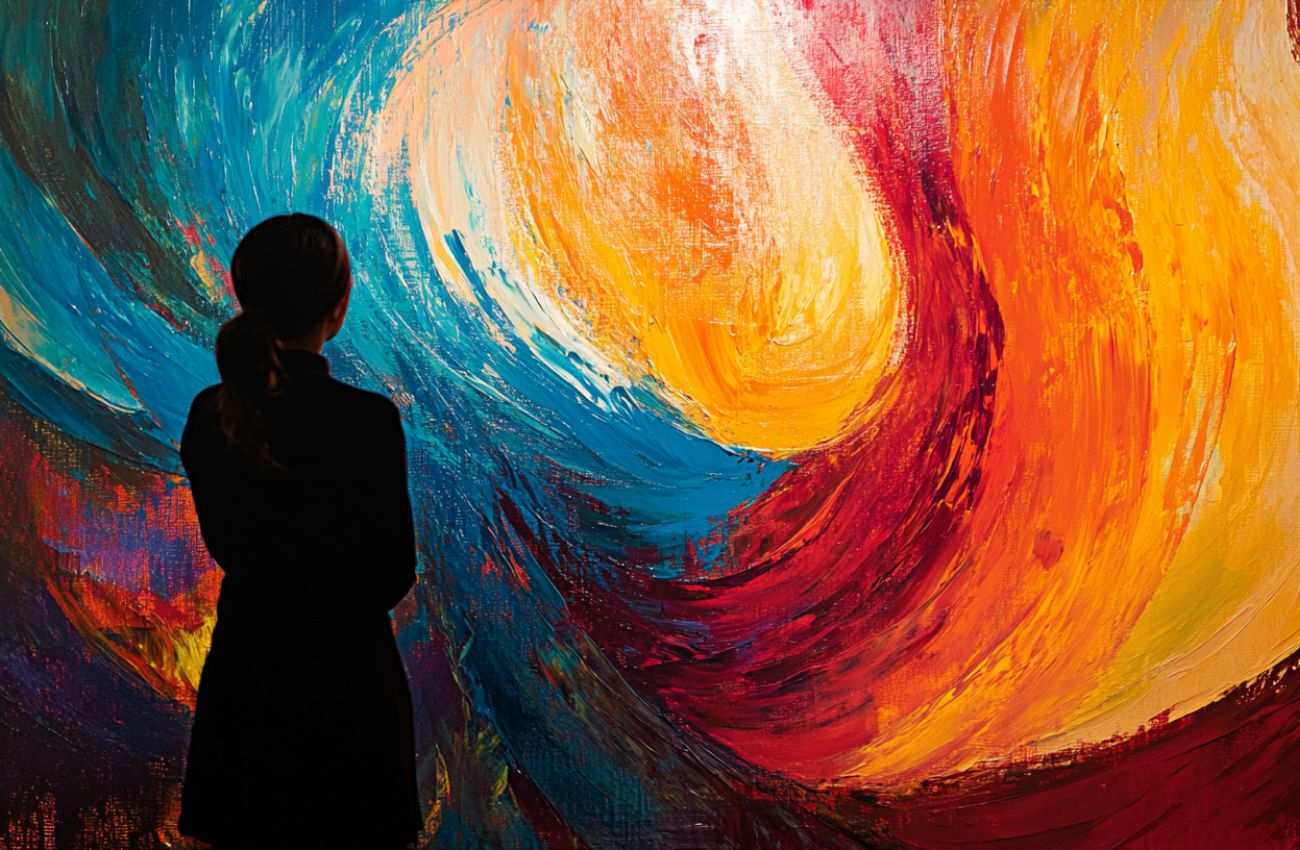
Emotion itself is not the problem; emotions are ancient biological communicators. Suffering arises when one becomes stuck—caught between urgency and immobility, a dynamic familiar to trauma survivors who describe their inner world as chaos. Art offers a way through this impasse.
Visual language, movement, and making allow trauma to be approached indirectly, safely, and honestly. By externalizing experience through symbol, individuals regain voice, coherence, and a sense of self without being overwhelmed. This is why art has proven effective in trauma recovery, especially where words fail.
Symbols such as the mandala illustrate this process with particular clarity. Across cultures, the mandala represents wholeness and containment, mirroring Jung’s insight that such images arise from the unconscious as organizing principles of the psyche.
Creating one’s own mandala becomes an act of self-initiation: a way to uncover hidden layers, restore equilibrium, and integrate chaos into order. This movement—from fragmentation toward centeredness—echoes both therapeutic healing and initiatory paths.
Freemasonry operates within this same symbolic economy. Its rituals, tools, and degrees do not offer direct answers; they stage experiences. The initiate is not told what transformation means but is invited to undergo it—through repetition, silence, gesture, and symbol.
Like art, Masonic ritual stretches the mind beyond its previous dimensions, awakening awareness of purpose, connectedness, and continual becoming. It honors process over arrival, transformation over explanation.
As shown in Your Brain on Art, creative engagement is not decorative—it is foundational to human flourishing, restoring agency, dignity, and belonging through embodied participation.
Poetry, writing, and art became the way back. Where trauma had silenced me, creative expression gave form to what could not yet be spoken. Through symbol and story, I could hold complexity without being overwhelmed, allowing meaning to return to experiences that had felt chaotic and numbing. Art did not erase suffering; it widened my inner world again.
Hope revealed itself in felt moments—being truly heard by a patient, feeling safe among colleagues, trusting my own voice. Creating became an act of healing, a quiet resistance to systems that reduce people to function. Through art, I reclaimed my humanity and remembered who I was beneath the injury. Healing, I learned, is not the absence of pain, but the courage to let the inner light speak again.
Ultimately, the purpose of art, symbol, and initiatory practice is not to soothe us into comfort but to awaken us into life. They lay bare the questions hidden by answers, inviting us into deeper relationship with ourselves and others. Healing, in this view, is not the erasure of trauma but its transformation—through form, rhythm, and meaning—into wisdom.
Art is not merely a hobby; it is a conversation with the self, a ritual of integration, and a lifelong journey of becoming.

Written by: Bro. Jonathan Kopel
Bro. Kopel is a MD PhD in his neurology residency in Washington DC. He is a member of Potomac Lodge #5 and Benjamin B. French Lodge #15 of the Grand Lodge of the District of Columbia, Washington, DC.
