The 33 Degrees in Freemasonry

The 33 Degrees in Freemasonry

MASONIC EDUCATION

The 33 Degrees in Freemasonry

Is 33 a mystical number with an inherent meaning?

Editor’s Note:

In February 2018, I was invited to speak at Schenectady Lodge #1174 in Schenectady, New York. Afterward, I was approached by Bro. James (Jim) Simpson, who shared his interest in the topic of my presentation. Jim caught my attention in that he’s an older member, the kind of Brother who leaves you with the impression that he has in-depth knowledge of the craft, its symbols, and history. We exchanged contact information. It was early March of that year when I opened the package of his first paper, “The Thirty Three Degrees of Freemasonry.”

What first caught my eye was that all 12 pages, including the title page and bibliography, were handwritten. For a kid who grew up in the 1980s who wrote thank you letters to my grandparents for every gift they sent me, I can’t remember the last time I opened a piece of mail in the past five years that was handwritten. I read on.

“There are 33 such degrees in the Ancient Accepted Scottish Rite. Is 33 a mystic number some inherent numerical meaning?”

I was hooked. I read the entire paper that afternoon when I came home after work. Bro. Jim also included photocopies of his supporting documentation to source his research. As a graduate studies student, I felt like I was reading college-level work.

I present to you the first in a series of Bro. James Simpson’s writings. What is special, is that Bro. Simpson is in his early 80s. When we last spoke on the phone, he shared that he’s “taking a hiatus this summer because my mind is getting tired.”

What surprised me over the past few years during our friendship is that he started writing about five years ago. After he was raised, he started reading and didn’t stop. He had so many ideas that he wanted to share his knowledge. This started with “scribbled paragraphs that I would read in my Blue Lodge,” he said. And how were his ideas received? He was thanked with not much discussion. “That was pretty much the end of it. There’s no discussion because the speaker is the only one who has done the reading on the subject. But, others will come to you and thank you for sharing the matter. (Just as he did with me) Don’t be discouraged! All of the Brothers I have known are interested in becoming more adept in the craft as it relates to their position in the Lodge.” He wasn’t the first, nor sadly the last, to learn that some of Freemasonry’s esoteric thoughts and ancient history sometimes fail to connect with the Brothers.

I will be converting Bro. Simpson’s papers to text, my hope is to share them with you as I receive them. He is one of many of our craft’s hidden gems. It is important to me that the library of history in his mind, the handwritten papers that he freely shares with any interested Brother, that knowledge continues to be accessed. I understand, not all Masons seek the additional Light that was promised to us in the degree ritual — but we should. We all began as Entered Apprentices with a desire to know and learn. We need to secure for future generations those “scribbles” that can spark great ideas or thoughts for an entire Craft.

Michael Arce, Editor-in-chief, Craftsmen Online

The 33 Degrees in Freemasonry

There are 33 degrees in the Ancient Accepted Scottish Rite. Is 33 a mystical number with some inherent numerical meaning?

The great Shakespearean actor and Mason, Edwin Booth, reportedly once said of the Masonic Ritual: “In all my research and study, in all my close analysis of the masterpieces of Shakespeare; in my earnest determination to make those plays a appear real on the mimic stage, I have never, and nowhere met the tragedy so real, so sublime, so magnificent as the Legend of Hiram. It is substance without shadow — the manifest destiny of life which requires no picture and scarcely a word to make a lasting impression upon all who can understand.”

Degree Origination

Our degrees began in France in the year 1725. The new class of scholarly men (Speculative Masons) had discovered written legends from the old Operative Masons. They were also aware of the early history of the Jews given in the Bible. It is from these histories the Hiramic Legend evolved. The early high degrees were a continuation of the Hiramic Legend. This occurred during the Age of Enlightenment when there was a growing interest in all mystical and occult doctrines. The mystical parts of many of the high degrees were influenced by the knowledge of Rosicrucianism and even the mystical parts of the Book of Revelation.
Important practical lessons are being taught through the observance of rituals. Participation in rituals in unifying and gives a greater sense of belonging. A mutual belief in a Supreme Power should bind all initiates together in Brotherhood. We must learn to work for work’s sake without the desire for praise or reward. There are philosophical ideas shown allegorically through the master architect’s tools. They teach us to be faithful to our family and country. They teach universal Brotherhood; honesty in business relations; the forgiveness of past injustices; and perseverance in overcoming the difficulties encountered in our progress toward perfection. These degrees are rich in benefits.

Scottish Rite Degrees and Chakras

Several years before I was raised, I purchased a book entitled “Hands of Light: A Guide to Healing Through the Human Energy Field” by Barbara Brennan. She is a practicing healer, psychotherapist, and scientist. She was a research scientist in atmospheric physics from NASA. She was trained in bioenergetic therapy and is currently teaching courses concerning the human energy field. Barbara presents the first in-depth study of the human energy field for people who seek happiness, health, and their full potential. She discusses how our physical bodies exist within a larger “body,” a human energy field or aura, which is the vehicle through which we create our experience of reality, including health and illness.

There are seven endocrine glands. Each gland has a chakra, which is a cone-shaped energy field that absorbs energy from the universal energy field. As a practitioner, Ms. Brennan will locate unhealthy chakra. The result of her healing will be physical, emotional, and spiritual. Although this healing is not a religion, the charkas are a western interpretation of Hinduism. Western practices have associated chakras with various concepts.

I.E., metaphysical counterparts to the endocrine glands; chakras reside in the psyche; chakras have a physical manifestation. These various beliefs have been speculative. The book “Dark Light Consciousness” has taken the speculative out of the chakras and brought them into the operative world of science. The book author, Edward Bruce Bynum, Ph.D., explores the ancient Egyptian science of the Uraeus and reveals how it is intimately connected to dark matter and to melanin, a light-sensitive, energy-conducting substance found in the brain, nervous system, and organs of all higher life-forms.

The following points are from Ms. Brennan’s book.

  • Chakra #1: The coccygeal center is related to the quantity of physical energy and will live in the physical reality.
  • Chakra #2: The gonads is related to the quality of love for your mate.
  • Chakra #3: The solar plexus relates to spiritual wisdom and consciousness of universality of life.
  • Chakra #4: The thymus is the center through which we love ourselves, our families, pets, friends, neighbors, and our countrymen.
  • Chakra #5: The thyroid is associated with taking responsibility for one’s personal needs.
  • Chakra #6: The pituitary is associated with the capacity to visualize and understand mental concepts.
  • Chakra #7: The pineal, the “Crown Chakra.” The pineal gland is related to the person’s connection to his spirituality and integration of his whole being, physical, emotional, mental, and spiritual.

Spritual energy and Freemasonry

The Knights Templar were in the Holy Land beginning in the year 1118. Hughes de Payens, the Master of the Order, although a Christian, was a descendant of Muhammed. It was through this connection that the Templars allied themselves with Islam. The Templars’ principal teachers of alchemy were the enlightened Sufis. The Sufis had gathered the rarest and most valuable alchemical texts of the Egyptians, Persians, and Indians. The Sufis also acquired texts from India regarding the mystical form of spiritual enlightenment.

The human spine contains 33 vertebrae. Spirit regeneration would take place by degrees through the 33 vertebrae of the spinal column until reaching the pituitary gland which invokes the pineal body. The science of this regeneration is one of the lost keys of Freemasonry, and it is this reason why ancient Freemasonry was founded upon thirty-three degrees. Manley P. Hall, a 33 Degree Mason and Masonry’s greatest philosopher, states, “The 33rd Degree represents the human head atop the 33 vertebrae of the back.”

From the base of the spine there is the serpent which will wind its way up the spine to the crown chakra. The Sufis knew this as the Baraka; the Jews called it the Shekinah; the Chinese Taoist called it Jing; in India, it was the Kundalini. To awaken the power of the Kundalini, it would take spiritual discipline, including alchemy and yoga. As the Kundalini rises through the physical, emotional, and mental bodies, it performs the task of destroying all the impurities that prevent him from knowing his innate divinity.

With the conquest of Spain by Islam (711-1492), Spain became the seat of Sufi learning in Europe. Beginning with Compostela, Spain, there are five cathedrals, one church, and one chapel. The sequence of the sites corresponds to that of the planets in our solar system. Each site also corresponds to a chakra. Just as subliminal energies stream up and down through the chakras within the human body, so similar forces surge northwards and southwards along the great alignment of the cathedrals.

When the novice had progressed thus far along his chosen spiritual path, he was open to receive the messenger of the mystery cults. The novice would make a pilgrimage to St. James of Compostela. The first-degree initiation was the result that flowed spiritually from the awakening of the base chakra that connects us with the earth and physical reality. Its ruling planet — the Moon.
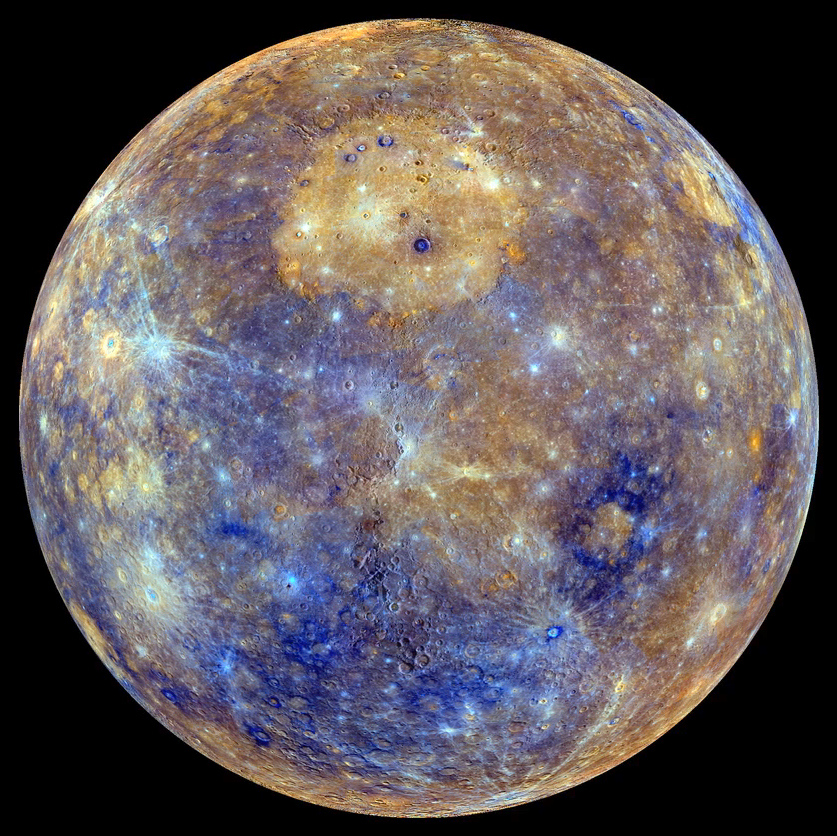
The initiate would then make a pilgrimage to the church in Toulouse. He would be introduced to the mysteries of the second degree with the opening of the abdominal chakra. Here he would discover his inner space and could retire into the isolation of his spirit. Its ruling planet — Mercury.

The novice was the symbol of the third or solar plexus chakra. The fulfillment of this degree led to the awakening of the universal life force. This degree was achieved by the entry into the mysteries of the Venus oracle at the Cathedral of Orleans.

The novice is now ready to awaken the heart chakra which is linked to the region of the thymus gland above the heart. This is the spiritual center controlling the sublime gifts of love. This initiation was held in the Crypt of Chargers Cathedral, the ancient site of the sun oracle.

Induction into the fifth degree was performed in the chamber under Notre-Dame de Paris, the site of the druidic oracle of Mars. The fifth center is the throat chakra and is the first of the higher ones. It is the center of both speech and inner hearing and is connected with the power of sound.

The brow chakra, known to many as the third eye, is connected with the pituitary gland. Clairvoyance is connected with this center, which relates to the spiritual faculties of insight and intuition. This took place in the cathedral of Amiens, and the aspirant would be instructed in the mysteries of the Jupiter oracle.

The seventh degree was attained with the culmination of the spiritual journey a the opening of the crown chakra, which is mystically united with the pineal gland; also known as the Seat of the Soul. This was awarded at the seventh site, Rosslyn Chapel, the ancient and revered site of the Saturn oracle. The initiation ceremony for this degree took place in the hidden chamber under the chapel, which was deliberately created by Earl William St. Clair. The Sinclairs were experts in sacred geometry and geomancy, sciences that teach how to design physical structures so that they harmonize, capture, and amplify the natural currents of energy that flow under and upon the surface of the earth. William Sinclair based the chapel’s dimensions on the Golden Mean, the proportion that determines the geometric spiral, which is synonymous with the path of serpentine life force.

Rosslyn Chapel was situated upon the confluence of important ley lines that united it with sacred landmarks throughout Britain. One of its intersecting leys comes from the direction of the bore stane hill where five powerful ley-lines radiate. In 1994, Niven Sinclair invited Professor Lin Yun, a master of Feng Shui, to measure the flow of the “earth energy” within Rosslyn Chapel. Professor Yun was impressed with this energy and maintained that the chapel was destined to be a center of world peace.

The seven spiritual centers along with their respective planets were in total alignment on July 28, 2019. The author did not make any predictions for this alignment.

Bro. Jim Simpson, Schenectady Lodge #1174, Schenectady, New York
Sigman Bodies Ancient Accept Scottish Rite, Scotia, New York
St. George’s Chapter #157, Schenectady, New York
St. George’s Council #74, Schenectady, New York
St. George’s Commandry #37, Schenectady, New York
Charles H. Copestake #69 AMD, Schenectady, New York

The Last Moon Lodge in New York State

The Last Moon Lodge in New York State

EDITORIAL

Moon Lodge

INSIDE THE LAST MOON
LODGE IN NEW YORK STATE

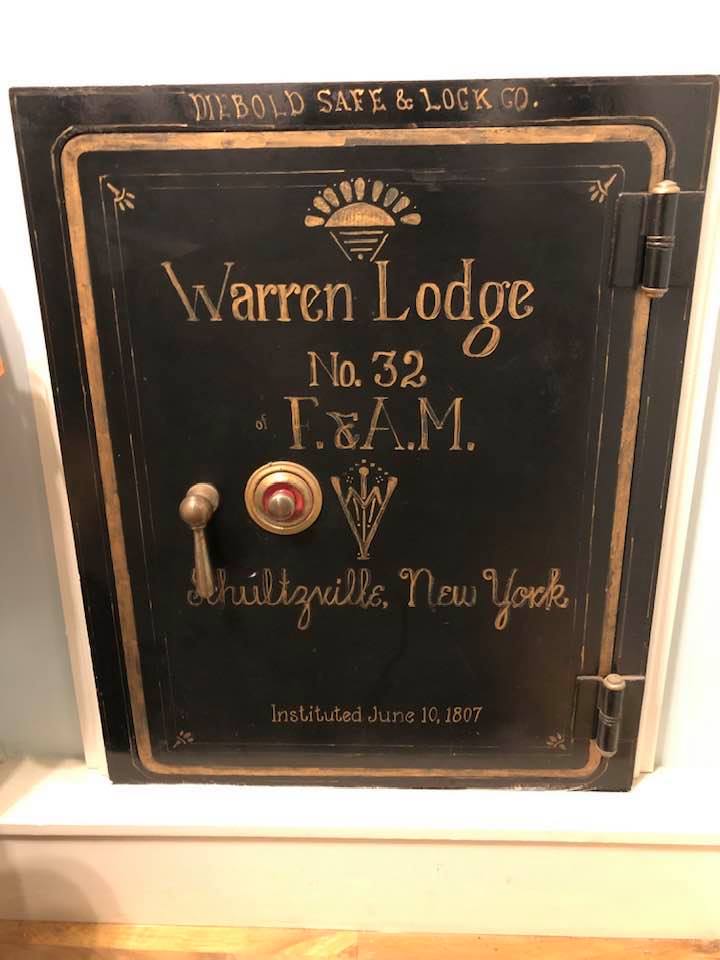
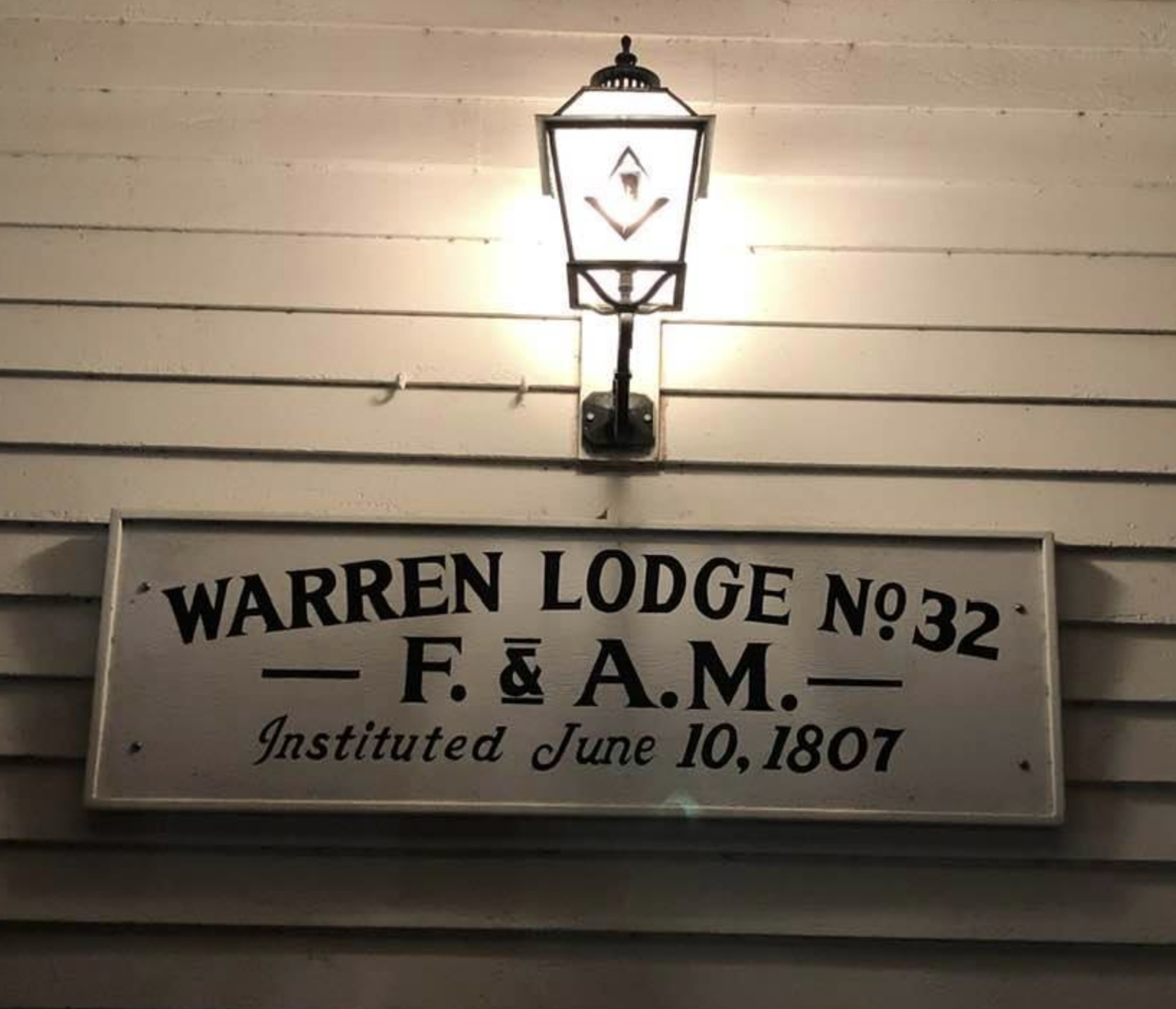
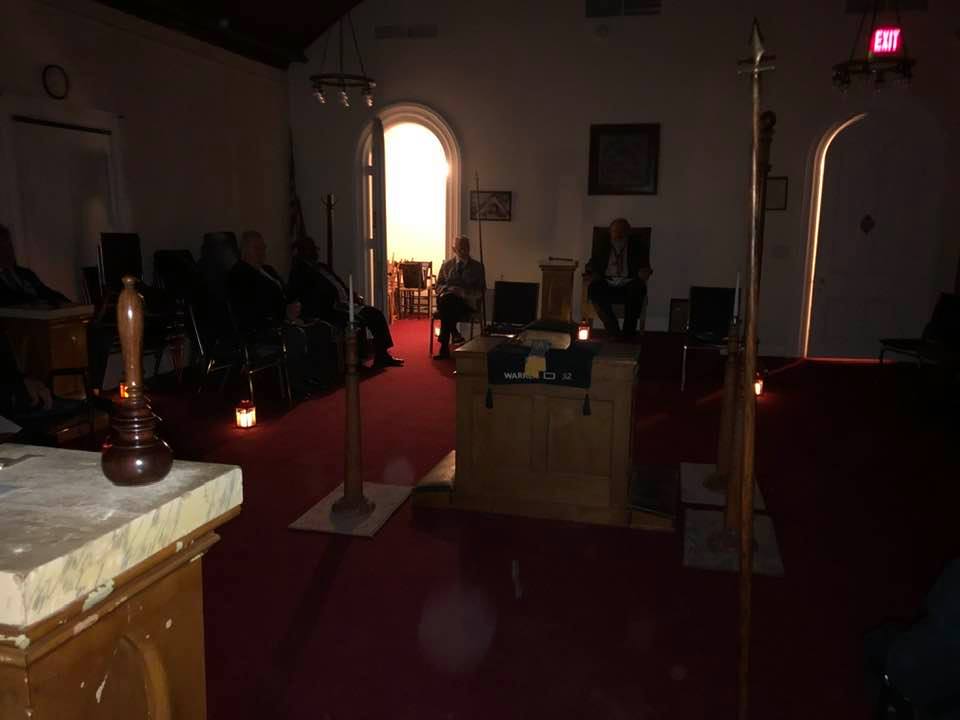
On the evening of April 18, 1775, Paul Revere was summoned by Dr. Joseph Warren of Boston and given the task of riding to Lexington, Massachusetts, with the news that regular troops were about to march into the countryside northwest of Boston. Thirty-two years later, Warren Lodge No. 32, named for Brother and Revolutionary War hero Joseph Warren, was chartered June 10, 1807, by DeWitt Clinton, Grand Master of Masons in New York. It meets in Rhinebeck, New York. Aside from a noteworthy connection to the American Revolution, there is another unique feature that sets Warren Lodge #32 apart in New York State: the Lodge meeting dates are on a lunar schedule. Warren Lodge opens by lantern light, setting its monthly meeting date as the Thursdays before every full moon, rather than on a set calendar day.

The first mention of Moon Lodges can be found in the Cooke Manuscript of 1410, one of the oldest documents belonging to the Masonic Craft. In the United States, Moon Lodges were first noted in colonial times around 1717 to be operating in Philadelphia, Boston, and Tennessee. During the 18th century, when brothers were required to travel to Lodge by foot, horseback, or buggy, a Full Moon assured illumination for the lonely and desolate miles. Masons at that time would travel 8-10 miles or more and were unable to make the long trip home at night and would be supplied lodging by a fellow brother, leaving after breakfast to return home the next morning.

Today, there are roughly 129 moon lodges in America, 14 of which are in Pennslyvania. Texas has the most with 19. Warren Lodge #32 is the last Moon Lodge in the State of New York.

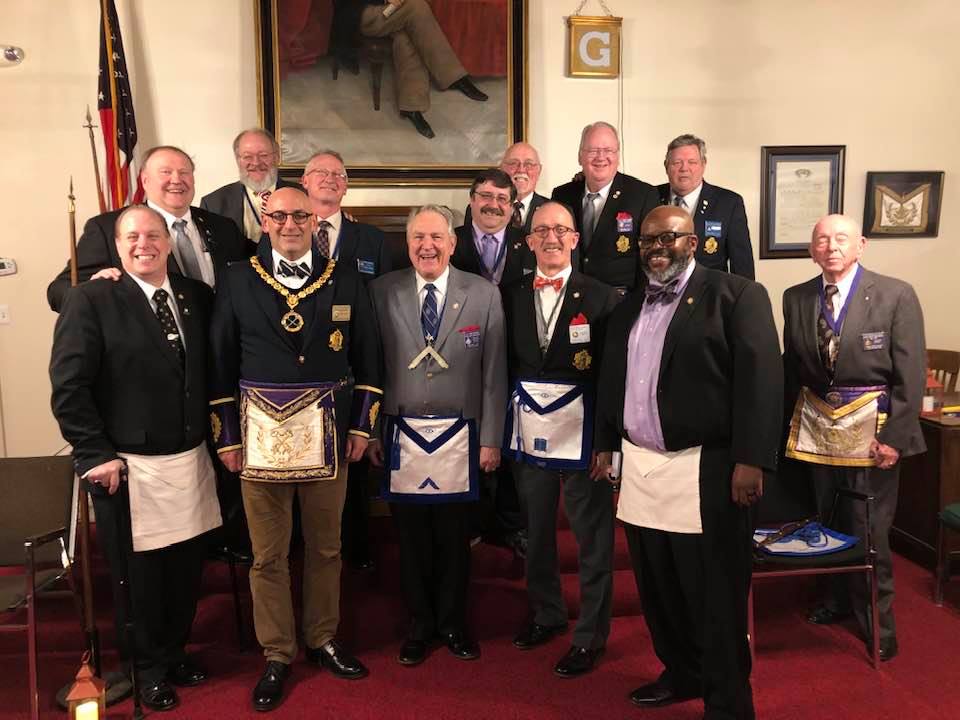
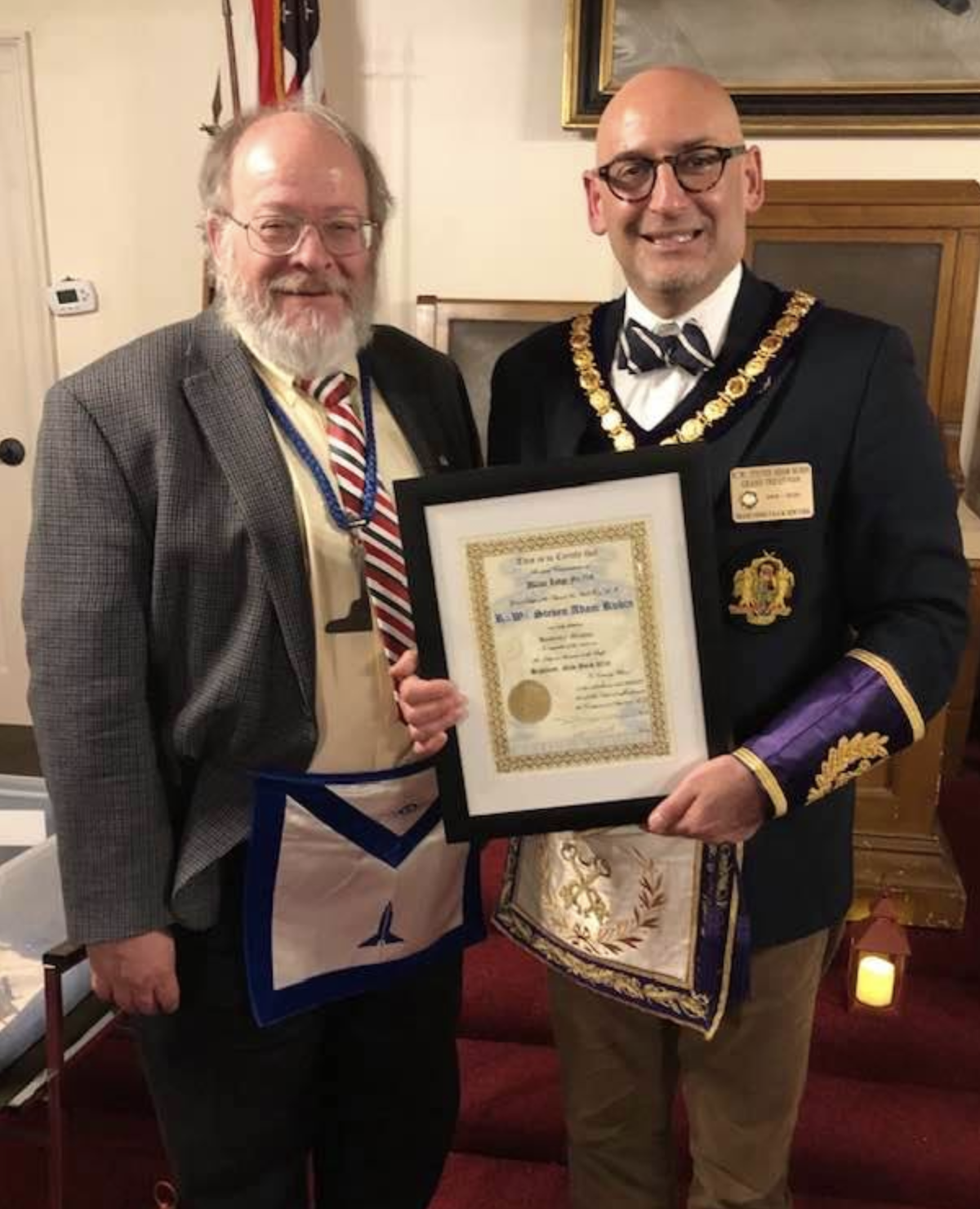
I recently had the honor of attending a Moon Lodge and was equally proud to affiliate with Warren Lodge #32. Below are some of my photographs from the evening.

RW Steven Adam Rubin
Deputy Grand Master of the Grand Lodge of the State of New York
Publisher, Craftsmen Online
Affiliate Member, Warren Lodge #32, the last Moon Lodge in New York State

RW Steven Adam Rubin

The Five Elements and Five Senses

The Five Elements and Five Senses

MASONIC EDUCATION

The Five Elements and Five Senses

FREEMASONRY AND MASONIC SYMBOLISM

In Freemasonry, there always seems to be a rhythm or correlation with any number of things. It seems to nearly never fail for the Craft to line up with all things Hermetic, Kabalistic, mystical, or beyond. Whether or not ‘modern’ Ancient Craft Masonry came from the ancient knowledge found prior to antiquity is a subject of debate. However, it does typically fall right into place with it and is unquestionably related.

As we were passed through the degrees of Masonry, we were introduced to esoteric and numerical studies, during our journey some of their meanings are explained. As we travel through the (B) and (J) pillars, we begin to ascend the flight of winding stairs. We first come upon three steps of which have an infinite amount of explanation based on the number three. However, we are taught they primarily represent the three main officers of the lodge: Junior Warden, Senior Warden, and Worshipful Master.

As we continue along, we come upon a set of five steps. Along with the five orders of architecture, each one represents one of our five primary senses. They are labeled hearing, seeing, feeling, smelling, and tasting. We are taught in one particular degree to primarily focus on the first three senses but as searchers of further light, there is usually a way to correlate similarities with numbers in Masonry and beyond. These five senses are what we utilize to study the seven liberal arts we are later introduced to in the lesson.

In some of the more esoteric Masonic and non-Masonic groups, we are introduced to the four primary elements of the Hermetic and Kabalistic sciences. They are earth, water, air, and fire. While many other teachings, such as eastern religions, utilize the same and different elements, I will stick with what our Masonic related groups teach.

Based upon my initiatory experiences and with some research, I found that there is a less known fifth element or Quintessence. According to Dr. Israel Regardie, the fifth element of spirit crowns and connects the other four. [i][i] This is a culmination of all the elements. One primary difference with this element is that it cannot stand alone as the others do. It is essential that the other four elements are ‘present’ and in alignment have an understanding of the fifth element.

As receivers of light often found in the blue lodge (but more often overlooked) and beyond, we are encouraged to learn and become familiar with numerology. In some of the first lessons taught, we are informed of the many meanings of different numbers but specifically here the number five. In one of our degrees as mentioned above, the number five is alluded to in regards to the five senses (and five pillars) and we are taught that when we are fully in sync with ourselves and our surroundings, we can get by without any of our senses, spiritually speaking. In Masonry, the five senses are much needed. Touch whereby one Mason may know another in the dark as well as in the light. Sight utilized whereby we see certain signs of recognition given to us or symbols as well. Hearing to hear the word of a brother mason, to also hear music as a part of some lodges ritual. Taste to rejoice among brethren in fellowship with fine food and drink. Smell when we have our ceremonial incense burning in the Lodge to help center our minds and bodies.

🜁
AIR & HEARING

In some Masonic traditions, the element of air is represented as intelligence and/or spiritual growth as well. During the creation days, it was God that breathed into a man’s nostrils and made us in His likeness. With air travels sound. From our time in the womb to our last moments on earth, we primarily hear sound through the air. Also through the air is played one liberal art that is perhaps the most recognizable and it is that of music.

Hearing in Masonry and other ritualistic orders is perhaps the primary means of communication. Whether whispering good counsel or carefully scripted, deeply esoteric lines of a ritual, the sound traveling in the air to our ears to be heard is everywhere. Air is represented by the east, as it is from the east we receive most of our Masonic lessons. We are given our obligation from the east and admonished as well as other communications. The sense of hearing and air go hand in hand with gaining knowledge and spiritual growth.

It is not so much to simply say certain words but to forcefully vibrate them out as to really push the sound waves through the air. As with our sense of smell, we often never see any of the day to day things we hear. From car horns and ambulances to other people’s conversations, the air is filled with constant sounds.

Perhaps no phenomenon in nature is as common and powerful as air. It is a driving force and a symbol of determination. In nature, wind storms, tornados, and hurricanes have no rivals except themselves in destructive power. These forces of air carry with them thunder, howling winds, and crashing noises of destruction. Air can also be gentle, cooling, and bring in clouds of life-supporting rain. It can tenderly blow a wind chime or be pushed through a musical horn or woodwind to produce a beautiful sound. If harnessed correctly and brought under control, it can carefully steer a sailboat, generate energy, or lift a 700,000 pound 747 jet airliner. Air can blow out fires, dry water, and shift the earth. As Masons or students of the Hermetic sciences, when we hear the winds coming, it is necessary to be able to harness and control these opportunities of learning something new or growing spiritually.

🜂
FIRE & SMELL

In the Masonic tradition, the element of fire is a symbol of life and destruction. In the Winter Solstice Ceremony for Masonry, it is symbolic of creation and energy; a new beginning and life. In tarot and other studies, fire is represented as passion and change, whether good or bad. In alchemy, fire is often associated with sulfur, one of the most potent and distinct smelling chemicals on planet Earth. Fire is represented in the south; the opposite of the cold, dark north.

In Masonry, as mentioned previously, one of the senses less talked about is that of smell. Smell is often one of our first senses to be activated during certain situations. It is also one that could be considered quite subconscious yet if something triggers your sense of smell enough, it can be one of the most difficult to ignore.

When a fire is created, we usually smell it far before we see, hear or feel it. Whether literally or figuratively, we often sense the smell of smoke, that all too recognizable smell of sulfur, or worse yet, the ‘smell of death.’ On the other hand, fire and smell can have positive meanings as well. In the culinary arts, we often smell what we are going to be eating before we ever see or taste it. As with fire, our sense of smell senses a sign of new beginnings, love, and passion, physical attraction towards (pheromones) another, or the very familiar smell of a newborn baby.

Our sense of smell often allows us to sense what is beyond our other senses, even hearing. It can also be right in front of us as we “stop and smell the flowers” as to live in the moment. As mentioned above, you can smell fire miles away and know that there are likely dangers and destruction. But you can rest assured, it is also a new beginning in the making as well.

🜄
WATER & TASTE

In the Masonic tradition, the element of water is represented as emotion and intuition, and according to Cicero[ii][ii], it has creative, subconscious, or mysterious qualities. As for taste, having ‘good taste’ is perhaps all of these things. It is that natural ability to make good choices, react accordingly, without thinking. It is also the ability to see the beauty and everyone else in the room would likely agree. It is a subconscious ability to have a positive awareness of what everyone else likely should see or does see in something. Having those water qualities means you are fluidic in that not only do you have good decision-making abilities, but that you also can adapt and see the hidden beauty in almost everything.

As Masons, we should have the ability to be fluid in most scenarios. If we are demanding to be free and accepted ourselves, we must also be accepting of others as well. As Masons, we are curious about the ancient mysteries, both esoteric and exoteric. From the west is water and fittingly so as it slows the fires our minds for rest. The west is where the sun sets every day. The search for more light from the east is then allowed to be pondered and meditated over. As water is passive and feminine, it is utilized best as a time to contemplate those fiery desires for knowledge.

One tradition that has been long forgotten in our day to day lives of traffic, work, and fast food is the slow consumption of our foods. As a whole, we eat more than ever in the history of mankind yet we enjoy our food less than we ever have. We often miss the taste of every nuance in a fine dish we are eating and therefore that likely reflects on our lives for the most part. We tend to not let our minds wander into our subconscious due to busy schedules. If we are missing those moments, it’s likely due to bad taste.

🜃
EARTH & TOUCH

In the Masonic tradition, the element of earth is represented as grounding, stabilization, or material. This is the element often looked at as the element that really houses all of the aforementioned elements. The earth element is the basis of knowledge, things learned, which allow for further spontaneous/passionate (fire), logical (air), or emotional (water) abilities in our mind and spirit. It is our day to day life. It is what we can see, smell, hear, taste, and most importantly touch. Being earthbound in a philosophical way is a less than desirable way to grow spiritually. However, it is the earth element and our physical beings that essentially make us up. While water can be touched and even held, it is more fluid and will change immediately. As for earth qualities, it is malleable, but not as much as air and water, and is nowhere near as inspired as fire. The earth is under our feet and is all we can touch.

Earth is represented from the cold north. It is also represented with the color black and therefore represents our lack of ‘light’. We are too concerned about gadgets, money, and other items we must have in our possessions to be anywhere other than in complete darkness. While it is the earth element that houses the others and is the basis for our growth, it is a virtue to have stability underneath us. It is the basis for all Masons to be physically born in darkness and to have to put away the possessions we hold close. We are even asked at one point to deposit a physical, metal item for archival reasons into our lodges. This helps us be able to give something up of a physical nature.

Being grounded to the earth to a fault can be a problem. As we can feel earthquakes underneath our feet if our Earth below us is toiling, so should we feel the earthquakes within ourselves if we are toiling inside. This toiling is often what pushes us towards any number of belief systems or to even begin our journey into Masonry. It is important to understand the positives and negatives of the earth element as it can keep us from ever-growing but always allows our acacia to grow.


SPIRIT & SIGHT

In the Masonic tradition, the element of spirit is a symbol of purity and is, more or less, a culmination of all of the other four elements. It is typically less spoken about or even recognized by many students of the ancient mysteries. It is so invisible; it is less visible than air itself yet as Masons we are constantly looking for it. It is nowhere yet everywhere. It is made up of all four elements yet none of them are specifically it. Spirit can also be called Quintessence or aether as well.

It’s the similarity to air that is relevant since air is represented in the east, the place we are constantly traveling. As seekers of light, it is a sight that we use most literally but figuratively as well. From the dawn of man until now, we have peered into the skies pondering questions of our existence. From worshiping the sun and moon or looking into the heavens for God’s answers, we are constantly looking for the light or spirit.

As humans with sight, we often have to ‘see it to believe it’. As seekers, we know we won’t see it with our physical eyes but with our wisdom and studies. Some believe the ‘third eye’ concept which allows for deeper meditation and understanding of things around us. As we bow our heads and pray, we usually close our eyes. This is most likely due to the closing of our ability to actually see but utilize more of our inner sight. In Masonic lodges, we are ceremoniously given light, more light, and further light by having our hoodwinked removed. Having a requirement to believe in a higher power, a GAOTU, this ritual alludes to the great light. To our ancestors, it may have simply been the sun. To us, it could be a multitude of belief systems.

If all things are of the aether element, then on an earthly level we see and detect signs from the universe such as numerology and things we often call coincidental. We use our sight to gain more knowledge that can be transferred into logic and wisdom.

My studies have led me to believe that in Lodge, the spirit is represented in the middle of the room. The other elements are represented directionally, but not spirit. As indicated in specific grades of at least one appendant body of Masonry, our “spirits” are positioned in a place of no direction but all directions, facing the east looking for light. Spirit is inside all of these elements and makes up the space each one of them lacks in.

It is often represented with a circle and this symbolizes the infinity of the spirit and how it is all things. It is also represented in the pentagram as the apex point of the star. In Masonry, we are caused to kneel at an altar and give a prayer. The VSL is also in the middle of the lodge as a rule and guide for us as Masons. This is fittingly so as it represents the place our spirit is. Our sight is taken away from us until a certain point and then as mentioned before, the hoodwink is removed for us to see the light.

The element of Quintessence has all of the features of the other elements. It is very logical and intelligent as with air yet as simple and grounded as the earth element. It is very emotional and soft as water yet powerful and scorching as fire. It is highly represented in Masonry but rarely if ever, talked about. It is the “light” we are constantly seeking.

PRACTICAL FREEMASONRY

The study of the aforementioned and our craft is not exclusive to Blue Lodge and can be explored via many avenues. Much literature has been written about the subjects and can be interpreted in an endless amount of ways. Also, much of what we learn is obtained from within through meditation and self-study. There are many Masonic appendant or concordant bodies that subscribe to these schools of thought as well as non-Masonic bodies that are considered more “fringe Masonry” but have just as much value as actual Masonic institutes. Incorporating the elements, senses, and sciences into our daily lives can further shape our ashlars into that perfect stone we are striving to have.


[i][i] Regardie, Israel (1938). The Middle Pillar: The Balance Between Mind and Body Ch. 9, pg. 185

[ii][ii] Cicero, Chic (2003) The Essential Golden Dawn Ch. 4, pg 117

Submitted by Bro. J. Clint Lewey, Fairport-Flower City Lodge #476 (Fairport, NY)
Bro. Lewer was raised at Edmond Lodge #37 in Edmond, OK, and is currently a member of Fairport-Flower City Lodge #476, Hiram Royal Arch Chapter #62, AMD Genesee Council #51, and SRICF New York College-Buffalo.

Bro. J. Clint Lewey

Opening and Closing of the Lodge Ritual

Opening and Closing of the Lodge Ritual

MASONIC EDUCATION

Opening and Closing Ritual

THE THREE FUNCTIONS OF CALLING THE MEETING TO ORDER

In this article, we will be looking at what I believe is implied in the opening and closing ritual in terms of our Three-Fold Duty to Deity, Our Brothers, and Ourselves. I will be drawing upon the works of Henry Meacham, Kirk Mcnulty, and Ray Dalio (bibliography will be made available upon request). It is specifically the three distinct functions of the opening, and closing ritual, which I assert call upon our threefold duties, and this point will hopefully become more clear by the conclusion of this writing.

To begin, we must discuss the functions of the Opening and Closing Ritual. I, for the purpose of this article, will point to three main functions, but the astute student of the craft may consider more. However, it is my belief those extra functions, in all honesty, can be traced back to these main three.

The three functions of the Opening and Closing Ritual are Purging the Lodge, Aligning the Officers, and Invocation of Deity. These three functions are evidenced in the ritual itself but are alluded to, if not explicitly stated, in Henry Meacham’s book Our Stations and Places. This work covers a myriad of topics essential for review among both the novice and the veteran. I would go further to say, each of these three functions or actions I trace back to our duty to Deity, Our Brother (or our Neighbor), and ourselves.

To make this connection more vivid, I would like to reference the implied analogy of the lodge or temple and the self, specifically with reference to the constituent officers of the lodge representing component parts of the self. This example is poignantly essayed by McNulty in the Way of the Craftsman, required reading of the Robert Livingston Library course (I highly recommend all brothers take these reading courses). I will not belabor the intricacies of the analogy but suffice it to say the lodge and the self can be viewed as a macrocosm and microcosm of the same thing, the same living breathing entity. You are the lodge; the lodge is you.

So what then is the purge, and what is the Opening and Closing of Lodge? Given this lens, the purge is exactly that first pursuit in seeking to better oneself in freemasonry, Divesting oneself of the vices and superfluities of life. In the material and Macrocosm level of the lodge, we are removing the uninitiated and unworthy person from the lodge. On the individual or microcosm level, we are purging our hearts and minds of thoughts, the spiritual and intellectual constituents of the mind, and targeting for removal those unworthy and unqualified thoughts that do not belong in the self while at the lodge or abroad in the world.

Alignment is a little more obvious in this example. Harmonizing of the officers is analogous to harmonizing the several parts of the self. as the Master, Wardens, and Deacons align for the purpose of conducting the affairs of the lodge, so should the individual align their spirit, conscious, body, inward, and outward awareness to respectively conduct themselves accordingly. Importantly, however, this is not to suggest that these separate individuals are to be tools of the Master, and are to cease to be individuals, neither should the various parts of the self become slaves to the passions of one’s own soul. These several parts should work together in harmony and balance. Preparing to work in harmony is the second functional objective of the Opening and Closing Ritual and it is arguably the support of all institutions, especially this of ours.

Lastly, and I would argue most importantly, the overarching objective of the Opening and Closing Ceremony is the invocation of Deity. It is specifically in this invocation that speaks to me of our threefold duty. The Chaplain’s verbiage is particularly important, in his request of Deity which he asks permission or on behalf of the lodge. He asks that the lodge humbly reflect. Specifically, the object of the lodge’s reflection is the divine order and beauty which reign forever before the GAOTU’s throne. But what I consider most important in this discussion is the nature of reflection in an everyday practical sense on the individual and microcosm level of the lodge which I feel speaks to our threefold duty which we are all charged with upon becoming Masons.

In Ray Dalio’s short animation titled Principals, he discusses success in terms of striving toward goals. He also mentions that it is likely anyone/ everyone will experience problems, weaknesses, and mistakes in trying to achieve those goals. Pain, in his view, is the experience of problems, weaknesses, and mistakes. There is a practical need in his view to meditate or Reflect, on pain. He importantly distinguishes the act of feeling and re-experiencing pain, from Reflection. In his view reflection is the evaluation of how to deal with the real limitations of weakness and mistakes in overcoming problems. This is how we achieve success. He says explicitly that a natural response to pain is inflation of ego. and by reflection, we can dissolve the persistence ego, and face reality. ‘Why did this failure happen when faced with these problems, weaknesses, and mistakes?’ we should ask. Through honest and real reflection on what occurred, we will be equipped with the correct responses and overcome these obstacles as they occur in the future to achieve our goals. In doing so we will unlock not only our goals but tools to realistically deal with problems we are faced with and will more than likely be challenged with again. By knowing our limitations and finding solutions around them and eliminating the ego, success is possible.

Success – That Order and Beauty which Reign forever before His throne.

So, what is our goal? What is our purpose that we are setting out to achieve, purging out what is unworthy, aligning ourselves, physically and spiritually, and invoking the aid of deity via reflection upon his grace? We aim to make ourselves better men. To humble ourselves before the chief good, honoring his name, and imploring his aid, to do good to our brothers, acting upon the square and doing unto them as we would wish they should do on to us, and to ourselves, in never debasing ourselves or our professions by intemperance; zealous adherence to the principals which distinguish us from the common or profane man, these are the goals we are striving towards. May we humbly reflect upon our pains in their pursuit.

So mote it be.

Submitted by W.M. Galen Kaback
Advance Service Mizpah Lodge #586, Long Island City, NY

WB Galen Kaback