Masonic Ritual – Conducting During Degrees

Masonic Ritual – Conducting During Degrees

MASONIC RITUAL

The Ritual – Conducting During Degrees


MASONIC RITUAL EXPLAINED BY THE CHAIRMAN OF THE CUSTODIANS OF THE WORK

Other than conducting, why are we not allowed to touch candidates during Degrees?

In the Grand Lodge of New York,

Why would we need to touch them other than for the purpose of conducting? Don’t forget that conducting can include assisting the Candidate in kneeling and rising as well as adjusting a Candidate’s Ritual garb if he is improperly clothed. Generally speaking, we don’t touch hoodwinked Candidates during Degrees except for the purposes of conducting because… well, it’s pretty creepy to have some unknown guy pawing you when you’re blindfolded. In cases where a hoodwinked Candidate needs some sort of direction, the conductor or Senior Deacon can simply whisper in his ear. It’s also helpful when Candidates are given some “advance preparation” on a few elements of the Ritual where they often struggle, such as making sure they know the names for the three parts of his feet and have some basic idea as to what sorts of things he might be asked to do with them. This can do much to eliminate any possibility that a Brother might feel it was useful or necessary to touch a Candidate below the waist or in any way other than those embraced by the duty of conducting.

The answers provided here reflect GLNY customs, rules, and ritual. We welcome discussion about how these may differ in your jurisdiction.

Response provided by RW Samuel Lloyd Kinsey
Chairman, Custodians of the Work, Grand Lodge of New York

Note: This site is an excellent source of information about Freemasonry. While every effort has been made to provide accurate and up-to-date information about Masonic Ritual, please remember that a website is not a substitute for your jurisdiction’s Standard Work or Approved Ritual.
Samuel Lloyd Kinsey
Masonic Ritual – Open Ritual Book

Masonic Ritual – Open Ritual Book

MASONIC RITUAL

The Ritual – Open Ritual Book


MASONIC RITUAL EXPLAINED BY THE CHAIRMAN OF THE CUSTODIANS OF THE WORK

 Can an open Ritual Book be used to provide cues when the Lodge is at Labor?

In the Grand Lodge of New York,

No, this is expressly discountenanced. What can be used to provide cues is a Monitor, which is a special book that includes only the exoteric—which is to say neither secret nor exoteric/private—portions of the Ritual. The Grand Lodge of New York hasn’t had a true Monitor for around thirty-five years, but the Custodians of the Work have one prepared for publication that only awaits approval of some minor adjustments to some of the public ceremonies.

Response provided by RW Samuel Lloyd Kinsey
Chairman, Custodians of the Work, Grand Lodge of New York

Note: This site is an excellent source of information about Freemasonry. While every effort has been made to provide accurate and up-to-date information about Masonic Ritual, please remember that a website is not a substitute for your jurisdiction’s Standard Work or Approved Ritual.
Samuel Lloyd Kinsey
Masonic Ritual – Chamber of Reflection

Masonic Ritual – Chamber of Reflection

MASONIC RITUAL

The Chamber of Reflection

MASONIC RITUAL EXPLAINED BY THE CHAIRMAN OF THE CUSTODIANS OF THE WORK

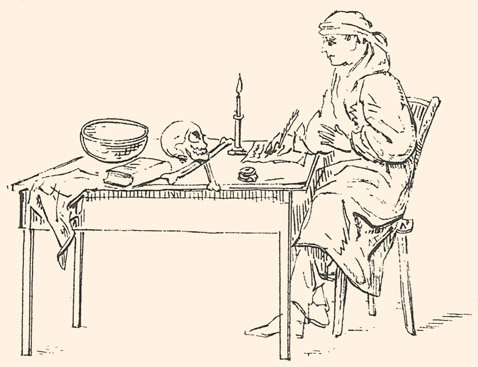
What is the best way or traditional way to use a chamber of reflection? If a Lodge does not have a chamber of reflection how can the Lodge configure a room to best incorporate the “feel” of the chamber of reflection?

According to the Grand Lodge of New York State:

The Chamber of Reflection is an idea that originated in French continental Masonry. As with many elements of French Masonry, this idea was borrowed by Albert Pike and described in his book “The Porch and the Middle Chamber: Book of the Lodge.” However, that book describes the workings of the three Craft Degrees and the Chamber of Reflection doesn’t seem to have caught on with the Ancient and Accepted Scottish Rite of Freemasonry (AASR). Craft Lodges and some Royal Arch Chapters do occasionally use a Chamber of Reflection and it does seem to be an idea that’s catching on. Overall it’s a good idea, as its primary effect is to create a beneficial psychological state in the Candidate that can make the experience more meaningful. Some Lodges use a Chamber of Reflection for the Entered Apprentice Degree, and some Lodges use different Chambers of Reflection for all three Degrees.

Understanding the foregoing, it doesn’t seem there is anything we could call a “traditional” Chamber of Reflection for a New York Lodge practicing our Antients-influenced Webb-Cross Ritual working. This has both advantages and disadvantages, and they’re the same: You can do whatever you want, within the bounds of propriety. What are the bounds of propriety? Primarily they’re the same as they are for all our Ritual practices, which forbid scaring, intimidating, or ridiculing Candidates, or anything else that might have a deleterious effect on the solemnity of our ceremonies. It’s also important to avoid symbols, words, practices, or other elements that borrow from or draw upon a Ritual lineage that differs from our own—which can be more challenging than one might think since most of what has been written about the Chamber of Reflection reflects a different Ritual tradition. So, no “V.I.T.R.I.O.L.,” no salt, sulfur, and mercury, no skeleton holding an arrow and dagger, no cockerel and hourglass, and so on.

If we can’t use those things, then what can we use? Anything that seems like it might be thought-provoking and in keeping with the New York Ritual tradition. Working Tools and cable tows; chalk, charcoal, and clay for the First Degree; corn, wine, and oil for the Second Degree, or perhaps a letter G. There are all sorts of things a Candidate might find curious in the Chamber or Reflection that will come to have significance as the Degree unfolds. The Chamber of Reflection could also include a piece of paper with a few questions for the Candidate to answer in writing—in which case I suggest it be sealed immediately without a reading and returned to the Candidate a the conclusion of the Degree. Or the Chamber of Reflection could simply be a dimly lit and quiet room where the Candidate can spend some time before the Masters of Ceremony brings him into the preparation room to knock on the inner door.

A Chamber of Reflection can also be a great time-saver if the Candidate is clothed and placed into the chamber just prior to the opening of the Lodge, in which case the Masters of Ceremony have only to bring him into the preparation room and apply the hoodwink. Needless to say, in such a circumstance the Candidate should have passed a ballot at a previous Communication—which should be a standard practice regardless. A Lodge should never ballot on a Candidate who has already shown up at the Lodge expecting to be Initiated.

Response provided by RW Samuel Lloyd Kinsey
Chairman, Custodians of the Work, Grand Lodge of New York
Note: This site is an excellent source of information about Freemasonry. While every effort has been made to provide accurate and up-to-date information about Masonic Ritual, please remember that a website is not a substitute for your jurisdiction’s Standard Work or Approved Ritual.
Samuel Lloyd Kinsey
Masonic Ritual – The Master’s Work

Masonic Ritual – The Master’s Work

MASONIC RITUAL

The Ritual – The Master’s Work


MASONIC RITUAL EXPLAINED BY THE CHAIRMAN OF THE CUSTODIANS OF THE WORK

What is the Master’s Work? How should a Brother be acknowledged when performing part of the Ritual?

In the Grand Lodge of New York,

The Master’s work consists of every part of the Ritual that is clearly designated for the Master as well as parts that are customarily delegated to another Brother, such as the Apron Presentation, the Working Tools, the questions in the Lecture of Forms and Ceremonies and the Lecture of Reasons, the Entered Apprentice and Master Mason Historical Lectures, and the Charges. A Brother to whom a portion of the Master’s Work has been delegated is the Worshipful Master at the time of his delivery for purposes of the Ritual. He should neither be announced by the East, nor salute nor acknowledge the East either before or after performing such Work.

Response provided by RW Samuel Lloyd Kinsey
Chairman, Custodians of the Work, Grand Lodge of New York

Note: This site is an excellent source of information about Freemasonry. While every effort has been made to provide accurate and up-to-date information about Masonic Ritual, please remember that a website is not a substitute for your jurisdiction’s Standard Work or Approved Ritual.
Samuel Lloyd Kinsey
Masonic Ritual – Printed Text

Masonic Ritual – Printed Text

MASONIC RITUAL

The Ritual – Reading Printed Text


MASONIC RITUAL EXPLAINED BY THE CHAIRMAN OF THE CUSTODIANS OF THE WORK

What parts of the Ritual can be read from a printed text?

Only the Prayers and Scripture Lessons, the Opening and Closing Charges, the Masonic Doxology and Pleyel’s Hymn, the Narrator’s part and Roll Call in the Drama of the Hiramic Legend, the Ceremony of Installation, the Memorial Service and the Committal Service may be delivered with the aid of printed texts. All other parts of the Ritual are to be delivered from memory.

Response provided by RW Samuel Lloyd Kinsey
Chairman, Custodians of the Work, Grand Lodge of New York

Note: This site is an excellent source of information about Freemasonry. While every effort has been made to provide accurate and up-to-date information about Masonic Ritual, please remember that a website is not a substitute for your jurisdiction’s Standard Work or Approved Ritual.
Samuel Lloyd Kinsey