More Masonic Books You Should Read from our Grand Historian

More Masonic Books You Should Read from our Grand Historian

MASONIC EDUCATION

Masonic Books You
Should Read

LINKS TO MASONIC BOOKS
FROM OUR GRAND HISTORIAN

Many moons if one wanted to find or read a Masonic Book or magazine, you had to find, then go to a Masonic Library to peruse their titles. I also haunted many used bookstores in my region, most of which are no longer in business. We had a very fine Library in Syracuse, but when the Syracuse Temple closed down in 1984 that library became the seed for the Museum of Our National Heritage in Lexington, MA, and the Greenland Collection now housed in the Utica Branch of the Robert R. Livingston Library. Soon after I was Raised, I went in search of More and Further Light in my Lodge only to find a small bookcase. I was looking for more, so I began with making inquiries, and by 1995 had acquired enough books to found the Onondaga Masonic Districts Historical Society (OMDHS), to be followed in 1998 by the Oswego Society. This was pretty much B.C. (Before Computers). Now our OMDHS Libraries in Liverpool and Phoenix now have over twenty bookcases filled with books, magazines, papers, and artifacts.

Thanks to the internet a new, vast resource is available. The only catch is sometimes the resource appears and in a relatively short amount of time, may no longer appear on the internet. This prompted me to begin capturing various resources of Masonic interests, and filing them on my hard drive and/or posting them on my Masonic Library website. In addition to sharing these resources on my website, a thumb drive of about 95GB of files has been forwarded for safekeeping to the Chancellor Robert R Livingston Library at the Grand Lodge of New York.

Who buildeth the Door upon which you must Knock?
What is you find when all Seas have been Crossed?

Needless to say there are tens of thousands of books and articles one could read or consult in one’s search for More and Further Light, so where does one begin or conduct one’s journey?’ In our recent Reading Room meeting, we shared a discussion on Wilmshurst’s, The Meaning of Masonry. That evening, it was noted that Wilsmhurst points to the hidden secrets in our Craft:

“Our teaching is purposely veiled in allegory and symbol and its deeper import does not appear upon the surface of the ritual itself. This is partly in correspondence with human life itself and the world we live in, which are themselves but allegories and symbols of another life and the veils of another world; and partly intentional also, so that only those who have reverent and understanding minds may penetrate into the more hidden meaning of the doctrine of the Craft. The deeper secrets in Masonry, like the deeper secrets of life, are heavily veiled; are closely hidden.
“They exist concealed beneath a great reservation; but whoso knows anything of them knows also that they are “many and valuable,” and that they are disclosed only to those who act upon the hint given in our lectures,
“Seek and ye shall find; ask and ye shall have; knock and it shall be opened unto you.”

Aside from Masonic books, there is a limitless resource of additional books, experiences, and insights available to the Seeker of Light. It is well for one to become mindful and aware of what transpires in each Here and Now of one’s journey. In doing so, one does not have to concern himself about what book to read or what experience to have, for they will slowly reveal themselves in due Order. From among the limitless resources, a small sampling of which may be seen at the OMDHS website, one may select one or more to which one may be drawn. Be sure to not always accept what you find as “absolute truth” but take it within you for that “truth therein you may find.” And slowly the diversity, the Duality, will shift toward the Unity to be found that rests wordlessly within.

Written by: R∴W∴ Gary L. Heinmiller, Grand Historian
Member of Liverpool Lodge #525, Liverpool, NY
Riverside Chapter RAM 260
Central City Council, Cryptic Masons 13
Trustee, The Chancellor Robert R Livingston Library of Grand Lodge
Founder & Archivist, Onondaga Masonic Districts Historical Society
Scottish Rite Research Society
American Lodge of Research
Finger Lakes Council, AMD
RW Gary Heinmiller

Masonic Books You Should Read

Masonic Books You Should Read

MASONIC EDUCATION

Masonic Books You
Should Read

FIVE TITLES TO ADD TO
YOUR MASONIC READING LIST

There are many sources of information on Freemasonry as well as the History of the Craft. If you looking to have a better understanding of the esoteric and hidden meanings behind the mystical principles within the Craft, we suggest these five books every Brother should read. These titles are widely available at your local library or bookstore. We have included Amazon links as a reference if you are interested in purchasing the titles online. Enjoy!

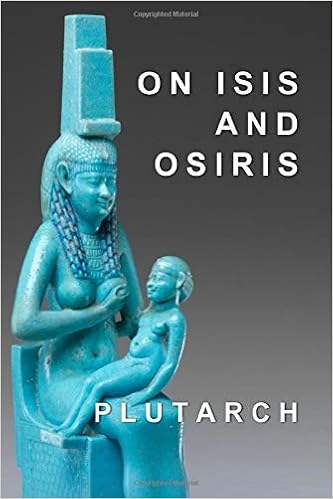
#1 — Plutarch, ISIS and OSIRIS

Plutarch was a well-known Greek philosopher, Historian, and Priest at the Temple of Apollo as well as an initiate of the mysteries; it is unfortunate that some Egyptologists disdain his works. His writings can interface the divergence pertaining to the Craft for those who have eyes to see.

From Amazon… The Osiris myth is the most elaborate and influential story in ancient Egyptian mythology. It concerns the murder of the god Osiris, a primeval king of Egypt, and its consequences. The myth, with its complex symbolism, is integral to the Egyptian conceptions of kingship and succession, conflict between order and disorder, and especially death and the afterlife. It also expresses the essential character of each of the four deities at its center, and many elements of their worship in ancient Egyptian religion were derived from the myth.

#2 — Apuleius, METAMORPHOSES OR GOLDEN ASS

It is said the works of Apuleius contain mystical anecdotes concerning the consolidation of the Soul and spirit. Some believe that the works of METAMORPHOSES contain the secret rites of the Egyptians. This has comparisons/allusions to masonic allegory, myth, and ritual.

From Amazon… This tale of a man who, when tinkering with magic, becomes changed into an ass is one of the most entertaining and remarkable stories from classic Latin literature. Within this account of these adventures, Apuleius (c124-c170 CE) places ribald stories which are more familiar through retellings by Boccaccio and Chaucer. But there are also passages of considerable literary beauty, particularly in the extended account of Cupid and Psyche.

#3 — THE HERMETICA

Considering there is an interesting parallel between the names of Hermes and Hiram, some believe the Hermetic philosophical writings are imbued in the Masonic tradition. The works of Hermes are the foundation of all esoteric arts. Hermetica provides an intro to Hermetic Philosophy for newly raised Brothers.

From Amazon… The figure of Hermes was venerated as a great and mythical teacher in the ancient world and was rediscovered by the finest minds of the Renaissance. Providing a fascinating introduction to the intersection of the Egyptian and Hellenic cultures and the magico-religious ideas of the antique world, The Hermetica is a marvelous volume for anyone interested in understanding the West’s roots in mystical thought.

#4 — George H. Steinmetz, (THE LOST WORD ITS HIDDEN MEANING

This book is excellent especially for newly raised Brethren to start their Masonic journey. The foreword was written By Manly P Hall.

From Amazon… This scarce antiquarian book is a facsimile reprint of the original. Due to its age, it may contain imperfections such as marks, notations, marginalia, and flawed pages. Because we believe this work is culturally important, we have made it available as part of our commitment to protecting, preserving, and promoting the world’s literature in affordable, high-quality, modern editions that are true to the original work.

#5 — Robert Hewitt Brown, (STELLAR THEOLOGY & MASONIC ASTRONOMY

This work is a top-choice book to have in your private library. The book describes the origins and symbols within the craft, utilizing zodiacal elements connected to astrology within Masonic ritual. If you have a basic understanding of Astrology, I highly recommend this book.

From Amazon… This volume contains an explanation of Masonic astronomy, symbols, astronomical facts, astronomical explanation and more.


Written by: Bro. Rene Perez, George Washington Lodge #285, Manhattan, NY
Member of RAM Nassau Chapter 109, Columbian Council No. 1, and the Valley of New York Scottish Rite.

Bro Rene Perez

The Five Elements and Five Senses

The Five Elements and Five Senses

MASONIC EDUCATION

The Five Elements and Five Senses

FREEMASONRY AND MASONIC SYMBOLISM

In Freemasonry, there always seems to be a rhythm or correlation with any number of things. It seems to nearly never fail for the Craft to line up with all things Hermetic, Kabalistic, mystical, or beyond. Whether or not ‘modern’ Ancient Craft Masonry came from the ancient knowledge found prior to antiquity is a subject of debate. However, it does typically fall right into place with it and is unquestionably related.

As we were passed through the degrees of Masonry, we were introduced to esoteric and numerical studies, during our journey some of their meanings are explained. As we travel through the (B) and (J) pillars, we begin to ascend the flight of winding stairs. We first come upon three steps of which have an infinite amount of explanation based on the number three. However, we are taught they primarily represent the three main officers of the lodge: Junior Warden, Senior Warden, and Worshipful Master.

As we continue along, we come upon a set of five steps. Along with the five orders of architecture, each one represents one of our five primary senses. They are labeled hearing, seeing, feeling, smelling, and tasting. We are taught in one particular degree to primarily focus on the first three senses but as searchers of further light, there is usually a way to correlate similarities with numbers in Masonry and beyond. These five senses are what we utilize to study the seven liberal arts we are later introduced to in the lesson.

In some of the more esoteric Masonic and non-Masonic groups, we are introduced to the four primary elements of the Hermetic and Kabalistic sciences. They are earth, water, air, and fire. While many other teachings, such as eastern religions, utilize the same and different elements, I will stick with what our Masonic related groups teach.

Based upon my initiatory experiences and with some research, I found that there is a less known fifth element or Quintessence. According to Dr. Israel Regardie, the fifth element of spirit crowns and connects the other four. [i][i] This is a culmination of all the elements. One primary difference with this element is that it cannot stand alone as the others do. It is essential that the other four elements are ‘present’ and in alignment have an understanding of the fifth element.

As receivers of light often found in the blue lodge (but more often overlooked) and beyond, we are encouraged to learn and become familiar with numerology. In some of the first lessons taught, we are informed of the many meanings of different numbers but specifically here the number five. In one of our degrees as mentioned above, the number five is alluded to in regards to the five senses (and five pillars) and we are taught that when we are fully in sync with ourselves and our surroundings, we can get by without any of our senses, spiritually speaking. In Masonry, the five senses are much needed. Touch whereby one Mason may know another in the dark as well as in the light. Sight utilized whereby we see certain signs of recognition given to us or symbols as well. Hearing to hear the word of a brother mason, to also hear music as a part of some lodges ritual. Taste to rejoice among brethren in fellowship with fine food and drink. Smell when we have our ceremonial incense burning in the Lodge to help center our minds and bodies.

🜁
AIR & HEARING

In some Masonic traditions, the element of air is represented as intelligence and/or spiritual growth as well. During the creation days, it was God that breathed into a man’s nostrils and made us in His likeness. With air travels sound. From our time in the womb to our last moments on earth, we primarily hear sound through the air. Also through the air is played one liberal art that is perhaps the most recognizable and it is that of music.

Hearing in Masonry and other ritualistic orders is perhaps the primary means of communication. Whether whispering good counsel or carefully scripted, deeply esoteric lines of a ritual, the sound traveling in the air to our ears to be heard is everywhere. Air is represented by the east, as it is from the east we receive most of our Masonic lessons. We are given our obligation from the east and admonished as well as other communications. The sense of hearing and air go hand in hand with gaining knowledge and spiritual growth.

It is not so much to simply say certain words but to forcefully vibrate them out as to really push the sound waves through the air. As with our sense of smell, we often never see any of the day to day things we hear. From car horns and ambulances to other people’s conversations, the air is filled with constant sounds.

Perhaps no phenomenon in nature is as common and powerful as air. It is a driving force and a symbol of determination. In nature, wind storms, tornados, and hurricanes have no rivals except themselves in destructive power. These forces of air carry with them thunder, howling winds, and crashing noises of destruction. Air can also be gentle, cooling, and bring in clouds of life-supporting rain. It can tenderly blow a wind chime or be pushed through a musical horn or woodwind to produce a beautiful sound. If harnessed correctly and brought under control, it can carefully steer a sailboat, generate energy, or lift a 700,000 pound 747 jet airliner. Air can blow out fires, dry water, and shift the earth. As Masons or students of the Hermetic sciences, when we hear the winds coming, it is necessary to be able to harness and control these opportunities of learning something new or growing spiritually.

🜂
FIRE & SMELL

In the Masonic tradition, the element of fire is a symbol of life and destruction. In the Winter Solstice Ceremony for Masonry, it is symbolic of creation and energy; a new beginning and life. In tarot and other studies, fire is represented as passion and change, whether good or bad. In alchemy, fire is often associated with sulfur, one of the most potent and distinct smelling chemicals on planet Earth. Fire is represented in the south; the opposite of the cold, dark north.

In Masonry, as mentioned previously, one of the senses less talked about is that of smell. Smell is often one of our first senses to be activated during certain situations. It is also one that could be considered quite subconscious yet if something triggers your sense of smell enough, it can be one of the most difficult to ignore.

When a fire is created, we usually smell it far before we see, hear or feel it. Whether literally or figuratively, we often sense the smell of smoke, that all too recognizable smell of sulfur, or worse yet, the ‘smell of death.’ On the other hand, fire and smell can have positive meanings as well. In the culinary arts, we often smell what we are going to be eating before we ever see or taste it. As with fire, our sense of smell senses a sign of new beginnings, love, and passion, physical attraction towards (pheromones) another, or the very familiar smell of a newborn baby.

Our sense of smell often allows us to sense what is beyond our other senses, even hearing. It can also be right in front of us as we “stop and smell the flowers” as to live in the moment. As mentioned above, you can smell fire miles away and know that there are likely dangers and destruction. But you can rest assured, it is also a new beginning in the making as well.

🜄
WATER & TASTE

In the Masonic tradition, the element of water is represented as emotion and intuition, and according to Cicero[ii][ii], it has creative, subconscious, or mysterious qualities. As for taste, having ‘good taste’ is perhaps all of these things. It is that natural ability to make good choices, react accordingly, without thinking. It is also the ability to see the beauty and everyone else in the room would likely agree. It is a subconscious ability to have a positive awareness of what everyone else likely should see or does see in something. Having those water qualities means you are fluidic in that not only do you have good decision-making abilities, but that you also can adapt and see the hidden beauty in almost everything.

As Masons, we should have the ability to be fluid in most scenarios. If we are demanding to be free and accepted ourselves, we must also be accepting of others as well. As Masons, we are curious about the ancient mysteries, both esoteric and exoteric. From the west is water and fittingly so as it slows the fires our minds for rest. The west is where the sun sets every day. The search for more light from the east is then allowed to be pondered and meditated over. As water is passive and feminine, it is utilized best as a time to contemplate those fiery desires for knowledge.

One tradition that has been long forgotten in our day to day lives of traffic, work, and fast food is the slow consumption of our foods. As a whole, we eat more than ever in the history of mankind yet we enjoy our food less than we ever have. We often miss the taste of every nuance in a fine dish we are eating and therefore that likely reflects on our lives for the most part. We tend to not let our minds wander into our subconscious due to busy schedules. If we are missing those moments, it’s likely due to bad taste.

🜃
EARTH & TOUCH

In the Masonic tradition, the element of earth is represented as grounding, stabilization, or material. This is the element often looked at as the element that really houses all of the aforementioned elements. The earth element is the basis of knowledge, things learned, which allow for further spontaneous/passionate (fire), logical (air), or emotional (water) abilities in our mind and spirit. It is our day to day life. It is what we can see, smell, hear, taste, and most importantly touch. Being earthbound in a philosophical way is a less than desirable way to grow spiritually. However, it is the earth element and our physical beings that essentially make us up. While water can be touched and even held, it is more fluid and will change immediately. As for earth qualities, it is malleable, but not as much as air and water, and is nowhere near as inspired as fire. The earth is under our feet and is all we can touch.

Earth is represented from the cold north. It is also represented with the color black and therefore represents our lack of ‘light’. We are too concerned about gadgets, money, and other items we must have in our possessions to be anywhere other than in complete darkness. While it is the earth element that houses the others and is the basis for our growth, it is a virtue to have stability underneath us. It is the basis for all Masons to be physically born in darkness and to have to put away the possessions we hold close. We are even asked at one point to deposit a physical, metal item for archival reasons into our lodges. This helps us be able to give something up of a physical nature.

Being grounded to the earth to a fault can be a problem. As we can feel earthquakes underneath our feet if our Earth below us is toiling, so should we feel the earthquakes within ourselves if we are toiling inside. This toiling is often what pushes us towards any number of belief systems or to even begin our journey into Masonry. It is important to understand the positives and negatives of the earth element as it can keep us from ever-growing but always allows our acacia to grow.


SPIRIT & SIGHT

In the Masonic tradition, the element of spirit is a symbol of purity and is, more or less, a culmination of all of the other four elements. It is typically less spoken about or even recognized by many students of the ancient mysteries. It is so invisible; it is less visible than air itself yet as Masons we are constantly looking for it. It is nowhere yet everywhere. It is made up of all four elements yet none of them are specifically it. Spirit can also be called Quintessence or aether as well.

It’s the similarity to air that is relevant since air is represented in the east, the place we are constantly traveling. As seekers of light, it is a sight that we use most literally but figuratively as well. From the dawn of man until now, we have peered into the skies pondering questions of our existence. From worshiping the sun and moon or looking into the heavens for God’s answers, we are constantly looking for the light or spirit.

As humans with sight, we often have to ‘see it to believe it’. As seekers, we know we won’t see it with our physical eyes but with our wisdom and studies. Some believe the ‘third eye’ concept which allows for deeper meditation and understanding of things around us. As we bow our heads and pray, we usually close our eyes. This is most likely due to the closing of our ability to actually see but utilize more of our inner sight. In Masonic lodges, we are ceremoniously given light, more light, and further light by having our hoodwinked removed. Having a requirement to believe in a higher power, a GAOTU, this ritual alludes to the great light. To our ancestors, it may have simply been the sun. To us, it could be a multitude of belief systems.

If all things are of the aether element, then on an earthly level we see and detect signs from the universe such as numerology and things we often call coincidental. We use our sight to gain more knowledge that can be transferred into logic and wisdom.

My studies have led me to believe that in Lodge, the spirit is represented in the middle of the room. The other elements are represented directionally, but not spirit. As indicated in specific grades of at least one appendant body of Masonry, our “spirits” are positioned in a place of no direction but all directions, facing the east looking for light. Spirit is inside all of these elements and makes up the space each one of them lacks in.

It is often represented with a circle and this symbolizes the infinity of the spirit and how it is all things. It is also represented in the pentagram as the apex point of the star. In Masonry, we are caused to kneel at an altar and give a prayer. The VSL is also in the middle of the lodge as a rule and guide for us as Masons. This is fittingly so as it represents the place our spirit is. Our sight is taken away from us until a certain point and then as mentioned before, the hoodwink is removed for us to see the light.

The element of Quintessence has all of the features of the other elements. It is very logical and intelligent as with air yet as simple and grounded as the earth element. It is very emotional and soft as water yet powerful and scorching as fire. It is highly represented in Masonry but rarely if ever, talked about. It is the “light” we are constantly seeking.

PRACTICAL FREEMASONRY

The study of the aforementioned and our craft is not exclusive to Blue Lodge and can be explored via many avenues. Much literature has been written about the subjects and can be interpreted in an endless amount of ways. Also, much of what we learn is obtained from within through meditation and self-study. There are many Masonic appendant or concordant bodies that subscribe to these schools of thought as well as non-Masonic bodies that are considered more “fringe Masonry” but have just as much value as actual Masonic institutes. Incorporating the elements, senses, and sciences into our daily lives can further shape our ashlars into that perfect stone we are striving to have.


[i][i] Regardie, Israel (1938). The Middle Pillar: The Balance Between Mind and Body Ch. 9, pg. 185

[ii][ii] Cicero, Chic (2003) The Essential Golden Dawn Ch. 4, pg 117

Submitted by Bro. J. Clint Lewey, Fairport-Flower City Lodge #476 (Fairport, NY)
Bro. Lewer was raised at Edmond Lodge #37 in Edmond, OK, and is currently a member of Fairport-Flower City Lodge #476, Hiram Royal Arch Chapter #62, AMD Genesee Council #51, and SRICF New York College-Buffalo.

Bro. J. Clint Lewey

Top 5 Best Wine/Bubbles For Valentine’s Day

Top 5 Best Wine/Bubbles For Valentine’s Day

GENTLEMEN’S GUIDE

Top 5 Best Wine/Bubbles for Valentine’s Day

OUR AFICIONADOS GUIDE TO A ROMANCE

Hey there again my brothers and friends, if you are looking for some ideas on how to start or finish your perfect Valentine’s Day night, here are some great ideas. I will give you my top 5 ideas to help you have the perfect beverage selection for your special night. I have had the pleasure of working for some very large and prestigious companies. They include Moet Hennessey, Diageo, and currently, I am working for Fetzer Vineyards as a Regional Manager for Upstate NY. The below suggestions are in order by price point from lowest to highest but all are amazing. Do not get prosecco LOL, it is so 2020!

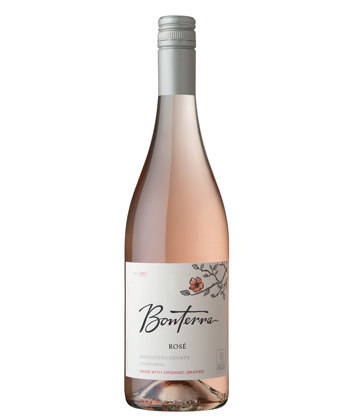
The first beverage suggestion is Bonterra Rose. This wine is sold in almost every liquor store in the world. It is Organic and Vegan. Now you are probably asking yourself, why would a wine not be vegan? I assure you that wine producers are not putting meat in your wine. Almost all wine needs to be filtered before it goes into the bottle, and this is usually done by using egg whites. Bonterra rose has a perfect pink package, light and balanced acidity, with amazing flora notes, without being too sweet. It is a great way to start out your evening. It is a wine that you can enjoy with or without food, which is why I love to start my evenings with a fabulous rose. This rose also comes in three sizes so perfect for two or great for a party. You can get 4 250ml cans for under $20.00 a 750 bottle for around $15.00 and 1.5-liter bag in the box for around $22.00

Next is Rose Regale Brachetto from Banfi. This also can be found almost anywhere and comes in two sizes. This wine has just a touch of bubbles but a much darker color than the Bonterra. It has a great package, really soft and lush mouthfeel. It has a full red ruby color and it is a great way to start out your night as well or with a light snack. The 187ml split around $9.00 and the 750ml is around $20.00 give or take a buck.

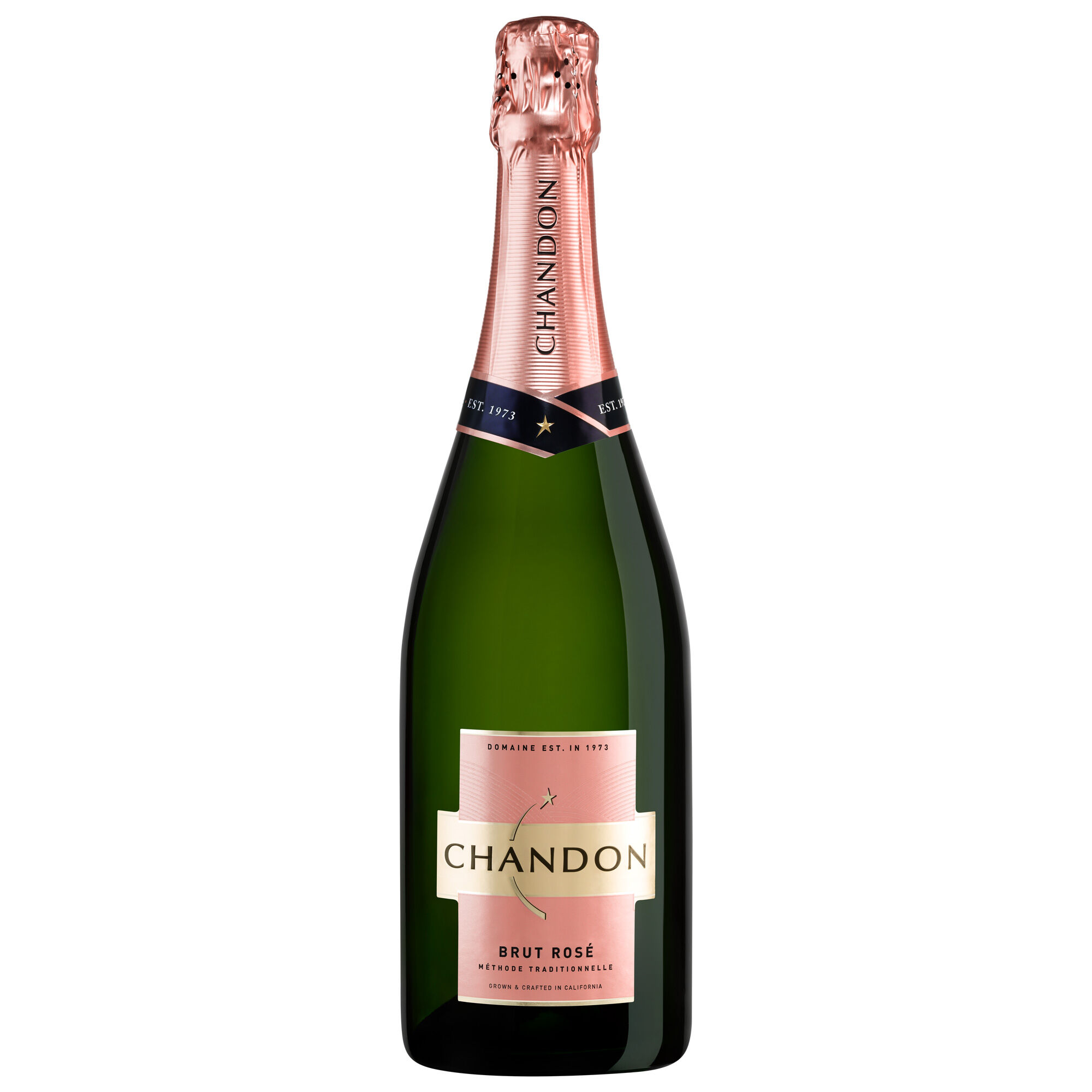
My third pick is now going to up in price and up in quality because it is a Sparkling wine made in the Champaign method. Chandon Rose from Moet is a great choice as well. One because it also has a great flavor profile, and two because it is made impeccably. Now we need to first explain why this wine is considered a sparkling wine and not Champagne. For any sparkling wine to be called Champaign it needs to be made with a second fermentation in the bottle and be made in the Champagne region of France. Chandon has perfect balance, soft but vibrant fruit flavors, and comes in a 187ml as well as 750ml. The 187ml is around $9.00 and the 750 is around $24.00. This is what makes this a great trade up that is not too dry but not too sweet, with a great package.

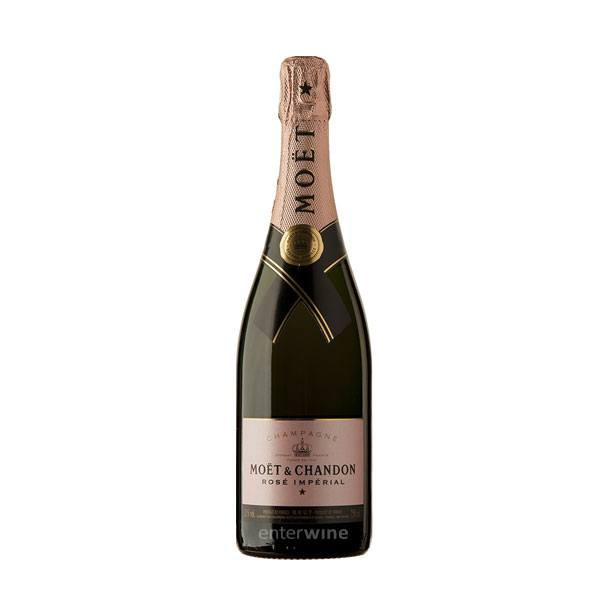
Number four on our list is the real deal Champaign. Moet and Chandon Rose, is one of my all-time favorites. It comes in a 750ml and 187ml just like the above. However, this is the first on our list that is made in France and in the above mentioned traditional method. This Chardonnay, Pinot Meunier, and Pinot Noir are just perfect all-around at this price point. The flavor is clean, crisp, and the package just screams out romance. The 187ml is around $18.00 and the 750ml can be purchased at most liquor stores in the mid $50.00 range.

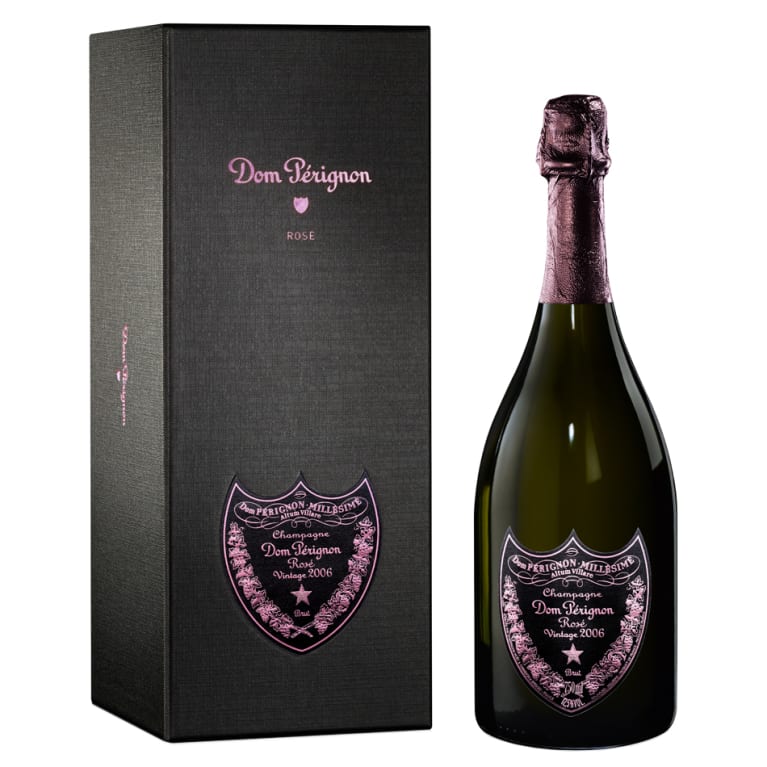
I saved the best for last, it is truly the best of the best in my opinion. Don Perignon Rose is hands down, the only way to celebrate something extra special. DP has put 100% rose in the bottle from France and perfected how to make this liquid. The bubbles are so small you can feel each of them individually on your pallet. There are collectors that will buy the empty box and bottle after you have enjoyed it. Due to many collectors and limited numbers of bottles made each year the price is anywhere from $300 to $400, so this is not your everyday beverage. But that being said when you do have a reason to celebrate and the means to open one of these bottles of pure joy, you will not be disappointed.

I hope these suggestions aid in your search for that perfect Valentine’s toast. Please enjoy responsibly!

Written by WB Anthony Prizzia
Adonai Lodge #718
Member of Cyprus Shrine, Oriental Shrine, Ulster County Shrine Club, Valley of Albany A.A.S.R, Poughkeepsie Chapter 172, Poughkeepsie Commandery 43, Royal Order of Scotland.

A Message from the Grand Lecturer

A Message from the Grand Lecturer

FAITH. HOPE. CHARITY.

A MESSAGE
FROM THE
GRAND
LECTURER

RW Rich Friedman

Monday, December 21, 2020

My dear Brothers,

To begin with, I hope all of you are enjoying the holiday season in whatever way you enjoy it.

This is one of the hardest things that I have ever done in a lifetime filled with hard things.

My Brothers, I have Stage 4 kidney failure. The great transplant team that I am working with highly recommends transplant over dialysis and the statistics bear that judgment out.

I am writing to you today to see if any Brothers would enter the process of being matched for a potential kidney donation. Matching is no commitment to following through but it increases the pool of candidates who may donate and qualify to do it.

The process involves doing screening wherever you are including some blood work. If you pass that hurdle then there would be further testing done to ensure that you are healthy enough to donate without harm to you. All of this is at no cost to you.

If you are interested in getting matched the first step is to call the Strong Memorial Transplant team, choose option 1, and ask to speak to a donor coordinator and they will take it from there. I was born in 1954.

My Brothers, I cannot tell you how proud I am to belong to a Brotherhood that will try to help a Brother the best it can. I know this is a hard ask, as much for me as it might be for you. I am hard to kill, and my spirit is 100% GUNG HO!!!!

Feel free to contact me by phone or email.

Just the fact that read this note makes me proud of all of us as Brothers.

God bless you all,

Gung HO!

RW Rich Friedman, Grand Lecturer