Beyond Ritual – Traveling with the Masters Word

Beyond Ritual – Traveling with the Masters Word

MASONIC RITUAL

Beyond Ritual

Traveling with the Masters Word

Brethren of the Craft, today we embark on a profound journey, delving into the intricate symbolism that lies at the heart of Freemasonry. As we navigate through the enigmatic depths of our cherished fraternity, we shall unveil the profound significance concealed within the question: “What induced you to become a Master Mason?” This query’s response holds layers of symbolic meaning that lead us through the sacred passages of our time-honored traditions.

In the rich tapestry of Freemasonry, we are reminded that our voyage is not limited to the  physical realm. Rather, it constitutes a symbolic odyssey, guiding us towards self-improvement, enlightenment, and dedicated service to humanity. The words, “To obtain the Master’s word, travel in foreign countries, work and receive Master’s wages…” encapsulate profound and multi-faceted truths.  

In the context of Freemasonry, the response to the question elicits several profound symbolic explanations. The aspiration of ancient Brethren to become Masters was driven by the quest for the Master’s word, which acts as a metaphorical key to unlock the ability to “travel in foreign countries.” This answer resonates on different levels. First, gaining the Master’s word signifies a pivotal achievement, akin to a passport that grants access to explore the intricate and diverse realms within Freemasonry. Just as a traveler explores foreign lands with different customs and cultures, Masons delve into the domains of philosophy, history, and symbolism within the Craft.

Importantly, at the core of this response resides the concept of “the Word.” Our Masonic  heritage regales us with tales of a Word of profound significance, known only to a select few but eventually lost to the annals of time. This Word, my brethren, is far from a mere sequence of letters; it embodies divine truth and knowledge, once imparted to the patriarchs of humanity. As Freemasons, our calling entails the pursuit of this elusive truth, to uncover the profound wisdom concealed beneath the surface.  

Symbolically, this Word stands as a beacon of Divine Truth, guiding our Masonic voyage. In  much the same way that a traveler immerses themselves in the intricacies of foreign lands, we  Masons immerse ourselves in the domains of philosophy, history and symbolism as alluded to  earlier. Our journey takes diverse forms – from the Entered Apprentice to the Fellowcraft and  culminating in the Master Mason – each degree marking a step towards enlightenment. Our  pursuit extends beyond mere knowledge acquisition, transforming into a quest for self-discovery and the embodiment of virtue. 

Symbolically “traveling in foreign countries” encapsulates a journey through distinct territories of  knowledge within Freemasonry. These realms are enriched with philosophical insights, historical perspectives, and profound symbolism – each presenting a unique facet of the Masonic experience. With the Master’s word as our guide, we gain entry into these symbolic lands of enlightenment. 
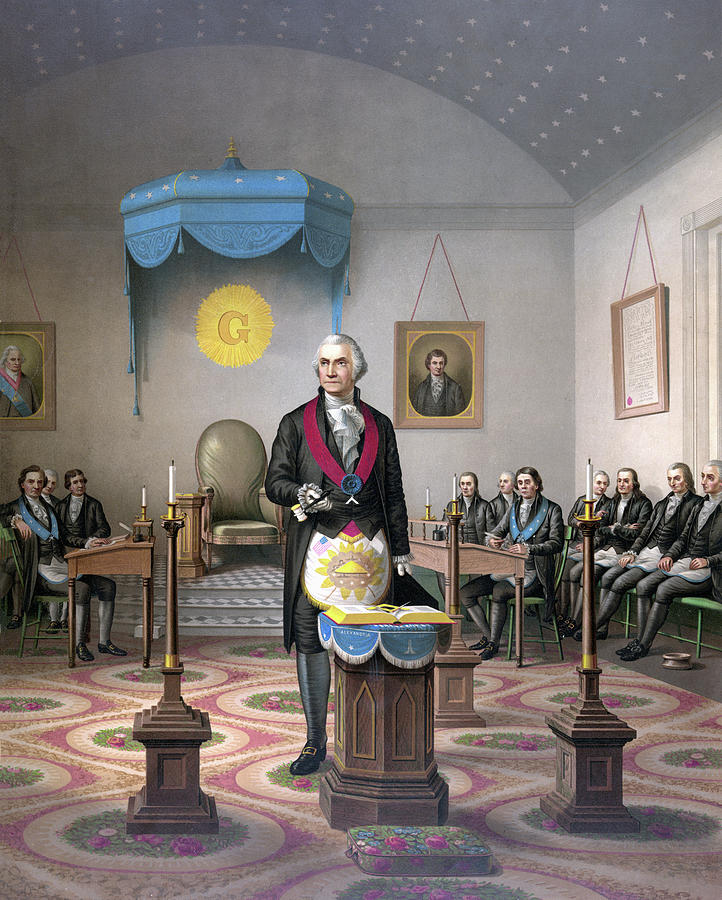
Within this journey, we encounter challenges akin to those encountered by travelers in foreign  lands. Just as a sojourner faces hurdles, we, too, encounter trials. The portrayal of old age and death in the Master Mason degree serves as a reminder that our earthly existence is  ephemeral, and the pursuit of absolute truth may elude us. However, solace can be found in the substitute for the lost Word, a guiding light to wisdom, urging us to await the time when perfect understanding shall be attained.  
Our Masonic voyage, however, extends beyond the confines of our earthly journey. The symbolism alludes to a life beyond the grave, where the recovery of the Word symbolizes a  state post-mortality. This suggests that true enlightenment finds its ultimate fulfillment beyond  the limitations of our earthly existence. Our labor, our unwavering search for the Word,  transforms into a form of worship, a dedication to the pursuit of divine truth. The concept of “to work and receive Master’s wages” transcends mere monetary exchanges; it embodies the acquisition of knowledge and wisdom within the context of Freemasonry. 

These teachings empower us not only for personal betterment but also to excel as husbands,  fathers, sons, brothers and active community members. Armed with the wisdom of our Craft, we become agents of upliftment for ourselves and those around us. While the latter part of the Masonic ritual underscores the importance of supporting ourselves, our families and the Masonic community more broadly – particularly those in need – this assistance encompasses more than mere financial aid. It underscores our duty to apply Masonic teachings, becoming steadfast pillars in our communities, extending compassion and care to fellow Masons, their widows, orphans, and those facing adversity. 

In essence, the Masonic journey mirrors the symbolic framework we’ve explored. The  acquisition of the Master’s Word empowers us to “travel in foreign countries,” embarking on  meaningful explorations into diverse domains of knowledge, achieving enlightenment and  strengthening ourselves and our communities. As Master Masons, we heed this symbolic call –  to enrich ourselves with the Master’s Word and to embark on these profound transformative journeys.  

It is worth noting that our ancient operative Brethren aspired to become Masters to practice their craft while traveling in literal “foreign countries.” In a speculative sense, Freemasons desire to “travel in foreign countries” to study and explore their craft. However, these “foreign countries”  hold a distinct meaning for us – they symbolize the various aspects of Masonic knowledge, philosophy, history, and symbolism awaiting discovery within the fraternity. 

In conclusion, Brethren, our journey within Freemasonry is a profound and intricate one. The  symbolism inherent in the Word instructs us to seek divine truth, to traverse the uncharted  realms of knowledge, and to labor diligently for personal enlightenment and the upliftment of our  families and communities. The pursuit of light becomes our mission, and through the pursuit of  knowledge, we unearth the profound depths of Freemasonry’s allegorical nature.

Let this wisdom serve as a guiding Light on your Masonic voyage. Let us remember that our true reward is not solely found in words or rituals, but rather in our personal growth,  enlightenment, the impactful contributions we make as Freemasons, and the indissoluble bonds of Brotherhood that are formed as a derivation of our travels. In our unwavering quest for divine truth, let us continue to plumb the limitless depths of our Craft, tirelessly striving to enhance ourselves and our world.

Written by:

John Pasqualicchio, Master Adonai Lodge #718, Highland, New York

Jason Short

Masonic Ritual – When to give Sign of Fidelity

Masonic Ritual – When to give Sign of Fidelity

MASONIC RITUAL

The Ritual – Sign Of Fidelity


MASONIC RITUAL EXPLAINED BY THE CHAIRMAN OF THE CUSTODIANS OF THE WORK

When should the Sign of Fidelity be given?

In the Grand Lodge of New York,

The Sign of Fidelity is required to be given during Work at the Altar, during prayer, whenever directly addressed, either collectively or individually, by an officer of higher rank, and whenever addressing the same. It is only to be given by Masons who are wearing an Apron. The Sign of Fidelity is not required for general declarations, or for ordinary discourse while the Lodge is seated. Candidates do not give this sign while receiving their Degrees.

The answers provided here reflect GLNY customs, rules, and ritual. We welcome discussion about how these may differ in your jurisdiction.

Response provided by RW Samuel Lloyd Kinsey
Chairman, Custodians of the Work, Grand Lodge of New York

Note: This site is an excellent source of information about Freemasonry. While every effort has been made to provide accurate and up-to-date information about Masonic Ritual, please remember that a website is not a substitute for your jurisdiction’s Standard Work or Approved Ritual.
Samuel Lloyd Kinsey
Masonic Ritual – Conducting During Degrees

Masonic Ritual – Conducting During Degrees

MASONIC RITUAL

The Ritual – Conducting During Degrees


MASONIC RITUAL EXPLAINED BY THE CHAIRMAN OF THE CUSTODIANS OF THE WORK

Other than conducting, why are we not allowed to touch candidates during Degrees?

In the Grand Lodge of New York,

Why would we need to touch them other than for the purpose of conducting? Don’t forget that conducting can include assisting the Candidate in kneeling and rising as well as adjusting a Candidate’s Ritual garb if he is improperly clothed. Generally speaking, we don’t touch hoodwinked Candidates during Degrees except for the purposes of conducting because… well, it’s pretty creepy to have some unknown guy pawing you when you’re blindfolded. In cases where a hoodwinked Candidate needs some sort of direction, the conductor or Senior Deacon can simply whisper in his ear. It’s also helpful when Candidates are given some “advance preparation” on a few elements of the Ritual where they often struggle, such as making sure they know the names for the three parts of his feet and have some basic idea as to what sorts of things he might be asked to do with them. This can do much to eliminate any possibility that a Brother might feel it was useful or necessary to touch a Candidate below the waist or in any way other than those embraced by the duty of conducting.

The answers provided here reflect GLNY customs, rules, and ritual. We welcome discussion about how these may differ in your jurisdiction.

Response provided by RW Samuel Lloyd Kinsey
Chairman, Custodians of the Work, Grand Lodge of New York

Note: This site is an excellent source of information about Freemasonry. While every effort has been made to provide accurate and up-to-date information about Masonic Ritual, please remember that a website is not a substitute for your jurisdiction’s Standard Work or Approved Ritual.
Samuel Lloyd Kinsey
Masonic Ritual – Open Ritual Book

Masonic Ritual – Open Ritual Book

MASONIC RITUAL

The Ritual – Open Ritual Book


MASONIC RITUAL EXPLAINED BY THE CHAIRMAN OF THE CUSTODIANS OF THE WORK

 Can an open Ritual Book be used to provide cues when the Lodge is at Labor?

In the Grand Lodge of New York,

No, this is expressly discountenanced. What can be used to provide cues is a Monitor, which is a special book that includes only the exoteric—which is to say neither secret nor exoteric/private—portions of the Ritual. The Grand Lodge of New York hasn’t had a true Monitor for around thirty-five years, but the Custodians of the Work have one prepared for publication that only awaits approval of some minor adjustments to some of the public ceremonies.

Response provided by RW Samuel Lloyd Kinsey
Chairman, Custodians of the Work, Grand Lodge of New York

Note: This site is an excellent source of information about Freemasonry. While every effort has been made to provide accurate and up-to-date information about Masonic Ritual, please remember that a website is not a substitute for your jurisdiction’s Standard Work or Approved Ritual.
Samuel Lloyd Kinsey
Masonic Ritual – Chamber of Reflection

Masonic Ritual – Chamber of Reflection

MASONIC RITUAL

The Chamber of Reflection

MASONIC RITUAL EXPLAINED BY THE CHAIRMAN OF THE CUSTODIANS OF THE WORK

What is the best way or traditional way to use a chamber of reflection? If a Lodge does not have a chamber of reflection how can the Lodge configure a room to best incorporate the “feel” of the chamber of reflection?

According to the Grand Lodge of New York State:

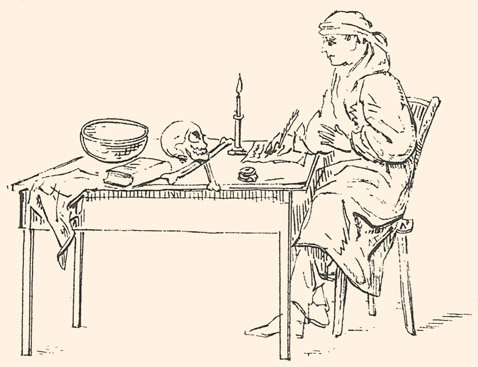
The Chamber of Reflection is an idea that originated in French continental Masonry. As with many elements of French Masonry, this idea was borrowed by Albert Pike and described in his book “The Porch and the Middle Chamber: Book of the Lodge.” However, that book describes the workings of the three Craft Degrees and the Chamber of Reflection doesn’t seem to have caught on with the Ancient and Accepted Scottish Rite of Freemasonry (AASR). Craft Lodges and some Royal Arch Chapters do occasionally use a Chamber of Reflection and it does seem to be an idea that’s catching on. Overall it’s a good idea, as its primary effect is to create a beneficial psychological state in the Candidate that can make the experience more meaningful. Some Lodges use a Chamber of Reflection for the Entered Apprentice Degree, and some Lodges use different Chambers of Reflection for all three Degrees.

Understanding the foregoing, it doesn’t seem there is anything we could call a “traditional” Chamber of Reflection for a New York Lodge practicing our Antients-influenced Webb-Cross Ritual working. This has both advantages and disadvantages, and they’re the same: You can do whatever you want, within the bounds of propriety. What are the bounds of propriety? Primarily they’re the same as they are for all our Ritual practices, which forbid scaring, intimidating, or ridiculing Candidates, or anything else that might have a deleterious effect on the solemnity of our ceremonies. It’s also important to avoid symbols, words, practices, or other elements that borrow from or draw upon a Ritual lineage that differs from our own—which can be more challenging than one might think since most of what has been written about the Chamber of Reflection reflects a different Ritual tradition. So, no “V.I.T.R.I.O.L.,” no salt, sulfur, and mercury, no skeleton holding an arrow and dagger, no cockerel and hourglass, and so on.

If we can’t use those things, then what can we use? Anything that seems like it might be thought-provoking and in keeping with the New York Ritual tradition. Working Tools and cable tows; chalk, charcoal, and clay for the First Degree; corn, wine, and oil for the Second Degree, or perhaps a letter G. There are all sorts of things a Candidate might find curious in the Chamber or Reflection that will come to have significance as the Degree unfolds. The Chamber of Reflection could also include a piece of paper with a few questions for the Candidate to answer in writing—in which case I suggest it be sealed immediately without a reading and returned to the Candidate a the conclusion of the Degree. Or the Chamber of Reflection could simply be a dimly lit and quiet room where the Candidate can spend some time before the Masters of Ceremony brings him into the preparation room to knock on the inner door.

A Chamber of Reflection can also be a great time-saver if the Candidate is clothed and placed into the chamber just prior to the opening of the Lodge, in which case the Masters of Ceremony have only to bring him into the preparation room and apply the hoodwink. Needless to say, in such a circumstance the Candidate should have passed a ballot at a previous Communication—which should be a standard practice regardless. A Lodge should never ballot on a Candidate who has already shown up at the Lodge expecting to be Initiated.

Response provided by RW Samuel Lloyd Kinsey
Chairman, Custodians of the Work, Grand Lodge of New York

Note: This site is an excellent source of information about Freemasonry. While every effort has been made to provide accurate and up-to-date information about Masonic Ritual, please remember that a website is not a substitute for your jurisdiction’s Standard Work or Approved Ritual.
Samuel Lloyd Kinsey