Secret History of New York Freemasonry

Secret History of New York Freemasonry

MASONIC HISTORY

The Secret History of
Freemasonry in New York

One Lodge Historian’s Search opened a portal to the past

Have you ever looked in your Lodge’s storage closet and noticed very old Lodge records? Well, Huguenot Lodge No. 46 (Tuckahoe, New York) was cleaning out our storage closet and we came across books that dated to the early 1800s. We started looking at them and noticed several last names that are on street signs throughout Westchester and Bronx Counties and this sent us off on an adventure to discover the early history of our Lodge.

It has amazed us how this process opened up to the history of the American Revolution and not just in our local area. Our Lodge had connections to Nova Scotia, Upstate New York, and even as far away as Sri Lanka! As the Lodge historian, I did a lot of the digging in and after sending multiple texts to our Lodge brothers, I thought, why don’t I just start making videos that will make these people come to life more than random isolated texts?

Our video project began with a trip to the Livingston Library to view our Lodge’s first meeting notes from 1796. The Chancellor Robert R Livingston Masonic Library of Grand Lodge of New York is one of the world’s largest collections of books, artifacts, memorabilia, and archival holdings relating to the subject of Freemasonry. At the library we learned how we went from Westchester Lodge No. 46, to Huguenot Lodge No. 448 and then to Huguenot Lodge No. 46. We also learned many other important facts, such as the names of the founding brothers of the Lodge, where some of them were raised and the fact that two brothers from Royal Arch No. 2 were the Lodge’s first visitors in 1796.

As we started researching the names of these men, the results were stories about the experiences they lived through and some of the amazing people who were related to them. Some are even portrayed in the musical Hamilton and what we learned about our local area and the Revolutionary War was a complete surprise. These men were common folks and others were from the wealthiest, most powerful and influential families of Colonial New York.

Image: With a catalog of 60,000+ books, 37,000 artifacts, and 13,000 photographs and slides, the Livingston Masonic Library is ideal for Masonic research.
We have produced several videos, but the work continues and we hope people enjoy the videos as much as we have enjoyed making them. We also would love to see our work encourage other Lodges to research their history and discover the interesting brothers of their past as well.

Written by: Bro. Lionel Justo, Huguenot Lodge No. 46, Tuckahoe, New York

Bro. Juston is also a Senior Demolay, Yonkers Chapter and an active member of Yorktown, Diamond, Thistle #555, as well as the Scottish Rite, Valley of the Hudson and Knights of St Andrew.

Celebrating 100 Years – Freemasonry In Finland

Celebrating 100 Years – Freemasonry In Finland

MASONIC HISTORY

FREEMASONRY IN FINLAND

Celebrating 100 Years

Finland Centenary 2024

A Brief History

Since the Treaty of Nöteborg in 1323, Finland was a part of the Kingdom of Sweden for 500 years. As such, Freemasonry in that part of Sweden was practiced through the Swedish Rite. In 1756, St. Johannes Lodge was founded for the eastern province of Finland which held sessions in Stockholm and Turku (Finland’s oldest city located in the south). Starting in 1762, the Lodge held some sessions in Helsinki.

Following the Russo-Sweden War of 1808-1809, Finland was absorbed into the Russian Empire making Finland a self-governing Grand Duchy with allegiance to the Czar. Freemasonry was suppressed under the Russian Emperor, Alexander I who on Aug. 13, 1822 issued an order “…prohibiting secret societies and Masonic lodges.”

Did you know that our Grand Lodge of New York consecrated the Grand Lodge of Finland in 1924?
Finland, a picturesque Scandinavian country of 5.5 million is popularly known as “the land of a thousand lakes” (180,000 lakes).

Situated at the top of Europe, Finland has a history that spans 9,000 years. During the Crusades, Finland became part of the Swedish Kingdom and was later absorbed into the Russian Empire, finally declaring itself an independent state in 1917. Having visited Finland as a young man in the 1970s, I remember late summer nights where the sun did not set until after 2AM and the Finns robust, hearty and welcoming.

Today, across 40 locations in Finland there are now 180 Finnish Lodges and 7,300 Freemasons. America’s cultural ties with Finland span back more than 150 years. Between 1870 and 1920, 340,000 Finns immigrated to the United States mostly to Minnesota, Ohio and Illinois. A shared priority was to keep their heritage, language and traditions alive. Today, there are more than 650,000 Finnish-Americans in the US.

Operating in Foreign Countries

Only few Finnish Masons continued to practice in other countries like England, Scotland and France. Due to Russian political oppression, ongoing wars and the economic situation in Europe, many Finns from the Russian Grand Duchy emigrated abroad. According to the US Library of Congress 389,000 Finns immigrated to North America from 1870-1920, many taking jobs in mining and tenant farming. (image: many Finns were recruited by American mining companies to work in Michigan and Minnesota) Many Finns joined Freemasonry in the regions to which they immigrated especially in the Midwest, while Freemasonry as such no longer existed in the old mother country.

A New Finnish Grand Lodge

Finland declared its independence on December 6, 1917 which laid the foundations to establish its own Grand Lodge.

On May 2, 1922, the Grand Lodge of New York, in the spirit of Fraternity, assisted in the founding of the Grand Lodge of Finland. The Finnish automobile engineer Brother J.E. Tuokkola alongside lawyer and Brother Toivo H. Nekto (who attended law school in New York) started working on establishing the first Finnish Masonic Lodge, Suomi Lodge 1. Both Brothers Tuokkola and Nekto returned to Finland from the US and labored together to draw up a charter-member list of prospective members including the world renowned composer Jean Sibelius, General C.G. Mannerheim, Archbishop Gustaf Johansson, architect Lars Sonck, painter Pekka Halonen and composer Robert Kajanus. On August 14th, 1922, with hopes that Sibelius would serve as the Lodge Organist, it was recorded in the minutes that Jean Sibelius would compose “original, genuinely Finnish music for the lodge”. Other music performed in the Lodge, at first on a Mannborg harmonium, were classical works by Mozart, Beethoven and unique Masonic Ritual music for the third degree composed by Sibelius in 1922. To this day, Finnish Lodges use the music composed by Sibelius for the Webb ritual.

On August, 22 1922, Most Worshipful Arthur S. Tompkins, U.S. Representative from New York and Justice of the New York Supreme Court, who served as Grand Master of Free and Accepted Masons in the State of New York visited Finland on three occasions: in 1922, 1923 and 1924. MW Tompkins performed an induction to the Order according to the prescribed Entered Apprentice Ritual and Finland’s first Lodge or “Loosi” – the Suomi Lodge No 1 was born. It was an august beginning to a new and truly Finnish Freemasonry in a modern Europe and an example of American Freemasonry’s commitment to the Fraternity worldwide. (Image: Summons to Stated Communication Suomi Loosi (Lodge) No 1, Dec 28, 1922. 

Image: News article reporting the official visit from the Grand Lodge of New York

On May 2, 1922, J.E. Tuokkola sent to New York a request to establish a Lodge. On August 14, 1922, the establishment session of the temporary Suomi Maja 1 Lodge was held in Tuokkola’s residence in Helsinki, at the invitation of Toivo H. Nekton, an American-Finn who was appointed as the Deputy Grand Master of the Finland District. On August 18, 1922, MW Tompkins and four other Masonic representatives from the Grand Lodge in the State of New York led the ritual in the Säätytalo at the first Masonic session of independent Finland where 27 Brothers received all three degrees on the same day. This was followed by the establishment of Tammer Lodge No 2 (in Tampere) and Phoenix Lodge No 3 in 1923 (in Turku). The formal Consecration was performed by MW Tompkins in September 1924 and the Installation of W Bro Axel Solitander (a member of the “twenty-seven” original founders) of Suomi Lodge No 1 as the first Grand Master of Finland. In 1931, a Lodge was established at Abo (Turku) on the southwest coast of Finland.

The 1930s marked a challenging time for Finnish Freemasons during the Great Depression and in the years approaching the Second World War while many groups faced severe persecution across Europe. Membership dipped to 238 in 1938 and the Craft officially suspended activities in 1941 but continued “underground”, especially in the form of charitable work. At the close of the War in 1945, Finnish Freemasonry resumed its operations with zeal and in the booming 1950s expanded with the noted establishment of the Humanities Society which focused on Masonic education, speaking and charity. By the 1970s, membership grew from the original 300 of the 1920s to 4,000 by 1980 and soon culminated into the first Masonic conventions held in Turku and Tampere.

As the Grand Lodge of New York had collaborated with Finnish Freemasons to establish a Grand Lodge, so did the Grand Lodge of Finland collaborate with their Estonian neighbors in the founding of the Grand Lodge of Estonia in 1999. The Grand Lodge of Finland has continued to build amity and Masonic relations with its Grand Lodges in Scandinavia with regular Lodge visits. 

Image: Charter of Suomi Lodge No 1, May 3, 1923

Today, Lodge ritual is performed in Finland in Finnish, Swedish, English and German using the ritual developed by the Founding Father of American Masonry Thomas Smith Webb (1771-1819).

The Future

The Grand Lodge of Finland and the Grand Lodge of New York both celebrate profound Fraternal Bonds in 2024 as part of the Centenary of the Founding of the Grand Lodge of Finland. New York Brethren are particularly welcome to attend the celebrations, learn more about this event by listening to the recent Craftsmen Online Podcast on Finnish Freemasonry below.

Acknowledgements

We are grateful to esteemed Brethren of the Grand Lodge of New York including RW Steven A. Rubin, Assistant Grand Master, RW Richard Schultz, Grand Secretary, RW Richard Bateman, Grand Pursuivant & Assistant Grand Secretary, RW Michael LaRocco, Executive Director, Robert R Livingston Library, VW Christophe Loubry-Boulanger.

And from our distinguished Brethren from Finland, our thanks to RW Lauri Helaniemi, Past Assistant Grand Master Centenary Program Director 2022-2024 and the team of devoted Brothers who have made this project possible.

The Transformative Influence of Freemasonry

The Transformative Influence of Freemasonry

MASONIC EDUCATION

The Transformative Influence of Freemasonry

Freemasonry has been a guiding force in my life, instilling the values and principles that have shaped my character and perspective. It has provided a framework for personal growth and the soul’s development, encouraging us to continually seek knowledge, cultivate virtue, and strive for excellence. It has equipped me with a compass, guiding me through the trials and tribulations of existence. Through its teachings and rituals, Freemasonry has shaped my character to become a better son, a better brother, a better friend, and a better member of the community. Freemasonry also fosters a sense of unity and brotherhood that transcends boundaries of race, religion, and nationality. It allows us to see past the body and look deep into the soul. It has surrounded me with like-minded individuals who have become my extended family, always offering support, wisdom, and unwavering camaraderie. Through Freemasonry, I have discovered a profound sense of purpose and a deeper connection to the world around me. Its allegorical teachings, symbolic rituals, and profound ceremonies invite us to contemplate the mysteries of existence and our place in the universe. By engaging in these rituals, embodying these virtues, and embracing these principles, one can cultivate a deeper understanding of oneself, strengthening their connection with the Divine. It provides tools, teachings, and practices that assist individuals in their quest for self-discovery, moral growth, and spiritual enlightenment. It encourages us to explore the depths of our being, utilizing our time wisely as it is our most precious commodity. Time is a gift bestowed upon us, and we are responsible for making the most of every moment in our daily lives. Freemasonry has taught me that true fulfillment comes not from material possessions or worldly achievements but from the impact we make on the lives of others. It has taught me to serve God, my fellow brethren, and society at large. By practicing charity, compassion, and brotherly love, we contribute to the betterment of humanity and leave a lasting legacy that transcends our mortal existence. In a fast-paced world filled with distractions and demands, Freemasonry reminds us to pause, reflect, and reconnect with our inner selves and our divine creator. It calls upon us to lead with integrity, to listen with empathy, and to act with kindness. Freemasonry teaches us to respect the rights and opinions of others, to work toward the betterment of humanity, and to strive for a society built upon justice, tolerance, and equality. It encourages us to actively participate in our religious institutions and communities, seeking opportunities to serve and uplift those in need. And It is through these daily acts of mindful living that we improve ourselves and inspire others to follow a similar path of enlightenment and personal growth.

Freemasonry has the power and potential to uplift, inspire, and nourish the soul on its lifelong journey of self-discovery and spiritual evolution.

To my Brethren, let us remember the immense influence and responsibility we hold in the Lodge and the lives we touch. Let us use our time wisely, investing it in meaningful pursuits that honor the principles of our Craft. Let us continue to support and uplift one another, creating an environment that nurtures personal and collective growth. May we all continue to embrace the teachings of Freemasonry, living our lives as beacons of light and pillars of virtue. Together, let us positively impact the world around us, inspiring others to seek enlightenment, embrace Brotherly Love, and strive for a better tomorrow.
Written by: WB Brian Budhram Harmony Lodge No. 241, Queens, New York Worshipful Brian Budhram is serving his second year as Worshipful Master at Harmony Lodge no. 241, one of the premier lodges of the esteemed Queens District, NY. Additionally, he has served three years as President of the John C. Ross School of Instruction, and a second year as an Associate AGL; he sits as Chairman of the Queens Master’s and Wardens Committee (a proud committee of the Queens Masonic Association). He is a lover of ritual, education, and Lodge leadership. Brothers enjoy his fellowship at many of the district social events as well as charitable endeavors such as the Queens District Blood Drives, which occur quarterly.
Traveling Man – White House Plumbers

Traveling Man – White House Plumbers

BROTHERHOOD

Traveling Man – White House Plumbers

Traveling back in time on the new hit HBO limited series

Editors note: For the last two years, I have been patiently waiting for the release of HBO’s series “The White House Plumbers.” As RW Anthony Prizzia will detail in his blog article, this limited series features a blend of history and comedy in the satirical political drama of the June 1972 break-in of the Democratic National Committee headquarters at the Watergate Hotel in Washington, DC. I was excited as a fan of US History to see this story, but also, when I received a phone call from Bro. Prizza that his beloved 1966 Lincoln was selected as one of the historic cars for the show. As the weeks and months passed, Bro. Prizzia shared more info on the show as some of the production was being done in Albany, New York. The five-part series is now available on HBO. For more information on the show, click here

Image: RW Anthony Prizzia on the set of “White House Plumbers”

Hello again, my Brothers and friends; it has been a while since I shared a traveling story in the wild world of Freemasonry. I will use my time machine to travel back to the early 1970s. I am being a little cheeky here because I did not use an actual time machine, but my classic 1966 Lincoln convertible and some Hollywood magic. During the COVID-19 pandemic, I answered a request for classic car drivers in an HBO limited series. Little did I know that the stars would be Woody Harrelson, Justin Theroux, Lena Headey, Judy Greer, Kathleen Turner, and many more world-class actors in a series on the Watergate scandal!
At first, I totally thought it was a scam. Two months passed, and still no call from the production company, but just as I felt like I had sent my email and personal info to a scammer, the phone rang. It was a woman named Sam asking me a bunch of questions. They loved my 1966 Lincoln convertible, but she wanted to know if I could grow hair, LOL. I said yes, I can, I just choose not to, to which she said I must stop cutting my hair and let it grow out. As my hair is growing out, I still feel like I am being pranked, and this will never really be anything. Two more months go by, and I get text messages about my availability as I still work my day job importing wine. Most of the shoots were overnight, so it worked out perfectly. And after many COVID tests and wardrobe fittings, I find myself on set making this amazing HBO show, feeling like a kid in a candy store. Everyone on set was so nice and welcoming. It was like being in a whirlwind of family and a touch of dysfunction. We would do take after take until it was perfect. Many nights I just parked my car on set and went to sleep, but there were a few times when they needed more people in the shot, and I was already in my best 1970 outfit and happy to jump in front of the camera.

Image: Bro. Prizzia’s classic 1966 Lincoln on the set of “The White House Plumbers” (location shoot, Albany, NY)

Image: Bro. Prizzia as an extra during the Country Club scene. (“The Beverly Hills Burglary”, Episode 1).

Image: Bro. Prizzia as an extra on the set of White House Plumbers.

So about now, you are asking yourself, what does this have to do with Freemasonry? Well, as I have said before, if there are a few Masons around in close proximity, we usually find each other like Cheerios in milk. I kept hearing people asking for Anthony, and I was like, “Do you mean me?” LOL, they did not! But I soon found out who the other Anthony on set was. Lo and behold, he spotted my ring and introduced himself as a fellow Brother. From that point on, I was treated even better on set, and when it came to the camera angle, I started to get into more shots. Bro. Anthony helped me learn who the people that ran the set were, and who I needed to be close with if I wanted to be called back to get more time on the show. I quickly introduced myself to all the important people on set and brought them some of their favorite wines. Within a few weeks, I was asked to join the Screen Actors Guild (SAG)! I was so excited to become a real paid background actor; it was a dream come true.
The best part was that after I made a good impression, I got my daughter on set for two days, and she made it in one shot during the show. This was the most amazing part, and most of this good fortune would have happened if I did respond to the production company’s social media ad and had the good fortune of a fellow Brother helping me along the way. (Image: Bro. Prizzia’s daughter leaving home for her first day on set) So, get out there, my brothers, shed that guiding light and meet your extended family all over the world. You never know when one little ring on your finger or a pin on your jacket will take you down a road you never dreamed about traveling.
RW Anthony Prizzia Past Master of Adonai Lodge #718, Highland, New York Bro. Prizzia is also a proud member of: Cyprus Shrine, Oriental Shrine, and Ulster County Shrine Club Valley of Albany A.A.S.R Poughkeepsie Chapter 172 Poughkeepsie Commandery 43 Royal Order of Scotland
I-Thou and the Promise of Masonry

I-Thou and the Promise of Masonry

MASONIC RITUAL

I-Thou and the Promise of Masonry

Invoking Deity in Masonic Ritual

It has previously appeared on Craftsmen Online that the Opening Ritual consists of three primary functions: Purging the Lodge, Aligning the Officers and Invoking Deity, and that the last of those three is the most important. It is my intent with this piece to not only heartily support the sentiment that the Invocation of Deity is the most important core function of the Opening Ritual, but to also briefly make the case that the Opening Prayer, as written in the ritual, reveals the keystone upon which our great Fraternity lays its lofty promise.
HCGW - PM Jewel

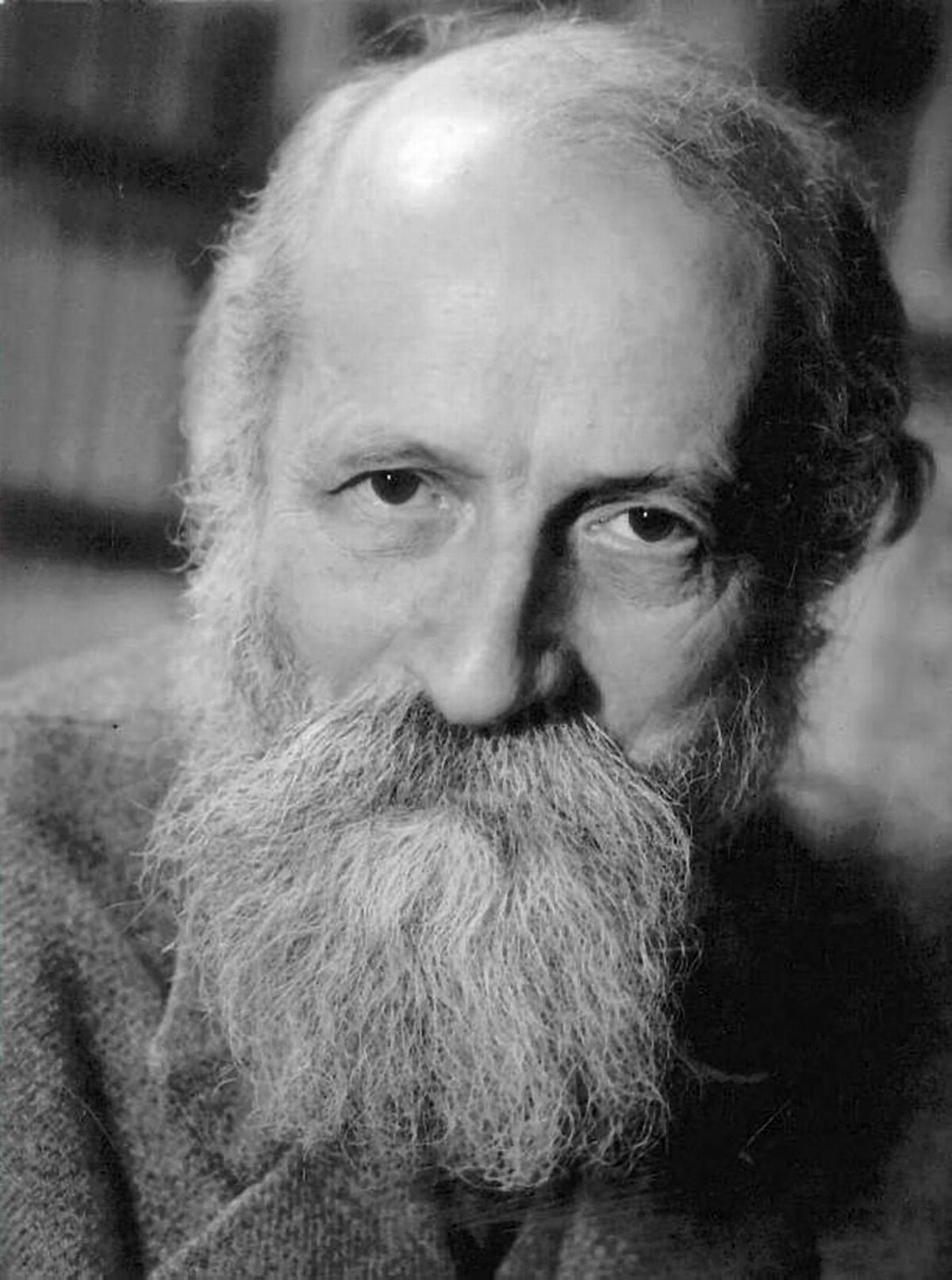
Martin Buber: February 8, 1878 – June 13, 1965

In his 1923 book “I and Thou”, the philosopher Martin Buber outlined the two primary ways in which we relate to people and the world around us. The first is the impersonal way that a person (the subject or “I”) interacts with the people or things around them (the object or “It”) as objects to be used. This type of relationship is referred to by Buber as “I-It” and it focuses on how an object can be used to benefit the subject. For example, a car is an “It” and its purpose is to enable the subject, the “I”, to get from one place to the other. Likewise, a soccer ball is also an “It” that is used as a piece of sporting equipment by the “I”. Conversely, there is the personal way that a person (the subject or “I”) interacts with the people or things around them, in which these people or things are unique and valued (the object or “Thou” or “You”). This is referred to by Buber as the “I-Thou” or “I-You” relationship. It acknowledges that the other subject in the relationship is to be interacted with rather than to be used. In this relationship, when the “I” interacts with the “You” in a mutually beneficial and respectful way, we allow for a blurring or dissolution of the boundaries between us, and, for that moment, essentially exist as that relationship rather than two individual “I’s”.
To Buber, the word “Thou” refers specifically to God. It can then be proposed, for our Masonic purposes, that we have “I-You” relationships with each other, but rely upon a mutual “I-Thou” relationship with God to set the Plumb, Square, and Level for our meetings. Thus the last action taken before the greatest Light in Masonry shines is the Chaplain’s prayer: “Thou hast promised that where two or three are gathered together in Thy name, Thou wilt be in their midst and bless them.”
This is an example of an “I-Thou” relationship between individuals (two or three people) and the divine (God), where there is a mutual recognition and respect for each other’s unique individuality. The promise in this sentence suggests that when people come together in the name of God, they are engaging in a relationship that is characterized by openness, vulnerability and empathy. It implies that there is a deep connection between individuals and the divine, and that this connection is strengthened when people come together in community (or “dwell together in unity”, if you will). This explains the great significance to the first question asked of a potential candidate before his acceptance into the Fraternity. Before he may be considered eligible to receive Masonic degrees, the candidate must first profess a belief in the existence of one ever-living and true God. Without that essential belief, we would be unable to form that relationship necessary for our work. When two or three of us invoke Him and perform our work in His holy name, we unite the brethren and activate the strength in our diversity. Furthermore, as we practice collectively in good faith and intention inside of our meetings, the better we are able to carry this strength with us when abroad in the world.
Written by: WB Ryan Toner Chaplain, Oriental-Faxton Lodge #224, Utica, NY Worshipful Ryan Toner is a Past Master and the current Chaplain of Oriental-Faxton Lodge No. 224, Oneida District, Utica, NY. He is also a 32° Scottish Rite Mason, Valley of Utica.