Freemasons in the White House – Lessons from History’s Trying Times

Freemasons in the White House – Lessons from History’s Trying Times

CRAFTSMEN ONLINE PODCAST

“Freemasons in the White House: Lessons from History’s Trying Times”

with Bro. Chris Ruli, 33°

On this episode, historian and Assistant Grand Historian of the Scottish Rite Southern Masonic Jurisdiction, Chris Ruli, 33°, took us on journey into the fascinating intersection of famous Freemason presidents and the trying times they faced in American history. The conversation offered a unique perspective on how Masonic values may have influenced these leaders and how historical perceptions often differ from reality.

Setting the Historical Stage: Perceptions and Precedents

Ruli emphasized that every generation often feels it’s living in the most divisive times, a notion quickly dispelled by a look back at history. “I don’t think, I think it has been a pretty crazy couple of decades since 9-11. I’ll say that. I think that’s probably the most certainly for my generation, the Millennial generation, that is absolutely the Pearl Harbor of the events of that.” He highlighted the ebb and flow of economic and social shifts throughout American history, from the Gilded Age to the Civil War, and the early 19th-century economic crashes.

A key theme was the shifting perception of history itself. Ruli noted, “Our perception, and this is an issue in Masonry, our perception is we’ve been taught something, we assume that that is accurate and true. And then as we grow up, we find through education, through experiences, through perhaps just living life, that we find that the things that we’re taught were not necessarily true, or perhaps there’s a shift or a turn or a tinge that’s off.” He views Freemasonry as an undercovered “arm of American history.”


George Washington and the Whiskey Rebellion

The discussion kicked off with Brother George Washington, the most famous Freemason and the nation’s first president. Washington’s decision to use a large militia to quell the Whiskey Rebellion in 1794 was a pivotal moment. Ruli explained that Washington knew “everything he would do would set a precedent moving forward.” He also noted that Freemasonry’s principles were “very fashionable, it was very hip, it was very modern” at the time, attracting respectable gentlemen who contributed to public welfare.

On the issue of presidential pardons, initiated by Washington, Ruli pointed out that criticism was inherent, regardless of the decision. “Even George Washington had detractors, right? Even, Harry S. Truman had detractors. Whoever the best presidents, know, of course, obviously Lincoln had his own distractors.”

Manifest Destiny and the Charge of Citizenship: James K. Polk

The conversation then jumped to James K. Polk, the 11th president and also a Freemason, known for popularizing the concept of Manifest Destiny. While Masonic lodges emphasize being good citizens and respecting the law, Ruli argued that Manifest Destiny is not inherently a Masonic idea. “Where in Masonry does it say we must accumulate all of our resources? We must… contribute, we must pool our resources together, we donate 10 % of our income to the Lodge, we must have Masonic buildings, we must have all of these things. There’s nothing in Masonry that says about the idea of wealth generation, of political generation, certainly of political capital. There is nothing in Masonry that explains this. There’s nothing that validates it.” He concluded, “Manifest Destiny is based on Masonic principles, because to me it’s inherently a political action. And what do we say? Don’t get involved in politics, and yet, be a good citizen.”


The Competitive Landscape of Fraternalism: Andrew Jackson and Theodore Roosevelt

The post-Civil War era saw a “massive influx of fraternal organizations, societies, benefit societies, insurance-based organizations.” This was due to the lack of social safety nets like the VA or Social Security. To compete, Freemasonry made dues cheaper, offered more benefits, and focused on its unique “ritual” as its competitive advantage. They also began to “ramp up mysticism” and “hype up patriotism.”

The conversation highlighted Theodore Roosevelt, a truly “fascinating character.” Despite his boundless energy and myriad accomplishments, he wasn’t a Mason who attended every meeting or joined all the appended bodies. Yet, his “curiosity” led him to become a Master Mason during his vice presidency.

The Power of Pardon and Quiet Engagement: Gerald Ford

The podcast concluded with Brother Gerald Ford, the only man to serve as president without being elected to the office, and his controversial pardon of Richard Nixon. Ruli believes Ford, a product of a Masonic family, embodied a “Masonic politician” trying to balance contemporary views with traditional practices.

Ford’s statement that his pardon aimed “to change our national focus” and that the American people “have a long record of forgiving even those who have been our country’s most destructive foes” resonated with Masonic principles of reconciliation. Ruli stated, “I think that level of reconciliation is important in Freemasonry. I’ve seen it personally. I’ve seen situations where we could make a big deal about this, but maybe we don’t. And maybe we find ways to privately deal with this. when we do privately deal with it, it turns out to be the best thing to do.” He emphasized the “benefit of quiet engagement, of engaging with brothers quietly,” a skill learned through the Masonic journey, particularly in the First Degree which emphasizes silence and listening.

Follow the Craftsmen Online Podcast on Spotify, subscribe on Apple Podcasts, and listen everywhere you hear your favorite shows!

The Craftsmen Online Podcast is the only Masonic podcast endorsed by the Grand Lodge of New York. Hosted by RWB Michael Arce. New episodes available every Monday morning!

Listen early and ad free on Patreon. Start your free 7-day trial and listen to our entire back catalog and bonus content!

Samuel Lloyd Kinsey

Examining Masonic Membership

Examining Masonic Membership

CRAFTSMEN ONLINE PODCAST

“Examining Masonic Membership”

with Bro. Matthew Brockbank

In a thought-provoking episode of the Craftsman Online Podcast, Matthew Brockbank, a returning guest and keen observer of Freemasonry, tackles the complex issue of Masonic membership and retention. Drawing on his experience and sociological background, Brockbank conducted a survey focusing on why members leave Freemasonry, offering valuable insights that challenge conventional thinking and provide a roadmap for potential change.

Brockbank’s approach is both methodical and deeply reflective. “I wanted to find out where we’re going wrong,” he states, emphasizing the importance of diagnosing the problem before attempting to fix it. Eschewing assumptions, he sought concrete feedback from those who had demitted, resigned, or withdrawn their membership, aiming to understand the reasons behind their departure.

The responses varied, revealing that the reasons for leaving were not always as simple as relocation or life changes. Brockbank notes, “To tell you the truth, I got a range of responses, and to be honest, some of which did involve some form of conflict, whether it be physical, mental, or emotional.” This acknowledgment of internal issues within lodges challenges the often-idealized image of Masonic brotherhood and calls for a willingness to confront uncomfortable truths.  

However, it wasn’t all negative. Brockbank highlights a significant finding: “Everyone had something good to say.” This underscores the complexity of the issue; even those who chose to leave often held positive views of individual members and the overall Masonic experience.  

Ultimately, Brockbank’s research points to a need for self-reflection and change within Freemasonry. “I feel like Freemasonry has an opportunity to be something amazing in the next 50 to 100 years,” he asserts, emphasizing the potential for growth and renewal. His insights offer a compelling call to action: to address the issues that drive members away and to create a more relevant and sustainable future for the Craft.

Follow the Craftsmen Online Podcast on Spotify, subscribe on Apple Podcasts, and listen everywhere you hear your favorite shows!

The Craftsmen Online Podcast is the only Masonic podcast endorsed by the Grand Lodge of New York. Hosted by RWB Michael Arce. New episodes available every Monday morning!

Listen early and ad free on Patreon. Start your free 7-day trial and listen to our entire back catalog and bonus content!

Samuel Lloyd Kinsey

The Hero’s Journey and Freemasonry

The Hero’s Journey and Freemasonry

CRAFTSMEN ONLINE PODCAST

“The Hero’s Journey and Freemasonry”

with WB Bull Garlington

In a recent episode of the Craftsman Online Podcast, Worshipful Brother Bull Garlington shared his unique insights into the connection between the hero’s journey and Freemasonry. Garlington, a storyteller and mythologist, draws upon his extensive knowledge of Joseph Campbell’s monomyth to illustrate how it dovetails with the Masonic journey.   For those unfamiliar with Joseph Campbell, Garlington explains, “Basically what Joseph Campbell did, Joseph, he was a mythologist…he studied myth and he would travel the world and he would dig through libraries and he would find the myths of various cultures and strip them down to their bare bones, you know, their bullet points, if you will.” Campbell discovered that despite their cultural differences, these myths followed a similar pattern, a cycle of 12 to 17 steps that a hero must undergo for the story to be complete.
Garlington argues that this heroic cycle is mirrored in the Masonic journey. Just as the hero of a myth embarks on a transformative quest, so does the Freemason. “When you cross over the literal threshold in Freemasonry and step into an actual lodge for the first time,” Garlington says, “that is going from the world of the known to the unknown.” This crossing of the threshold is a decisive moment, marking the initiate’s entry into a new world of meaning and purpose.   The parallels between the hero’s journey and Freemasonry don’t end there. Garlington points out the importance of mentorship in both contexts. Just as the hero often has a mentor to guide them, Freemasons also benefit from the wisdom and support of their brothers. Garlington notes, “Mentorship is not necessarily about age. Mentorship is not even about where you are in your degrees. Mentorship is about understanding and loving this other dude and just basically supporting him in ways that aren’t written down anywhere.”   Ultimately, Garlington believes that the search for meaning is at the heart of both the hero’s journey and the Masonic experience. “What these guys are looking for when they come to Freemasonry,” he states, “is meaning. They want to give their life meaning.” It is this quest for self-actualization that drives men to seek out Freemasonry, and it is the transformative power of the Masonic journey that helps them find it.

Follow the Craftsmen Online Podcast on Spotify, subscribe on Apple Podcasts, and listen everywhere you hear your favorite shows!

The Craftsmen Online Podcast is the only Masonic podcast endorsed by the Grand Lodge of New York. Hosted by RWB Michael Arce. New episodes available every Monday morning! Listen early and ad free on Patreon. Start your free 7-day trial and listen to our entire back catalog and bonus content!
Samuel Lloyd Kinsey
Preston vs Webb The Battle for Masonic Ritual Supremacy

Preston vs Webb The Battle for Masonic Ritual Supremacy

CRAFTSMEN ONLINE PODCAST

“Preston vs. Webb:
The Battle for Masonic Ritual Supremacy”

with WB Nathan St. Pierre

In the latest episode of the Craftsmen Online Podcast, Worshipful Brother Nathan St. Pierre returns to the show to discuss the legendary figures of William Preston and Thomas Smith Webb and their massive influence on Freemasonic ritual.


Who Were Preston and Webb?

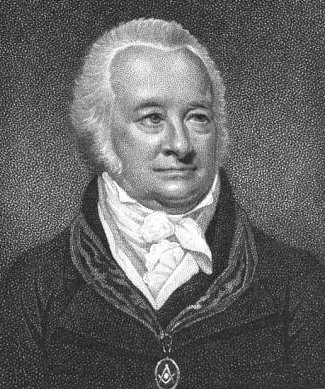
Preston, born in Scotland in 1742, was a bookbinder and printer who became a Mason in 1763. He was a champion of Masonic education and is known for the historical lectures of the three degrees.

Webb, born in Boston in 1771, was a well-educated, extroverted musician and printer. He is credited with creating the York Rite and what is known outside of the United States as the American Rite.

Preston’s Focus: Knowledge

Preston believed that Freemasonry was about the perpetual pursuit of knowledge and preserving it. He was constantly writing and rewriting his lectures, incorporating historical references and etymology.

Webb’s Goal: National Ritual Unity

Webb, on the other hand, focused on establishing a standardized system of Masonic ritual in the United States. He published “The Freemason’s Monitor” in 1797, which became the basis of all American ritual.

The Blending of Two Philosophies

The philosophies of Preston and Webb were very different. Preston’s lectures were aimed at educating and inspiring Masons, while Webb sought to codify the ritual. Their works were combined and have had a lasting impact on the Craft.


Key Points From the Episode

  • Preston and Webb did not know each other.
  • Webb took Preston’s work, removed references to the monarchy, and simplified it.
  • There is no one Prestonian work, as he was constantly revising his lectures.
  • Webb was an entrepreneur who sold his monitor and ciphered portions of the ritual.
  • American lodges ended up doing ancients work because of Webb’s publications, regardless of their Grand Lodge affiliation.
  • Differences in ritual between jurisdictions are often more recent than people think.
  • Grand Lodges often claim their ritual is the most accurate.
  • The plain text portions of ritual are called monitorial because they come from Webb’s monitor.
  • The goal of memorizing the ritual is that the words become a part of the Mason.

Listen to the Episode

Follow the Craftsmen Online Podcast on Spotify, subscribe on Apple Podcasts, and listen everywhere you hear your favorite shows!

The Craftsmen Online Podcast is the only Masonic podcast endorsed by the Grand Lodge of New York. Hosted by RWB Michael Arce. New episodes available every Monday morning!

Listen early and ad free on Patreon. Start your free 7-day trial and listen to our entire back catalog and bonus content!
Samuel Lloyd Kinsey

Why I Retired and Became a Substitute Teacher

Why I Retired and Became a Substitute Teacher

CRAFTSMEN ONLINE PODCAST

“Why I Retired and Became a Substitute Teacher”

with WB Greg Knott

In a recent episode of the Craftsmen Online Podcast, we had the pleasure of hosting Worshipful Brother Greg Knott, 33°. Brother Greg shared his experiences in Freemasonry, public service, and his surprising transition from a career in higher education to becoming a substitute teacher.

WB Knott’s journey is a testament to his commitment to service and education. His career in higher education culminated in a significant role at the University of Illinois, where he served as secretary for the board of trustees. He worked with everyone from a rocket scientist to volunteer board members. However, after 35 years, WB Knott felt the pull to return to his early aspiration: teaching. It’s such an easy way to give back… you’re directly contributing to the success of those students. And to me, that’s the whole motivating factor,” Bro. Greg shared. This led him to a new chapter as a substitute teacher at St. Joseph Ogden High School.

His story is not just about a career change, but about the underlying values that have driven him throughout his life. WB Knott’s involvement in scouting, where he achieved the rank of Eagle Scout, deeply influenced his path. “The correlation between Freemasonry and scouting, there’s so much… the value system is very much the same,” noted Bro. Greg. He sees both experiences as opportunities to emphasize character development and foster good citizenship. This foundation has been a guiding force in his desire to serve and educate.

Listen to WB Knott’s story on his transition to substitute teaching and the inspiring example of the impact one person can have on the next generation on the Craftsmen Online Podcast.

Follow the Craftsmen Online Podcast on Spotify, subscribe on Apple Podcasts, and listen everywhere you hear your favorite shows!

The Craftsmen Online Podcast is the only Masonic podcast endorsed by the Grand Lodge of New York. Hosted by RWB Michael Arce. New episodes available every Monday morning!

Listen early and ad free on Patreon. Start your free 7-day trial and listen to our entire back catalog and bonus content!

Samuel Lloyd Kinsey