Reflections on Healing and the Craft

Reflections on Healing and the Craft

Weathering the Soul

Reflections on Healing and the Craft

The recent snow storm covering a large majority of the United States reminded me of Johann Wolfgang von Goethe’s work on weather. The way in which condensing water into snow could hamper so much of modern life is a testament to the power nature holds within it. As a practicing physician, it reminded me how much my own practice and experiences with patients comes to confront both what can and cannot be controlled in the face of the minuscule forces within all of us. The enormity of such forces makes our existence as fragile as a blade of grass in the wind. Yet, as human beings, we continue to try understanding such forces despite the growing mystery our knowledge unfolds. It is this pursuit of understanding nature, including the weather, that made me reflect on Freemasonry and our individual pursuits to understand the greatest mystery of all — our own being. At the center of lies an even deeper question: Who do I want to be?

This question becomes central to my interactions. Each patient encounter is a dance and a small microcosm of process. Each act of healing feeds back into my own becoming. It is a terrifying and exhilarating process. The energy of transformation through the abyss and storms of sickness demands vulnerability. Each person, including myself, must travel their own checkered pavement. Only by understanding and experiencing it themselves can one find their way to the other side — the East.

However, I feel this question is like reading the weather of my own soul. It demands introspection, asking me to look inward and face the direction my thoughts and intentions are pointing. It calls me to attune to the divine center and recognize my place in a larger unfolding. Sometimes, admitting the limitations of my knowledge is the first step towards grasping the enormity of the situation to which I am now a part of with another human being. It entangles the outward movement of life with the inward journey, pulling me into the turbulence and stillness that shape growth through the shared journey with another patient and their illness.

For myself, this question declares itself through the healing process. Each patient travels on their own path to healing through which I can often only guide and assist. The process reminds me so much of the dynamic and unpredictable nature of the weather. Storms rise and fall, winds shift, clouds gather and dissipate. I’ve noticed healing for one patient never fully matches another. Each has its own tempo, rhythm, and forecast. Like the weather, each patient faces moments of calmness that tumbles into turbulent waters and downright hazardous conditions. Despite my best efforts with other medical staff, the patient dies. 

Yet, in holding the hands of those dying, I recognize that the same question of who I want to be is not too far different from what they long for — peace in coming to terms with their true self. In those moments, what matters is being a sturdy rudder through life’s storms as I help another navigate back to themselves. Often times, moments before succumbing to the unknown that awaits us all. Between life and death, I feel that the real answer to the question posed earlier is simple: becoming part of the interconnected nature of love itself. As Johann Wolfgang von Goethe wrote concerning the weather, I am reminded how the process of forming the mystic tie is expressed in his writing:

“Above all we must remember that nothing that exists or comes into being, lasts or passes, can be thought of as entirely isolated, entirely unadulterated. One thing is always permeated, accompanied, covered, or enveloped by another; it produces effects and endures them. And when so many things work through one another, where are we to find the insight to discover what governs and what serve”

— Goethe, Toward a theory of Weather (1825)

As I continue practice as both a physician and Mason, I recognize that the Great Architect cares less about absolute answers and more about our willingness to engage the process. To stand in the storm and be present with our imperfections. Life is a journey to the edge. A place where our current framework stretches and dies to allow transformation to what lies beyond in this world and in the next. In my journey, I am realizing that being a Mason and being a good doctor are inseparable. Both demand trust in process, courage in the storm, and patience for the unfolding. The Craft has taught me that transformation often comes when I surrender to the turbulence, when I allow myself to be pulled into the energy of change. Like weather shaping the land, the process shapes my soul.

It is perhaps the great irony that the deepest questions of life are often found not through philosophical debate or discussion, but through weathering the storms of life in community and near death. To face the abyss and darkness that life holds through the powerful forces of nature defines the shared experience of all human beings. The answer is found in the mere act of choosing to live and hold tightly through life’s storms as one shared substance and brotherhood.

“May wisdom shine through me. May love glow in me. May strength penetrate me. That in me may arise a helper for humanity. A servant of sacred things. Selfless and true.”

— Rudolf Steiner

Written by: Bro. Jonathan Kopel


Bro. Kopel is a MD PhD in his neurology residency in Washington DC. He is a member of Potomac Lodge #5 and Benjamin B. French Lodge #15 of the Grand Lodge of the District of Columbia, Washington, DC.

Samuel Lloyd Kinsey

The Power of Symbolic Experience in Art, Ritual, and Healing

The Power of Symbolic Experience in Art, Ritual, and Healing

Beyond Words

The Power of Symbolic Experience in Art, Ritual, and Healing

Across neuroscience, psychology, art, and initiatory traditions, a common insight emerges: human healing and self-discovery do not occur through explanation alone, but through symbolic experience.

The aesthetic triad—sensorimotor engagement, reward, and meaning-making—describes how an “aesthetic moment” arises when the body, emotions, and intellect are aligned. This moment creates space to be, to feel alive, and to encounter reality not as abstraction but as lived resonance. Art, ritual, and symbol work precisely because they operate in this integrated register, communicating complexity without prematurely reducing it to language.

Emotion itself is not the problem; emotions are ancient biological communicators. Suffering arises when one becomes stuck—caught between urgency and immobility, a dynamic familiar to trauma survivors who describe their inner world as chaos. Art offers a way through this impasse.

Visual language, movement, and making allow trauma to be approached indirectly, safely, and honestly. By externalizing experience through symbol, individuals regain voice, coherence, and a sense of self without being overwhelmed. This is why art has proven effective in trauma recovery, especially where words fail.

Symbols such as the mandala illustrate this process with particular clarity. Across cultures, the mandala represents wholeness and containment, mirroring Jung’s insight that such images arise from the unconscious as organizing principles of the psyche.

Creating one’s own mandala becomes an act of self-initiation: a way to uncover hidden layers, restore equilibrium, and integrate chaos into order. This movement—from fragmentation toward centeredness—echoes both therapeutic healing and initiatory paths.

Freemasonry operates within this same symbolic economy. Its rituals, tools, and degrees do not offer direct answers; they stage experiences. The initiate is not told what transformation means but is invited to undergo it—through repetition, silence, gesture, and symbol.

Like art, Masonic ritual stretches the mind beyond its previous dimensions, awakening awareness of purpose, connectedness, and continual becoming. It honors process over arrival, transformation over explanation.

Modern neuroscience now affirms what these traditions long understood: we are not static beings but energetic systems in constant exchange with our environment. Art and ritual shape this exchange, influencing emotional regulation, neuroplasticity, and meaning-making.

As shown in Your Brain on Art, creative engagement is not decorative—it is foundational to human flourishing, restoring agency, dignity, and belonging through embodied participation.

During residency, trauma slowly covered my spirit. What once felt like passion and love was buried beneath disappointment, isolation, and a sense of being dehumanized. The light was not gone—it was overgrown. I had mistaken hope for wishful thinking or endurance, but I came to understand it as something real and embodied: the reawakening of the heart to the possibility of goodness, even in the presence of pain.

Poetry, writing, and art became the way back. Where trauma had silenced me, creative expression gave form to what could not yet be spoken. Through symbol and story, I could hold complexity without being overwhelmed, allowing meaning to return to experiences that had felt chaotic and numbing. Art did not erase suffering; it widened my inner world again.

Hope revealed itself in felt moments—being truly heard by a patient, feeling safe among colleagues, trusting my own voice. Creating became an act of healing, a quiet resistance to systems that reduce people to function. Through art, I reclaimed my humanity and remembered who I was beneath the injury. Healing, I learned, is not the absence of pain, but the courage to let the inner light speak again.

Ultimately, the purpose of art, symbol, and initiatory practice is not to soothe us into comfort but to awaken us into life. They lay bare the questions hidden by answers, inviting us into deeper relationship with ourselves and others. Healing, in this view, is not the erasure of trauma but its transformation—through form, rhythm, and meaning—into wisdom.

Art is not merely a hobby; it is a conversation with the self, a ritual of integration, and a lifelong journey of becoming.

Written by: Bro. Jonathan Kopel


Bro. Kopel is a MD PhD in his neurology residency in Washington DC. He is a member of Potomac Lodge #5 and Benjamin B. French Lodge #15 of the Grand Lodge of the District of Columbia, Washington, DC.

Samuel Lloyd Kinsey

The Craft of Compassion – Finding Universal Truth in Nathan the Wise

The Craft of Compassion – Finding Universal Truth in Nathan the Wise

MASONIC BOOK REVIEW

The Craft of Compassion

Finding Universal Truth
in Nathan the Wise

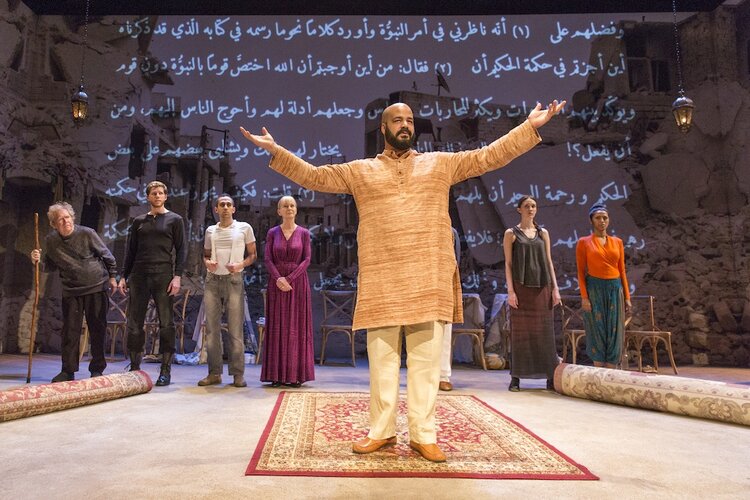
Nathan the Wise (Nathan der Weise) is a dramatic play written by Gotthold Ephraim Lessing (1729–1781), one of the most influential figures of the German Enlightenment. Lessing was a philosopher, playwright, critic, and theologian who championed reason, religious tolerance, and moral development over dogma and inherited authority.

Writing during a time of intense religious conflict and censorship, Lessing believed that no single religious tradition could claim exclusive possession of divine truth. Instead, he argued that faith should be judged by ethical action, compassion, and humanity rather than doctrinal correctness. Published in 1779, the play represents the culmination of Lessing’s philosophical thought.

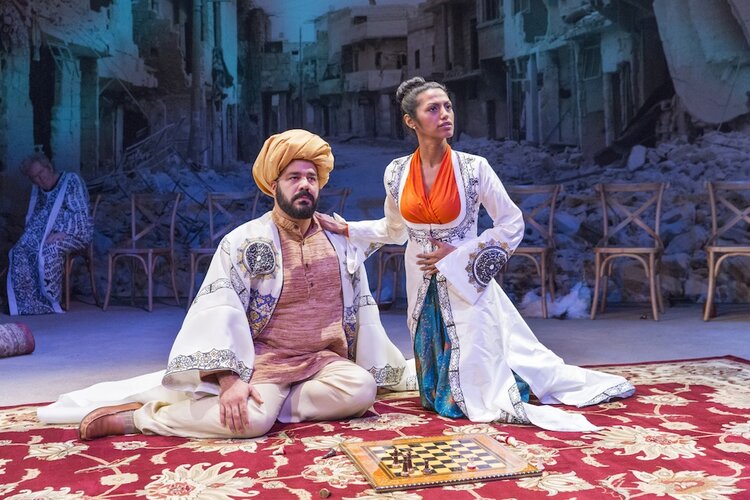
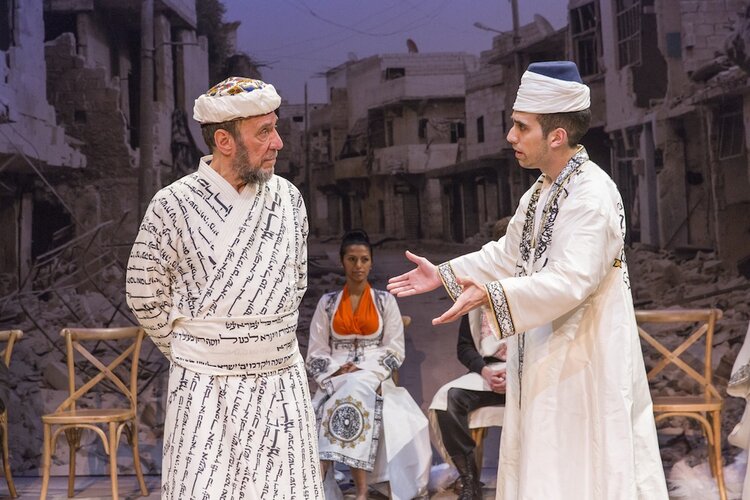
The story is set in Jerusalem during the Third Crusade, a period marked by conflict among Judaism, Christianity, and Islam. The central character, Nathan, is a wise and wealthy Jewish merchant known for his compassion and moral clarity.

The plot revolves around Nathan’s interactions with:

  • Saladin: The Muslim sultan.
  • A Christian Templar knight.
  • Recha: Nathan’s adopted daughter.

While tensions arise from religious differences and unresolved identities, these conflicts gradually give way to understanding and reconciliation.

The philosophical core of the play is the famous Parable of the Three Rings. When Saladin asks Nathan which religion is the true one, Nathan responds with a story: A father owns a ring that makes its wearer beloved by God and humanity. Unable to choose among his three sons, he has two identical rings made and gives one to each.

The parable asserts that the truth of a religion is demonstrated not by origin or doctrine, but by ethical living. As the story unfolds, it is revealed that the characters are part of the same extended family, symbolizing our shared human origin beneath religious divisions.

“The true ring cannot be identified by claim alone. Instead, each son must prove the ring’s power through a life of love, kindness, and moral action.”

For myself, reading Nathan the Wise felt less like encountering a new work and more like recognizing a conversation that had already been unfolding in my life. The story mirrored my own interior journey—particularly my fear of where God might be drawing me, and the courage required to follow that call.

I have come to understand that Christianity was God’s first embrace of me, a necessary beginning. Yet love, by its very nature, expands. To see God reflected in other traditions is not betrayal, but delight. God rejoices in expansion because God is expansion.

In this way, the play offers a deeply Masonic lesson: faith is a living process, proven through gentleness, tolerance, humility, and charity. This is perfectly embodied in a conversation between Saladin and the Templar:

Saladin: My young friend, when God chooses to do good through us, we should not appear indifferent to it, even out of modesty.

Templar: But everything has so many different faces, and sometimes I don’t understand how they can all belong together.

Saladin: Then you should seek the best in everything, and trust God who knows all things are connected.

One of the central lessons for me is that love is the means by which duality is reconciled. In Freemasonry, symbols point to duality—light and dark, East and West, silence and speech. Love does not erase difference; it unites difference without destroying it.

The symbol of the checkered pavement has become deeply personal to me. Life is lived not on one color alone but in the movement between light and dark. I experienced this “love in action” through chess with a Brother—a shared space for learning patience, loss, and return. Much like the Masonic process: persevere, reflect, and try again.

The question of truth—whether it is found within or received from without—has been one of my deepest struggles. Masonry teaches that truth cannot be imposed. Through experience, I learned how to hear that “still, small voice” within my heart. We do not awaken alone; we awaken with one another.

The judge’s charge in the play—to prove the power of one’s ring through love—captures the heart of the Craft. Faith is not about being right, but about being real. As a Freemason, every member of the human family that I meet is an opportunity to leave behind a fragment of that love.


Nathan the Wise arrived in my life by grace. It affirmed that Freemasonry is the lifelong practice of discovering unity in diversity. As Nathan says:

“Vie with each other to prove the power of your ring, through gentleness, tolerance, charity, and deep humility before the love of God. And if after a thousand thousand years the power of the ring still shines amongst your children’s children’s children, then I’ll summon you again before this judgement seat.”

The secret is simple, though never easy: love deeply, walk humbly, and trust the process.

Written by: Bro. Jonathan Kopel


Bro. Kopel is a MD PhD in his neurology residency in Washington DC. He is a member of Potomac Lodge #5 and Benjamin B. French Lodge #15 of the Grand Lodge of the District of Columbia, Washington, DC.

Samuel Lloyd Kinsey

The Defining Moment FDR’s Hundred Days and the Triumph of Hope

The Defining Moment FDR’s Hundred Days and the Triumph of Hope

MASONIC BOOK REVIEW

“The Defining
Moment: FDR’s
Hundred Days
and the
Triumph of
Hope”

by Jonathan Alter

“In, The Defining Moment: FDR’s Hundred Days and the Triumph of Hope, Jonathan Alter brings us closer than ever before to the Roosevelt magic. Facing the gravest crisis since the Civil War, FDR used his cagey political instincts and ebullient temperament in the storied first Hundred Days of his presidency to pull off an astonishing conjuring act that lifted the country and saved both democracy and capitalism.
—Author’s website
Most Worshipful Franklin Delano Roosevelt’s (FDR) presidency, particularly his first hundred days, offers profound lessons in leadership, adaptability, and the balance between individual influence and collective effort. The book illustrates how Roosevelt’s life experiences—his battle with disease, his strategic political maneuvers, and his ability to bring people together—shaped his approach to governance. He doubted experts, valued teamwork to complement his weaknesses, and leveraged new technologies to communicate directly with the public. His ability to project confidence and use media effectively made him a master of political persuasion. A key theme emerging from his story is the historical tendency of Americans to seek strong, singular leadership in times of crisis, even bordering on dictatorship. Yet, FDR understood that true progress required collaboration—forcing differing perspectives into a room to generate solutions rather than relying on one person’s vision alone. His presidency highlights the role of social trends, media influence, and the necessity of action over stagnation.

Freemasonry shares many philosophical parallels with FDR’s leadership principles. As FDR gathered advisors with diverse perspectives to tackle national crises, Freemasonry teaches that leadership is most effective when guided by wisdom and collective input. This input may not always present with mutual understanding.

The Masonic Lodge functions as a space for men of different backgrounds to work together toward self-betterment and societal progress. Masonic teachings encourage members to seek knowledge, refine their understanding of the world, and adjust their approach based on new insights. Interestingly, FDR also understood the power of symbols, rituals, and public perception, using fireside chats and political imagery to instill confidence in the American people.

The power of symbols within the Craft allow for communicating values and ideals beyond platitudes and, instead, towards a greater feeling and mutual understanding from experience. It is the understanding of symbols that allowed FDR to view his own political career, despite his own desire for smoothing his ego, as an embodiment of American progress and character to handle the challenges of the present with humor and hope, both of which would be critical for his addressing the Great Depression. Despite his ideals, FDR was not a perfect ashlar. Yet, through his determination and adherence to his ideals, FDR’s perception of his countrymen changed to one that embraced a positive spirit of change and harmony in the midst of great adversity. The imperfect ashlar embraced the process of roughing its own imperfections through engaging in trials of the common individual.

The major premise of “The Defining Moment” is the warning against placing too much faith in one individual to solve society’s problems. Freemasonry teaches that leadership should be distributed among many, reinforcing the idea that no single person can bear the full burden of change. The fraternity operates democratically, ensuring that wisdom and guidance come from collective participation rather than absolute authority.

Ultimately, “The Defining Moment” teaches that history is not shaped by one person alone but by the broader movements and struggles of society. This aligns with Masonic teachings, which emphasize that human progress is a shared responsibility. Both FDR’s leadership and Freemasonry highlight the necessity of unity, adaptability, and ethical responsibility in shaping a better future. By studying FDR’s life and Masonic principles, we are reminded that the path to meaningful change is built not through passive reliance on authority, but through active engagement, moral discipline, and the willingness to work together for the greater good.

Written by: Bro. Jonathan Kopel


Bro. Kopel is a MD PhD in his neurology residency in Washington DC. He is a member at Potomac Lodge #5 and Benjamin B. French Lodge #15 of the Grand Lodge of the District of Columbia, Washington, DC.

Samuel Lloyd Kinsey

How to Win Friends and Influence People

How to Win Friends and Influence People

MASONIC BOOK REVIEW

“How to Win
Friends and
Influence
People”

by Dale Carnegie

“How to Win Friends and Influence People is a 1936 self-help book written by Dale Carnegie. Over 30 million copies have been sold worldwide, making it one of the best-selling books of all time.”

—Goodreads
The Masonic journey, though an inward reflection, manifests itself through the relationships within and outside the Lodge. It is this curious dynamic of the Craft through which the relationship between our inner life and our relationships manifest together towards a larger discussion on virtue and meaning. These relationships confront one with the question of how their influence benefits or impedes the ability of others to circumscribe their own desires and keep themselves within due bounds. It is in this question that drew me to the work of Dale Carnegie’s “How to Win Friends and Influence People”. The three major areas he explores define how the Craft teaches interpersonal relationship and leadership skills.

Carnegie’s ideas can be broken down into three major parts: building strong relationships, winning people over and influencing others, and leading and inspiring others. The Labor of the Craft can be perceived as the daily habits of forming healthy relationships that ensure harmony within and without a person’s daily existence in society and the world at large. For Carnegie, his ideas of forming relationships emphasize knowing the other and presenting oneself as approachable to relationships through vulnerability. It is focusing less on one’s own desires and seeing through others how knowing them leads back to their own development and fulfillment of desires. One may argue that only through knowing others can a Mason truly know how to keep themselves within due bounds. It is loosening of the ego by which a Mason can begin to practice their Craft.

How does one maintain these relationships? For Carnegie, the due bounds articulated within the Craft can be expressed through avoiding criticisms and arguments that disrupt the harmony within the Fraternity. Instead, he argues that honesty and sincerity towards helping others express the fullest and best version of themselves. Admission of wrongs and imperfections that we hold within ourselves and observe in others is critical towards refining our ego and understanding how our character fits into the larger narrative of the world.

Within this context, it is curious how the Craft can easily succumb to illusions of power and privilege as a Brother Mason progresses through the Lodge leadership Chairs. Yet, the underlying truth is that these Officers are meant to be of service to the Lodge and not of personal gain. Within Carnegie’s book, he describes several principles which, upon further examination, provide methods for ensuring this focus is transmitted within and outside the Lodge. The principle of giving people a fine reputation to live up to reminds me that the Lodge officers, as a whole, should demonstrate the virtues and habits that inspire members within the Lodge to help and participate to aid in their own moral edification. Along similar lines, Carnegie encourages praise and encouragement rather than criticism to encourage people to bring their best efforts to the Lodge. Whether in events or through ritual, Lodge etiquette that seeks to encourage and promote people’s ability to handle the challenges and difficulties with performing elements of the ritual ensures both greater participation and enjoyment for the long term benefits that such activities bring to the Fraternity as a whole. Taken together, Carnegie’s classic is a reminder that the ultimate determiner of leadership and growth within the Fraternity is within the manner and methods by which one helps not only themselves, but the entire Craft benefit.

Written by: Bro. Jonathan Kopel


Bro. Kopel is a MD PhD in his neurology residency in Washington DC. He is a member at Potomac Lodge #5 and Benjamin B. French Lodge #15 of the Grand Lodge of the District of Columbia, Washington, DC.
Samuel Lloyd Kinsey