Start with WHY

Start with WHY

EDITORIAL

START WITH “WHY”

The Deeper Meaning of The Square in Self-Reflection

In 2009, Simon Sinek’s bestseller, “Start with Your WHY” changed the basic principles of brand marketing. He suggests rather than lead with traditional benefits or features, begin your message by stating your passion. Consumers are more interested in why you are passionate about something rather what you do. A good example of this principle is how Apple markets their products. Apple begins with a theme that connects on a personal level: safety, security, health and fitness are a few examples. I share Sinek’s belief that consumers want to have relationships with the brands and companies they use. Starting with your why creates an opportunity to share your passion and form an organic connection.
My resolution for 2023 is to take a better personal inventory of events and pause for daily moments of reflection on these experiences. Part of my practice is rather than asking why an event happened, I look to find why did something happen THIS way. I then search deep in my emotions to embrace the lessons learned from the outcome of life experiences. I have become fascinated with the idea that there are endless tiny points that all lead up to BIG moments. My goal is to identify the one factor in a series of events that produced a particular outcome.
I’m sure you are thinking, hey, this sounds pretty deep. Yes, it is. But where is the Masonic connection? I’m glad you asked!

I have struggled with the explanation of the Square as a Working Tool. As Fellowcraft, we are simply told the Square is help us square our work. I don’t think anyone else who appreciates structurally strong buildings or perfect corners would disagree that a square is a useful tool. But I don’t believe that is the Square’s WHY.

Morality is the key theme in Masonic Ritual. And as a symbol, the Square is impressed upon us to guide our actions by being honest and fair. This goes deeper than being truthful or kind in all of our dealings. By reflecting on our conscious, we consider the multitude of choices and decisions presented in daily life. How those moments are influenced by our attitudes, emotions, and feelings — which also change over the course of a day. And when you analyze the many parts that make up the sum, you can then isolate that one point where an action was influenced by that choice between “right” and wrong.

Reflecting on our actions as part of a daily routine is more than an exercise in self-awareness; it is also an opportunity to apply the Square as a Working Tool to measure our Ashlar. Not to seek perfection, but rather to shape our structure to be strong and sound.

Written by:
Bro. Michael Arce
Co-Founder, Craftsmen Online

Brother Robert Burns

Brother Robert Burns

FAMOUS FREEMASONS

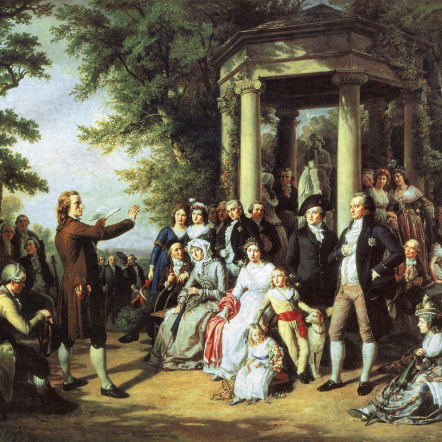
ROBERT “RABBIE” BURNS

Poet Laureate, Activist, Freemason

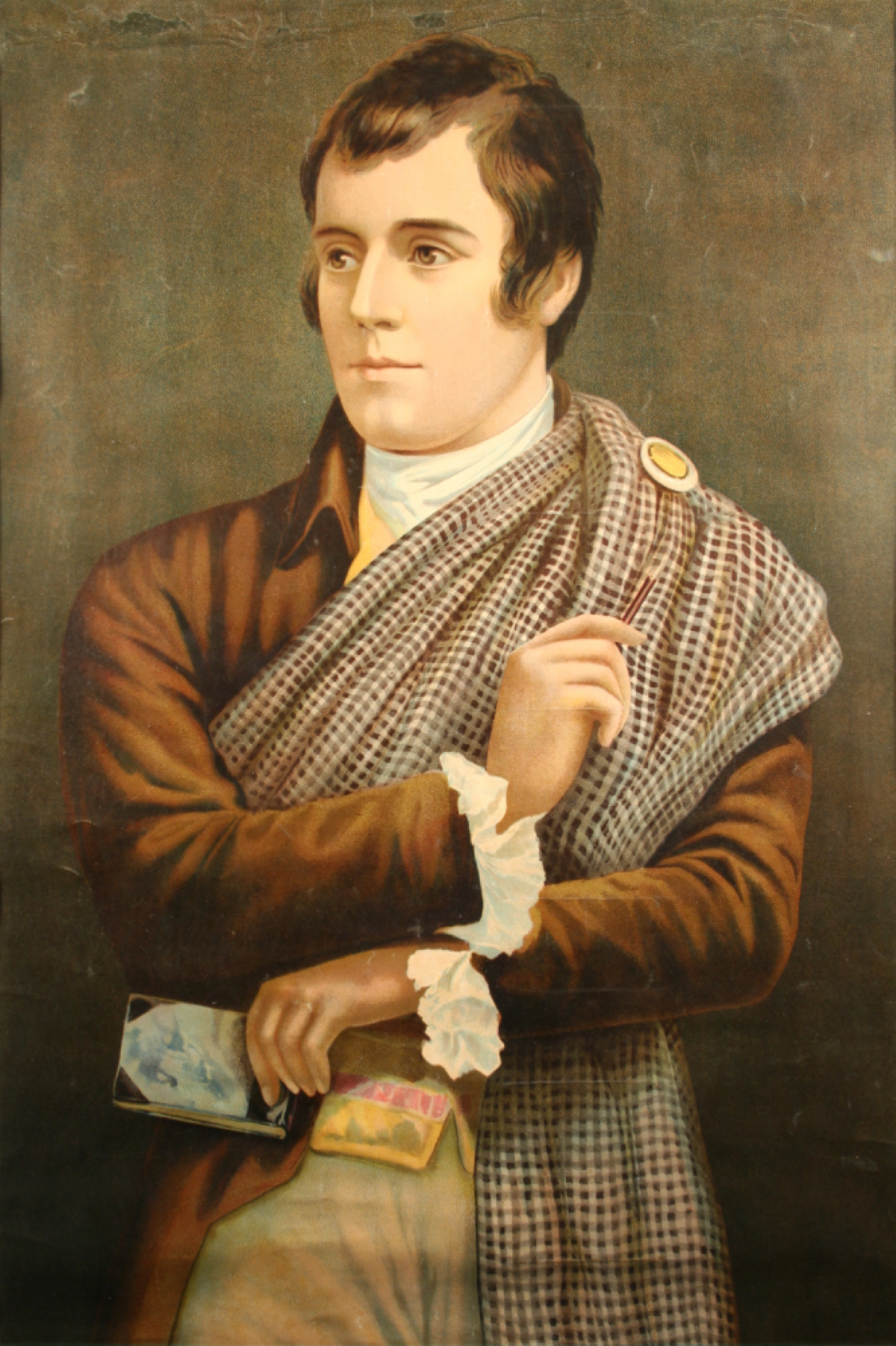
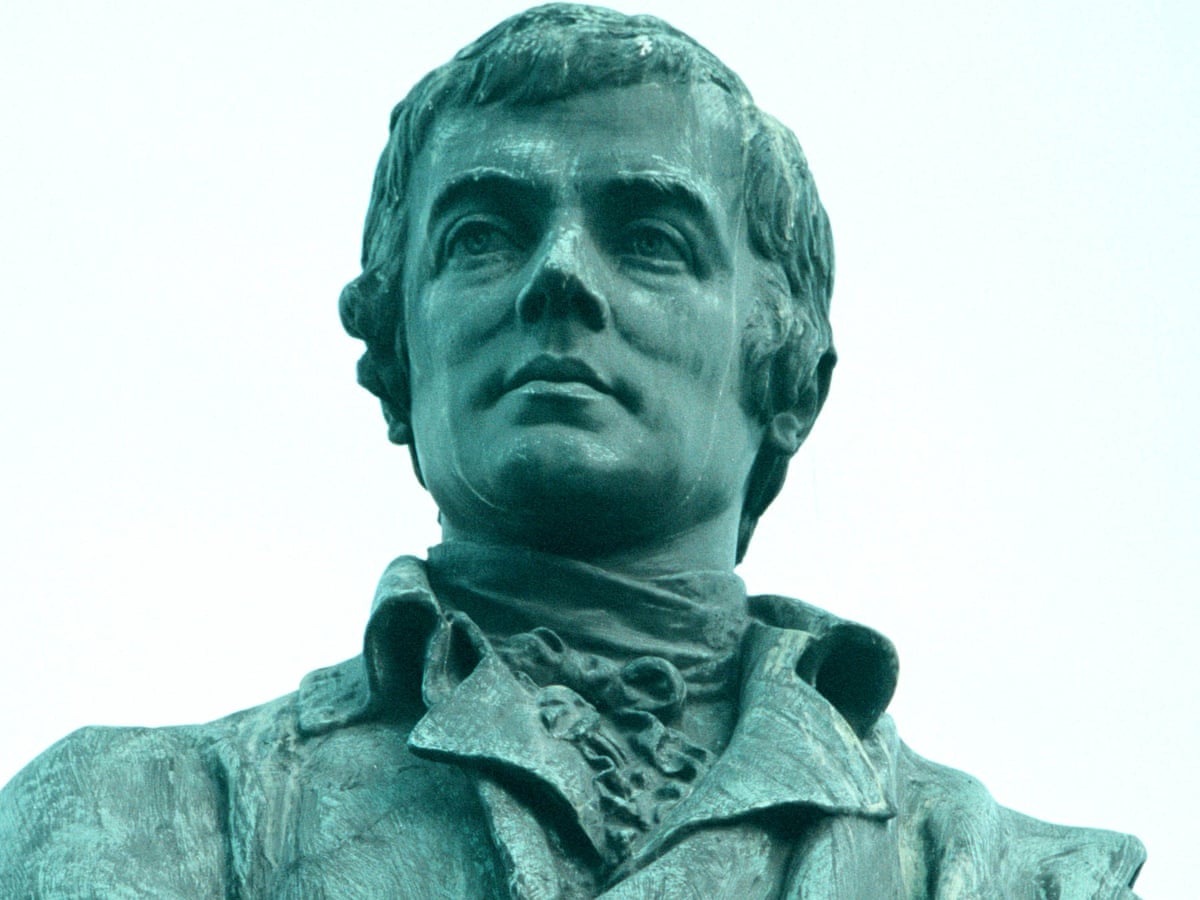
Robert Burns, celebrated Scottish poet, is considered a seminal figure in 18th century literature. Born in Alloway, Ayrshire, Scotland on January 25, 1759. Robert was born the eldest of seven children born to William and Agnes Burns. Robert’s father as a tenant farmer struggled to support his family. Because of this, Burns had to work on the family farm from a young age. However, at the age of fifteen, while working the harvest season with his field partner, Helen Kilpatrick, Burns felt his first love which sparked his passion for love and poetry, and he soon wrote his first poem; “Handsome Nell”. 

(Portrait of Robert Burns, January 25, 1759 — July 21, 1796)

Bruns began to pursue poetry (and Love) with fervency and zeal. The traditional folk songs and ballads of Scotland, as well as the works of contemporary poets such as Allan Ramsay and Robert Fergusson heavily influenced his early poems. His early works focused on nature’s beauty, the simplicity of rural life, and the struggles of the working class.

In 1777, at the age of eighteen, Burns left the family farm to find work and support his family. He worked as a flax-dresser, ploughman and tutor, but continued to write poetry in his free time. At the age of twenty-one, in 1781, Brother Burns joined the Lodge of St. David, Tarbolton, Scotland, a significant step as Freemasonry was an influential and respected organization in 18th century Scotland. The Fraternity provided Brother Burns with a sense of belonging, camaraderie, and an opportunity for self-improvement and personal growth. This likely led to the publication of his first collection of poetry, “Poems, Chiefly in the Scottish Dialect,” in 1786 which was well-received by critics and the public and established our Brother as a significant literary figure in Scotland.

Robert Burns is famous for writing poetry to charm and impress women. However, he had a special interest in Jean Armour and courted her for several years before they married on July 4, 1788. Together they had twelve children. Even with his marriage, Burns continued to have extramarital affairs which resulted in more children with other women. Jean, the daughter of a local operative stonemason, remained devoted to Burns throughout their marriage.

In 1788, Burns began to collaborate with James Johnson in compiling an anthology titled “The Scots Musical Museum”. During the last decade of his life, Burns devoted himself to editing and revising traditional folk songs for this volume and for the “Select Collection of Original Scottish Airs.” These publications played a crucial role in preserving elements of Scotland’s cultural heritage, featuring renowned songs such as “My Luve is Like a Red Red Rose” and “Auld Land Syne.”

As a poet, Brother Burns possessed exceptional oratory skills and his speeches at Masonic gatherings were highly esteemed. Because of this he earned the title of Lodge’s Poet Laureate. His participation in Freemasonry had a notable impact on his literary works. Many of his poems and songs were written for Masonic events and ceremonies and contain references to Masonic symbols and themes. One of his most famous poems, “A Man’s a Man for A’ That,” is a tribute to the fraternity’s ideals of Brotherhood and equality. Additionally, his poem “The Brotherly Ties of Friendship” is a clear allusion to the principles of Freemasonry. Freemasonry’s emphasis on equality greatly influenced Brother Burns’ beliefs and poetry. As a vocal advocate for the rights of the working class, many of his poems and songs reflect his belief in the importance of equality among all individuals.

Unfortunately, Brother Burns’ later years were plagued by personal and professional difficulties. His extramarital affairs and financial struggles caused tension in his marriage and damaged his reputation. He also faced challenges in gaining recognition and respect from his peers. His health started declining rapidly, suffering from various illnesses such as rheumatism and heart disease. These difficulties ultimately led to his untimely death at the age of 37 on July 21, 1796, the same day his wife gave birth to their twelfth child, Maxwell.

Brother Burns’ literary legacy endures despite the hardships and struggles he faced throughout his life. His poems and songs remain celebrated and revered, serving as a testament to his skill as a poet and his dedication to the ideals of Freemasonry earning him the title of National Bard of Scotland.

Written by WB Todd M. Paterek
Blazing Star Lodge #694 F&AM

From Operative to Speculative

From Operative to Speculative

MASONIC EDUCATION

OPERATIVE FREEMASONRY

HOW FREEMASONRY EVOLVED FROM CRAFT GUILDS

Operative Freemasonry has a long and rich history that can be traced back to the very beginnings of human civilization when people first began to build shelters to protect themselves from the vicissitudes of the seasons. In those early days, simple wood structures held together by vines would have provided basic shelter from the changing and often violent weather. It is even possible that the wood used was still living, with the vines touching the ground taking root and beginning to grow, transforming a simple shelter into a living work of art.

As humanity evolved and made new discoveries, such as the ability to transform rock into building materials, builders were able to construct larger and more sturdy dwellings. The lessons learned from nature, and the deep connection that humanity has with the natural world, led to the development of both functional and aesthetically pleasing elements in architecture.

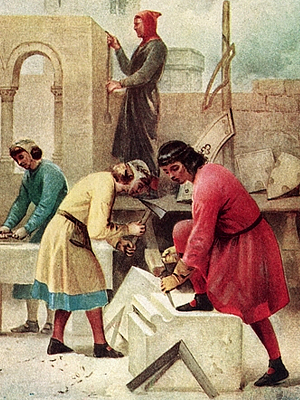
Operative Freemasons were skilled craftsmen who honed their abilities in building to provide shelter from the elements and to create works of art that conveyed a sense of unity and harmony. A Master Mason would pass along his knowledge and skills to his Fellowcrafts, who would in turn teach these lessons to Apprentices. In this way, new ideas and innovations were built upon the foundation of basic architectural principles, helping to advance the craft, and resulting in structures that were strong, well-proportioned, and beautiful.

The art of Masonry began with the construction of simple shelters and dwellings, but over time it grew to encompass a wide range of structures, including cathedrals, monuments, temples, bridges, and fortifications. These structures still stand today as testament to the enduring skills and traditions of operative Masonry and continue to inspire and awe people to this day.

As a Speculative Freemason, we are constantly seeking to improve ourselves and to build our own “temple” – not just in the physical sense, but in the metaphorical sense as well. We are all bound by the limitations of nature, but more importantly we are also empowered by its possibilities.

Our journey through Freemasonry is one of self-improvement and growth, and as we progress, we come to realize that our “dwellings” — the foundations upon which we build our lives — are not yet perfected. We rely on the wisdom and guidance of those who came before us to teach us how to properly apply the principles of The Craft and to hone our skills. This concept can be understood in several ways. It could refer to the fact that we are all works in progress, with room for growth and improvement in various aspects of our lives. It could also be seen as a metaphor for the idea that we are constantly building and constructing the various elements of our lives — our relationships, careers, personal values, and so on — and that these structures are not yet complete or fully formed.

As Speculative Freemasons we know that we are always learning and growing.

Just as our operative Brothers of the past used their skills and knowledge to build and create, we too have the opportunity to use our learned skills to put our own unique stamp on the lessons we have learned. We can use our skills and understanding of The Craft to not only improve ourselves, but also to improve the Fraternity and the world around us. This idea is rooted in the belief that Freemasonry is more than just a fraternity or a club; it is a way of life that encourages its members to strive for self-improvement and to use their skills and abilities for the betterment of society. Through the application of the principles of the craft and the pursuit of knowledge, Masons are able to make a positive difference in the world, whether through their work, charitable efforts, or community service.

In this way, the skills and knowledge that we acquire through Freemasonry can be seen as tools that we can use to create positive change and to contribute to the greater good. We can build upon the legacy of our operative Brothers and continue to make a positive impact on humanity and contribute to the betterment of society.

Written by WB Todd M. Paterek
Blazing Star Lodge #694 F&AM

Masonic Ritual – Master Mason Without

Masonic Ritual – Master Mason Without

MASONIC RITUAL

Master Mason without

MASONIC RITUAL EXPLAINED BY THE CHAIRMAN OF THE CUSTODIANS OF THE WORK

Can an Entered Apprentice oR Fellowcraft occupy any officer’s chair in an Entered Apprentice or Fellowcraft Lodge, respectively, at the invitation of the Master?

Yes, with one exception. As described in our Ritual, the Lodge is tiled by a “Master Mason without.” Otherwise, it is the prerogative of the Master to delegate performance of any portion of the Work to any qualified Mason. There is no Masonic basis that would enjoin the Master from delegating Work to an Entered Apprentice or Fellowcraft, as they are entitled to knowledge of all the Ritual performed by Lodges working in the Degrees they hold, and thereby qualified to perform the same. Notwithstanding, there is also no Masonic principle that an officer’s chair must be occupied unless the Ritual calls for performance by that officer. Thus, for example, while the Master could invite an Entered Apprentice to occupy a Steward’s chair for a regular meeting, there is no reason for him to do so.

Stepping away from purely Masonic considerations, we note a 1928 Judge Advocate Opinion (GLNY) regarding visiting Degree teams holding that the Master “can fill all or any of the stations by any Master Mason.” This might be construed to preclude Ritual delegation to Entered Apprentices and Fellowcrafts, but there are some important factors against this interpretation:

⤚ First, the Opinion does not consider the question of delegation to Entered Apprentices and Fellowcrafts because visiting Degree teams would only have included Master Masons in the custom and practice of the time
⤚ Second, because it does not explicitly rule out such delegation, the Opinion is not properly interpreted as restricting delegation to Master Masons only
⤚ Third, in Lodges that regularly admit Entered Apprentices and Fellowcrafts it is already commonplace for Brothers of these Degrees to perform such portions of the Master’s Work as presentation of the Working Tools and exemplification of the Lectures of Forms and Ceremonies

And finally, as a general matter, Lodges don’t contemplate seating Entered Apprentices and/or Fellowcrafts in officers’ chairs unless there is an insufficiency of capable Master Masons present, and we should not place roadblocks in the way of Lodges working to revitalize by involving such Brothers to participate in its life and works.

Response provided by RW Samuel Lloyd Kinsey
Chairman, Custodians of the Work, Grand Lodge of New York

Note: This site is an excellent source of information about Freemasonry. While every effort has been made to provide accurate and up-to-date information about Masonic Ritual, please remember that a website is not a substitute for your jurisdiction’s Standard Work or Approved Ritual.
Freemasonry As a Way Of Awakening

Freemasonry As a Way Of Awakening

MASONIC BOOK REVIEW

FREEMASONRY AS A WAY OF AWAKENING

Written BY Rémi Boyer

Freemasonry as a Way of Awakening
France’s Rémi Boyer has immersed himself for decades in studying philosophies and initiatory rites, among other things, and has authored a book for understanding Freemasonry. His knowledge and experience lead him to see Masonic initiation as metaphysical, and his prose is patient and instructive, but while Freemasonry as a Way of Awakening presents brilliantly conceived and stated ideas, it may confound Freemasons of the Anglo-American tradition—that is to say, most of us.
The first two paragraphs prime the reader:

“From the outset, let’s state the paradox. Initiation is not thought of, it manifests itself, it is realized, outside of all linearity conducive to thought in which the person de-realizes himself. Initiation is ‘unstoppable’ only in a state of non-thought. Silence is required. The more the literature devotes pages to the subject, the more the so-called initiatory orders multiply and the less they encounter, not only ‘initiates,’ but the ‘initiatables,’ who themselves are rare. Time is confusing while the initiatory ushers in fusion with Being.

“Initiation is by nature indefinable, elusive as the Spirit. Always, it is an initiation to one’s own original nature or ultimate reality, to the Real, to the Absolute, to the Divine, to what remains, no matter the words, since, precisely ‘there,’ there are no words.”

So, you see, 2B1ASK1 is not a consideration here. Boyer writes of and for the Egyptian Rite.
Likewise, our notions of receiving Light and of “making good men better” are blurry in Boyer’s vision. It’s not that they are contrary or unimportant goals, but this author likens initiation to art. He sees those two as avenues for “controlled madness, madness that allows the overcoming of the limits of the conditioned person.”
Masonic initiation, as Boyer recommends, is comprised of seven stages: the request for initiation; analysis of the request; passage under the blindfold; initiation instruction and orientation to the tradition; the “first” initiation; the initiatory work; and evaluation. As a blindfold conjures a familiar image and key aspect of our own rituals, I’ll skip to No. 3 and explain what Boyer intends. Employing the blindfold is not so much to keep the candidate in a state of darkness until the moment comes to bring him to Light; the blindfold here indicates “a plunge conducted by the candidate into the darkness of self.” It is akin to the alchemical decomposition of raw matter, and the unmasking heralds the start of awakening. “It must leave a slight crack in the continuity of the person” so that initiation will “turn this slight crack into a fissure”and the deeper the fissure, the deeper it descends into the depths of the psyche, and the more it allows the radiance of the light of Being.”
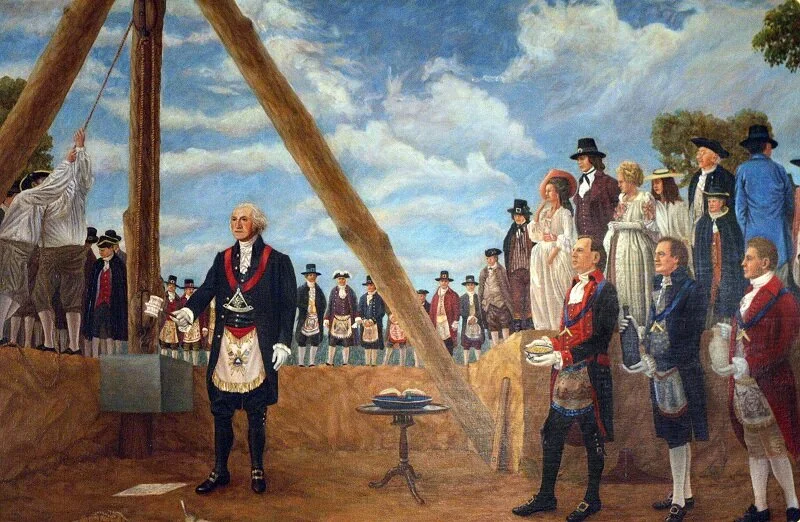
A meeting of early 19th century Freemasons in which an apprentice or candidate is introduced to the Lodge.
To be sure, there are passages of this book that ring clearly to the Anglo-American Masonic ear. Chapter 8 is titled “Dysfunctions in the Initiatory Process,” and it begins with a description familiar to many of us: “Internal struggles, competitions between organizations, the ‘professionalization’ and ‘commodification’ of initiation are commonplace. They reflect the radical break with traditional rules and principles and the lack of initiatory work by the leaders of these organizations more concerned with their careers than with their awakening.” Still, even these disappointments can be overcome, Boyer explains, by those on a quest who can see beyond the habits of fallible people.
Where our Freemasonry prescribes moral lessons to make a good man better, Boyer shows us a different way down the Masonic path. Actually, there isn’t a single path, as “the initiate is always at the center of an infinity of possible paths.” It’s about psychology, and the context of everything must be respected. The potential candidate for initiation must not be regarded only as someone seeking admittance, but he has to be considered as a person with a psyche shaped by age, social and economic status, family life, any traumatic past experience, and other factors that cause the interviewer “to harmonize himself” with the petitioner. Even the generations and geography are significant (time and space are important understandings in this book), as the author plainly points out how seeking Masonic membership in Paris today is very different from when the city was held by Nazi forces during World War II.
The lengthiest, by far, and possibly most illustrative chapter of the book is devoted to questions that you might have for the author. In fact, they are questions put to Boyer in seminars he conducted in Europe. From “What is the ultimate function of ritual?” to “What is the true nature of the work of a venerable master?” and fifteen others all serve to enlarge finer points from the main body of the text. And then follow nearly fifty pages of appendices that, sometimes, might qualify as Too Much Information!
Freemasonry as a Way of Awakening, published in English for the first time, truly can rouse the Brother Mason of the Preston-Webb-Cross tradition to see how some brethren in Europe tend to their labors. It’s never a question of one way is superior to another. As always with Boyer, context is crucial, as “initiation in a lake village does not rely on the myths that underlie a mountain initiation.”
Written by The Magpie Mason

The Magpie Mason is a Past Master who tiles Publicity Lodge 1000 and calls the Craft from labor to refreshment at The American Lodge of Research, both in New York City. He also is the immediate past president of the Masonic Society.