William H. Sherer: A Life of Service, Leadership, and Masonry

William H. Sherer: A Life of Service, Leadership, and Masonry

NEW YORK MASONIC HISTORY

William H. Sherer

A Life of Service, Leadership, and Masonry

Most Worshipful William H. Sherer was “an able parliamentarian, impartial and quick in his decisions, conservative, independent, sanguine, cool, but magnetic.”

Originally born in Kentucky in 1837, William H. Sherer moved with his family to Brooklyn, New York at the age of 14, and began volunteering as a fireman with Engine Company No. 17. He later became manager of the New York Clearing House Association, and second vice president of the Metropolitan Savings Bank, where he earned a reputation as “a man of wonderful executive ability.”

During the outbreak of the Civil War, Sherer approached the local recruiting station and signed his name onto the rolls as a volunteer in Company G of the 23rd New York Infantry, serving as commissary sergeant. As Confederate General Robert E. Lee mobilized his forces in Gettysburg, Lee’s Cavalry rode north toward Harrisburg, Pennsylvania, aiming to disrupt and attack union resources. Sherer bravely stood alongside his regiment during the defense of Pennsylvania’s capital city, where the regiment emerged unscathed.

In 1868, at the age of 31, Sherer was entered upon the rolls as a Master Mason of Anglo-Saxon Lodge No. 137, later being appointed District Deputy Grand Master of the Third Masonic District of Brooklyn in 1878.

At precisely 10 o’clock, on June 3, 1891, the hour appointed for the election of Grand Lodge Officers, Grand Master Vrooman retired from the Grand East and called upon Past Grand Master Frank R. Lawrence to preside. Upon taking the gavel, Past Grand Master Lawrence was greeted with immense applause, and after giving a few remarks, the elections began. Right Worshipful William H. Sherer, Deputy Grand Master was nominated, and after running unopposed, was duly elected the 40th Grand Master of the Grand Lodge of the State of New York.

Most Worshipful Sherer was a compassionate man, and a model Mason, who from the podium in the Grand East once exclaimed, “he who doeth all things well will guard the widow and the orphan.”

Sources:
American Legion of Honor. (1891, August 8). The Brooklyn Daily Times.
Grand Master Sherer. (1891, June 3). The Brooklyn Daily Times.
Masonic. (1891, July 12). The Buffalo Sunday Morning News.
Secret Society News. (1891, February 22). The Buffalo Sunday Morning News.

By: W. Bro. Kyle A. Williams

Bro. Williams, a collector of New York Masonic history, is Past Master of Wallkill Lodge 627 in Walden, New York, where he also serves as Historian.

Samuel Lloyd Kinsey

Freemasonry and the American Revolution in New York: A Legacy of Brotherhood and Battles

Freemasonry and the American Revolution in New York: A Legacy of Brotherhood and Battles

NEW YORK MASONIC HISTORY

Freemasonry and the American Revolution in New York

A Legacy of Brotherhood and Battles

New York played an undeniably critical role in the American Revolution. From multiple decisive battles to Westchester County serving as the front line for the majority of the war, the Empire State was a crucible of conflict. Within this intense historical backdrop, a fascinating and often overlooked aspect is the significant involvement of Freemasons – on both sides of the fight.

As a fraternity, Freemasonry famously took no official stand on the American Revolution, allowing its members the freedom to follow their consciences. This led to a unique situation where Brothers found themselves on opposing sides, embodying the profound complexities of loyalty during wartime. Thanks to the meticulous research of RW Gary Heinmiller, we now have an invaluable record of hundreds of Masonic Brothers, their ranks, units, and lodge affiliations, who participated in this pivotal conflict.

Many of the lodges these Revolutionary-era Masons belonged to are, remarkably, still in existence today, standing as enduring testaments to over 250 years of history. Special attention is due to lodges such as Holland Lodge No. 8, Independent Royal Arch No. 2, St George’s, St John’s No. 1, St Patrick’s Lodge No. 4, and Mount Vernon Lodge No. 3 (known as Union Lodge during the Revolution). These venerable institutions, along with others like Solomon’s Lodge No. 1 in Poughkeepsie, saw their members go off to fight for what they believed was the “Glorious Cause.”

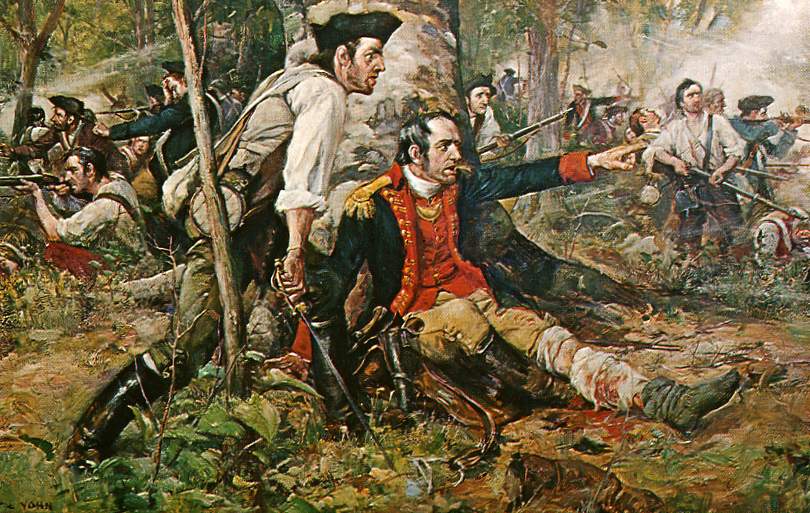
General Nicholas Herkimer at the Battle of Oriskany.
Photo Courtesy of Utica, NY Public Library

While luminaries like George Washington, Benjamin Franklin, and the Marquis de Lafayette are widely recognized for their Masonic ties and contributions to the Revolution, countless other Brothers played equally vital, though lesser-known, roles. Figures such as MW Mordecai Gist, W John Glover, and Henry Knox deserve significant recognition for their service. Just like the great State of New York, these Brothers’ contributions are ripe for deeper exploration. We encourage all Brothers to delve into their stories, and to remember the fidelity to Masonic obligation even among Loyalist Brothers like Joseph Brant.


No discussion of Freemasonry in Revolutionary New York would be complete without acknowledging the profound and poignant events of the Battle of Oriskany. Here, Brothers from Saint Patrick’s Lodge No. 4 found themselves fighting against each other, a stark reminder of the war’s personal cost. Tragically, General Nicholas Herkimer, a Brother in arms, gave his life on that battlefield.

The America 250 celebration is a unique opportunity to illuminate the story of Freemasonry’s profound importance to our Founding Fathers – not just the famous few, but the many lesser-known heroes who fought right here in our own state. Thanks to the research of RW Gary Heinmiller and the work of RW Samuel Lloyd Kinsey, the Grand Lodge of New York has produced an “American 250 Festive Board” script for our Lodges to use at dinners this year.

As we reflect on our rich history, let us particularly call attention to the enduring principles of Brotherhood, Citizenship, and Fellowship that continue to resonate within Freemasonry and Masons today.

Across the country, Freemasons are planning unique and exciting ways to celebrate the 250th anniversary of the signing of the Declaration of Independence of the United States. The Grand Lodge of New York has compiled upcoming milestones and opportunities to get engaged and ensure that all New York Lodges can find ways to commemorate this historic moment in our nation’s history.
See our events and get involved here.
Samuel Lloyd Kinsey

The Moon Lodge Opening: A Masonic Reflection on Light, Unity, and Ancient Traditions

The Moon Lodge Opening: A Masonic Reflection on Light, Unity, and Ancient Traditions

MASONIC RITUAL

The Moon Lodge Opening

A Masonic Reflection on Light, Unity, and Ancient Traditions

Freemasonry is a tradition steeped in symbols. Light and darkness, ignorance and understanding, formality and renewal. These are not merely poetic opposites, they point to something deeper. Our rituals teach us many things but one is specifically important for this paper, unity dispels darkness. That truth lies at the center of why I wrote the Moon Lodge Opening.

The inspiration came from Most Worshipful Steven Adam Rubin’s article The Last Moon Lodge in New York State. Bro. Steve describes Warren Lodge No. 32 in Rhinebeck, New York, the last Masonic Lodge in New York State still meeting according to the lunar calendar. Their persistence in maintaining this old rhythm, once common, now nearly forgotten, resonated with me.

There was something noble in it. They had chosen to uphold a practice not for convenience, but because it had significance. Their meeting schedule is not dictated by the routine flow of modern timekeeping, but by the full moon, our ancient companion ready to illuminate our path in the dark of night. At around the same time, I came across a simple image, one candle lighting another. The first does not lose its flame or luminance, both shines just as brightly. It is a simple yet powerful expression of how we, as Masons, pass light, wisdom, care, or instruction, from Brother to Brother. We do not diminish when we give, we become more ourselves. We do not hoard the light. We extend it and it multiplies.

I wondered if there was a way to frame that truth in an educational way. A visual demonstration to show how our actions can have positive impacts far outside of our personal circle. A way of showing that our strength lies not just in ritual precision, but in the intention and unity behind it.

This is how the Moon Lodge Opening took shape. It is not meant to replace our official Masonic opening, which must remain as prescribed. Rather, this is something to precede it, a symbolic act, meant to set the tone if a Lodge decides to observe a Moon Lodge meeting. It prepares the heart and mind tethering us to Brothers from the past.

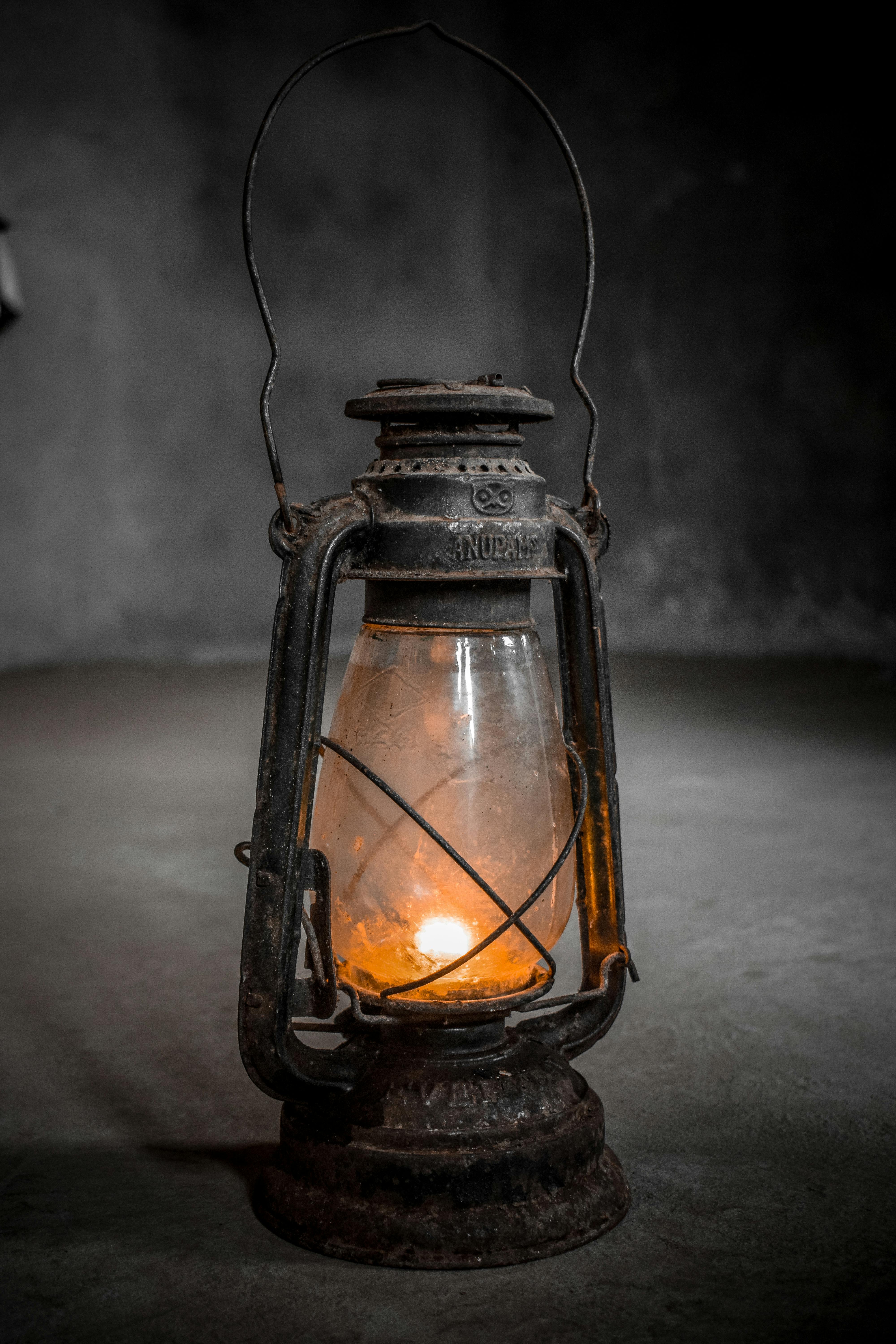
The centerpiece is a simple lantern carried in by the Worshipful Master. One by one, the Brothers light their own lanterns passed on from his light, until the entire room is illuminated. What begins in darkness with a single beacon becomes bright through shared effort, each Brother playing a part, each flame depending on another. It is a physical act with spiritual implications. The room changes. The atmosphere changes. And, perhaps, so do we.

In smaller gatherings, the effect is quiet and intimate. However, when the Lodge is filled with Brothers it becomes something amazing to behold. But always, the message remains, we do not labor in isolation. The shared work of Brothers past and present, of friends, of men committed to something higher always shines brighter than the single beacon in the night.

I offer the Moon Lodge Opening to all Lodges who would like to share the experience of what it was like to be a Mason long ago. A way of remembering those who came before us, those who traveled by foot, horse, carriage, or even boat, to sit in Lodge together. One by one they entered the Lodge room with their lanterns. Their faithfulness is not a relic. It lives on when we remember why we gather today.

And just as the moon reflects the sun’s light, I hope we continue to reflect and share the Light of Freemasonry. It is not by guarding the flame, but by giving it freely, that we keep it alive.

The words I wrote are not set in stone but are a base for this to grow. Please enjoy it as is or feel free to modify it as you see fit. The text I have now is my fifth version and I expect it to continuously change. If you do use it and if you change it, please email me your version. I am excited to learn how this will evolve.

Thank you Brothers! I hope you enjoy it.

Written by: WB Todd M. Paterek

Bro. Todd is Past Master, Lodge Education Officer, Northstar Coach, and Webmaster of Blazing Star Lodge #694 F&AM, East Aurora, New York.

More Than Just Members: Reflecting on the Heart of Freemasonry

More Than Just Members: Reflecting on the Heart of Freemasonry

MASONIC EDITORIAL

More Than Just Members: Reflecting on the Heart of Freemasonry


My Brethren all, today I share with you a piece that reflects my own opinions. Those of you who know me within the Craft by name or reputation know that I truly love “this thing of ours.” I love what I believe it is meant to do, its purpose, and what it stands for. I’ve wanted to write something like this for a while, and until recently, I wasn’t sure how to convey it. But my Brothers, I have found the words. I want to evoke a sense of nostalgia in the older reader, pride in the younger reader, and encourage everyone to think – to think about themselves, the brother on their right and left, the brother who doesn’t attend lodge as often as we’d like, and the prospective member who has yet to enter our doors. My Brothers, I hope this article makes you think and ignites a fire within you and your lodge – a fire that may need reigniting or perhaps one that will burn even more passionately and stronger.

I’m sure some of you, having read the title, are wondering, “What is this?” or “Why would he write this?” Why? Because, as I said before, I love this Craft, I love my fellow Masons, and I want to be known as a Mason who inspires others, who makes people think, but more importantly, who makes good men better. Now, let’s get into it!

Don’t be a Mason if your search within this fraternity is based on seeking personal merits. If you intend to stand out above others, if you crave or mistakenly believe that you will find recognition, fame, or wealth within “this thing of ours”, then you are on the wrong path.

Masonry is not a stage for selfishness nor a means to achieve individual glory. Rather, it is a sacred space where humanity, tolerance, and selfless service are the pillars that support our work

Don’t be a Mason if your purpose is to take advantage of this fraternity for your own interests. Masonry teaches us to be men of principle, committed to the well-being of our community and the development of our virtues. If your gaze is focused on what you can get instead of what you can offer, then you are not ready to embrace the true Masonic spirit.

Masonry invites us to use the mallet with enough force to carve the rough stone, enabling us to build the immense edifice that is humanity, but never with excessive force that disregards intelligence, which would only destroy what we have achieved. In its teachings, the fraternity always emphasizes unity, not division.

Being a Mason means working on the continuous improvement of oneself and others; it is to be a beacon of light in the darkness and an example of integrity and honor for all. Each one of us is responsible for cultivating these qualities and virtues. Only then will we be able to honor the values transmitted to us through the centuries by our ancestors.

My Brothers, I urge you to ask yourselves: What are your true intentions in crossing through this door? Is it your desire to grow in wisdom? To build bonds of brotherhood? To contribute to the well-being of humanity? If you answered yes to any of those questions, then you have a place in our fraternity, and for all of you who answered yes, WELCOME!

To quote someone I admire and who has personally motivated me within the lodge and beyond, R.W. John McKoy: “Being a good man is not something you take with you, but it is something you leave behind. It is something you pass on.” I don’t know if John knows how profound I found that statement and how often I think about it. I’m even willing to bet John doesn’t remember saying it, but it’s something I have thought about regularly since 2019 and has been a daily driving force in my life.

Freemasonry is a journey of self-knowledge, dedication, and love for one another. Our actions must speak louder than our words, so that in the end, we can look back with pride, knowing that we have been true Masons in every step we have taken throughout our lives. Then, when our end comes, we can leave this world with pride and the satisfaction of duty fulfilled.

Thank you for the opportunity to share my thoughts and opinions with you. I hope you reflect on your Masonic journeys and remember what drove you to become a Mason. I hope that any lost passion has been reignited, and if your passion remains, I hope this reflection only intensifies it. I truly believe that as men and Masons, we serve a greater purpose. We should forever strive not just to make good men better, but also to continue working on becoming the best versions of ourselves.

Thank you again, my Brothers, for reading. May the Great Architect bless each and every one of you and your loved ones. I wish you health and happiness.

Written by: WB Lee Eitelberg WB Eitelberg is the current sitting Master of Cornucopia Lodge No. 563 (2025). He is also a 32° Freemason (Scottish Rite Northern Masonic Jurisdiction) and a proud Shriner.
Samuel Lloyd Kinsey
Masonic Ritual – Teaching through Emblems

Masonic Ritual – Teaching through Emblems

MASONIC RITUAL

On the Method
of Teaching
through Emblems

MASONIC RITUAL EXPLAINED BY THE CHAIRMAN OF THE CUSTODIANS OF THE WORK

In the Grand Lodge of New York,

Freemasonry has often been described as “a beautiful system of morality, veiled in allegory and illustrated by symbols.” Not all Freemasons may agree with this description – which is attributed to Dr. Samuel Hemming, c. 1820—and it may not tell the whole story, but it’s as good a place as any to start. The volume of Masonic Ritual and lecture that has accumulated and evolved over the centuries has offered us an almost inexhaustible source of material to teach the lessons of Masonry and learn the lessons of life. However, while our Rituals, symbols and allegories are among our great treasures, our method is not without its challenges for the Mason seeking enlightenment and knowledge. In fact, a central challenge arises from the very strength of the symbolic method: An emblem may symbolize one thing, but it may also symbolize many other things. It has even been said that the most powerful emblems are those to which many different meanings can be ascribed.

The emblems of Freemasonry are powerful indeed, and as a result they have given rise to a vast profusion of written work exploring and interpreting the higher meanings of our Rituals and emblems. These works have approached Masonry using perspectives as diverse as Kabballah, sacred geometry, Hermeticism, Christianity, Alchemy, legendary history, Eastern philosophy, mythology, Rosicrucianism, ceremonial magic and highly eclectic personal beliefs, to name but a few. The question therefore naturally arises as to which one is right and true, and the answer is as unsatisfying as it is brief: It depends.

I like to remind young Brothers that it’s incorrect to say “there are no wrong answers” or “all interpretation are equal” when interpreting Masonic Rituals, emblems and allegories. There are plenty of wrong answers and bad interpretations. Wrong answers and bad interpretations are those that are not grounded in a thorough knowledge of that which is answered or interpreted.

For example, if someone proclaims some “truth” about Masonry predicated on the assumption that the Masonic Altar is always situated in the middle of the Lodge room, this would be a “wrong answer” because it does not acknowledge that one of the largest Masonic traditions in the world does not use a centrally-located Altar, nor does it account for the fact that our own tradition only started using a centrally-located Altar sometime in the mid-1800s.

The good news is that there is an almost infinite number of “right answers” that can be built upon a solid basis of knowledge. Freemasonry can also be described as a journey of spiritual, intellectual and moral growth, so we should eagerly embrace opportunities to enrich our Masonic experience through the acquisition of knowledge. Just remember to be skeptical! If it seems too tidy to be true, it probably isn’t. Two starting places I recommend are David Stevenson’s The Origins of Freemasonry : Scotland’s Century”, which is more grounded in good scholarship than any other book on this subject, and Robert L.T. Cooper’s The Rosslyn Hoax”, which contains many of the most foundational texts with relevance to Freemasonry and also sets forth a good way of discerning an academic approach from a popular approach (hint: you want to read things written by those who adopt the former approach).

Response provided by RW Samuel Lloyd Kinsey
Chairman, Custodians of the Work, Grand Lodge of New York

Note: This site is an excellent source of information about Freemasonry. While every effort has been made to provide accurate and up-to-date information about Masonic Ritual, please remember that a website is not a substitute for your jurisdiction’s Standard Work or Approved Ritual.
Samuel Lloyd Kinsey