Rites, Rituals, and the Universal Journey to Manhood

Rites, Rituals, and the Universal Journey to Manhood

MASONIC EDUCATION

Rites, Rituals, and the Universal Journey to Manhood

The following is the first of a two-part essay. Part II will discuss Native Americans and Indigenous Australians.

Ancient civilizations around the world had intricate rites of passage and initiations to propel their males from boyhood to adulthood. These emphasized transformation, mentorship, and the sacred. Freemasonry, a modern fraternity, with roots in the seventeenth century, echoes these ancient practices with its own initiation rituals. They appear to be connected across time, highlighting the universal and enduring human need for structured pathways to mark the transition to manhood, which some argue is absent from today’s social constructs.

There are four core themes from four civilizations we can examine.

Separation, Transition, and Incorporation

Ancient Greece and the Eleusinian Mysteries

(circa 1600 BCE to the 4th century CE)
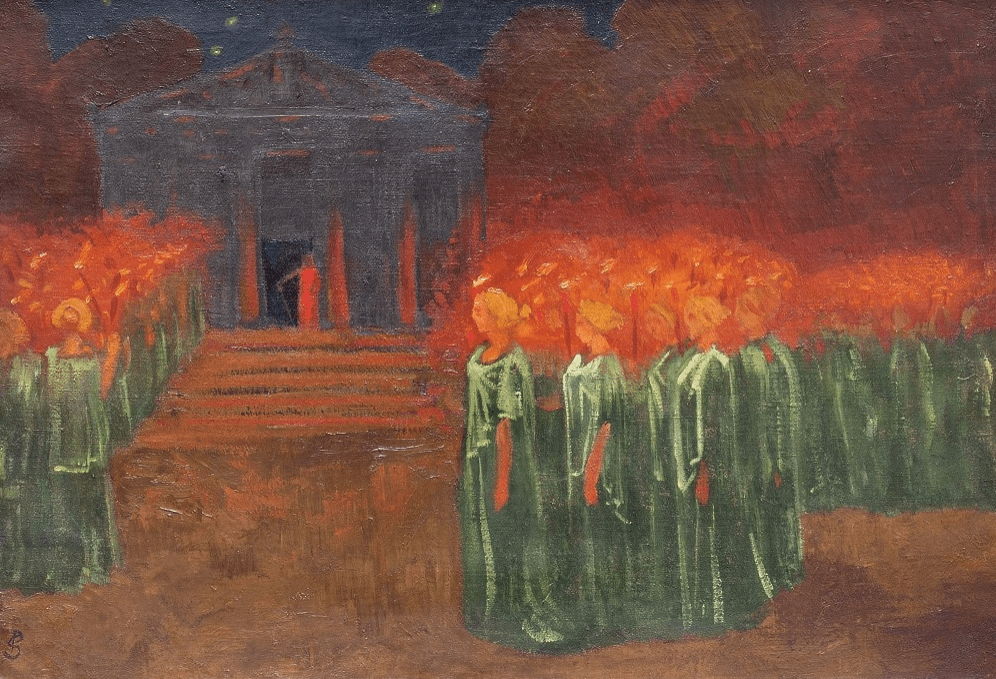
The Eleusinian Mysteries were among ancient Greece’s most significant and secretive spiritual traditions. Centered in the town of Eleusis, these were much more than rituals; they comprised a cornerstone of spiritual life, deeply rooted in the myths of the gods. Rich with themes of death, rebirth, and the life cycle, they provided the framework for initiation rites that promised profound spiritual renewal and insights.

The scale of the Eleusinian Mysteries and their impact on ancient Greece were immense. It is estimated that, at any given time, thousands of initiates were part of this sacred tradition, encompassing a wide cross-section of society. From the humble farmer to the most esteemed philosopher, participants were drawn to Eleusis by the promise of encountering the divine and gaining knowledge that was believed to hold the power to transform their lives. Given the mysteries’ long span, from approximately 1600 BCE to the 4th century CE, it is likely that a significant portion of the Greek populace, spanning generations, had either some awareness of, or direct involvement, in these rites. Despite the mysteries’ secrecy, the general reverence for and curiosity about the mysteries permeated the culture, contributing to their central role in the spiritual and social fabric of the time.

Similar to modern Freemasonry, the Eleusinian Mysteries functioned as an ancient secret society, where initiation marked a pivotal transition in an individual’s life. Both traditions share a graded structure of initiation, imparting knowledge in stages, coupled with a strict code of secrecy regarding their inner workings and wisdom. This framework reveals a timeless human fascination with secretive societies that promise not just deeper knowledge and community, but a connection to something beyond the ordinary—a connection that elevates the individual and collective experience of the sacred.

The Eleusinian Mysteries’ broad appeal and the sheer number of participants reflect the innate human need for rituals that mark life’s transitions. These ancient rites provided a structured pathway to spiritual growth, echoing the human journey through life, death, and rebirth. The mysteries’ lasting influence and the widespread awareness among the ancient Greeks of their existence reflect the deep-seated desire for connection to the divine and the cosmos, a desire that continues to find expression in modern traditions like Freemasonry.

Initiating in Sacred Spaces

Ancient Egypt

(circa 3100 BCE to the 4th century CE)

In Ancient Egypt, sacred spaces for initiation rites were integral to the cultural and spiritual life of the society. These spaces, often majestic temples, were far more than architectural achievements; they were central to Egyptian spiritual practices, providing a venue for significant transformational processes. The Egyptians believed that for an initiation rite to be fully effective, it needed to be held in a space that was both physically and spiritually separate from everyday life.

The need for these sacred spaces arose from the Egyptians’ deep connections to their deities and the afterlife. Temples were viewed as earthly residences of the gods, serving as gateways between the human and divine realms—where heaven and earth intersected. This perception made temples the perfect settings for initiation rites aimed at elevating individuals from mundane existence to a heightened spiritual awareness. These rites typically featured ceremonies symbolizing death and rebirth, reflecting the journey of the soul through the afterlife, a core concept in their theology.

The initiation rites were crucial not only for preparing initiates for their roles in society, but also for their spiritual journeys after death. This dual focus on the temporal and the eternal highlighted the critical role of sacred spaces in these rites. Temples provided a controlled environment where metaphysical energies and divine presence were palpable, aiding the transformative experience of the initiate.

The practice of utilizing sacred spaces for initiation rites dates to the very beginning of Egyptian civilization, around 3100 BCE with the First Dynasty. Over the millennia, these practices evolved, but always maintained the importance of sacred spaces in achieving spiritual transformation.

Drawing a parallel to this, Masonic lodges today are considered sacred retreats where initiations and rituals of gradual revelation are conducted. These lodges are deliberately arranged with symbols and tools that reflect Masonic teachings, creating an atmosphere that supports the initiate’s symbolic death and rebirth. The practice of conducting rites in secret or in consecrated spaces is not just a nod to tradition, but is a recognition of the need for environments that are removed from the concerns and employments of the world, enhancing the depth and impact of the transformative processes.

Freemasonry, like the ancient Egyptian practices, operates in these consecrated spaces to maintain a level of confidentiality and sanctity. This secrecy is not just for tradition, but serves to deepen the bond among members and enhance the personal and communal experience of the spiritual and moral lessons imparted during the rites. The use of such spaces reflects a universal understanding of the importance of special environments in facilitating profound personal and community transformations, echoing through centuries of human spiritual practice.

Written By Bro. Christopher Ramcharran.

Bro. Ramcharran is the Junior Warden of Cornucopia Lodge 563 in Queens, New York.

Jason Short
An Apprentice’s Twenty-year Journey to the Sublime Degree

An Apprentice’s Twenty-year Journey to the Sublime Degree

MASONIC LIFE

AN APPRENTICE’S TWENTY-YEAR JOURNEY

TO THE SUBLIME DEGREE

I am often asked what happened during the twenty years between my being made an Entered Apprentice and being raised a Master Mason. A more interesting story is why I joined and what brought me back. It was as simple as one brother reaching out to another.

It was a brisk October evening in 2002. I nervously put on my Sears & Roebuck suit and kissed my wife goodbye. She told me she was proud of me as I closed the door to our little Verplank apartment and drove off. A little while later, I parked in front of this beautiful old building. It was Collabergh-Radium Lodge 859. I barely knew a soul inside and wondered what was going to happen within, as I looked at the Square and Compasses on its façade. I walked up the front steps as a cool wind bristled through the trees and a few leaves spiraled down the sidewalk. I opened the door and entered and was immediately greeted by warm smiling faces that put my mind at ease. Then I was seated in the room adjoining the lodge room, was prepared in the manner of an Entered Apprentice, and was about to go forward as all brethren who have gone this way before.

But I never thought it would take twenty years to complete my journey from Entered Apprentice to Master Mason.

I grew up hearing about the legacy of Freemasonry in my family history. My mother is a very proud Eastern Star, as was my grandmother. I was told my grandfather was a Mason, although he never spoke about it (maybe because I was too young to join before he died). Then there was Uncle Walter, who also was a Mason. I often heard stories about what a good man he was.
He was in a “secret society” of great men, I was told. I often wondered what kind of magical things these men were up to in their lodges. My grandparents owned a beautiful old Victorian home in Bedford Hills, New York, where I’d spent a lot of time growing up. My grandfather was a structural engineer retired from the New York Central Railroad. I loved to explore my grandparents’ property.

My favorite place was their attic with all the magical items within. One day, something caught my eye. A beam of light shining through a pane of wavy glass in the attic window illuminating a wood box in the corner. It was like something out of The Chronicles of Narnia. I walked over and blew the dust off the lid, revealing a Square and Compasses. When I opened it, I found my great grandfather’s constable badge, some arrow heads, a hat, a white apron, a Masonic Bible, and an old poster. Across the top was written “The Steps of Freemasonry.” I was awestruck! What were the degrees listed on this poster? Who were these great people? I had to join them one day. Years later, while studying at the University at Albany, the Craft called to me again. I spent some time studying famous Freemasons, like George Washington, Benjamin Franklin, and other Founding Fathers.

I graduated UAlbany in 1999; married my beautiful girlfriend, Hana; and we had our son, William. I admired my father-in-law, he was a Freemason in the Czech Republic, so I decided to give it a try. I printed out a petition, mailed it, and waited for a response. A short time later I completed my first degree.

After my initiation, I entered the dining room and was warmly received by my new brothers. They gave me a Bible, which they all signed, and my apron. The Three Tenets of Freemasonry, they explained, are Brotherly Love, Relief and Truth. It would take me twenty years to fully understand this. Soon after receiving the degree, the realities of life began to hit hard. I was a first-time father and a husband eager to make my way in the world. My wife couldn’t work because she didn’t have a Green Card, and my son was a toddler. They were dependent on me for everything. I had to do something drastic to improve our situation, so we moved upstate to Johnstown in hope of a better life. I took a job to have a steady income between writing gigs, and the years rolled on.

I thought about Freemasonry often. The impact of leaving the brotherhood weighed heavy on my mind. I longed to return, but didn’t know how, didn’t know whom to ask, didn’t know how they would respond to me. My life was good, and I wasn’t working so many hours anymore. My son is now grown. I put him and my wife through college. They are both very successful now. Something was missing though.

It appears the Great Architect wasn’t done with me, as fate and circumstance intervened in 2021.
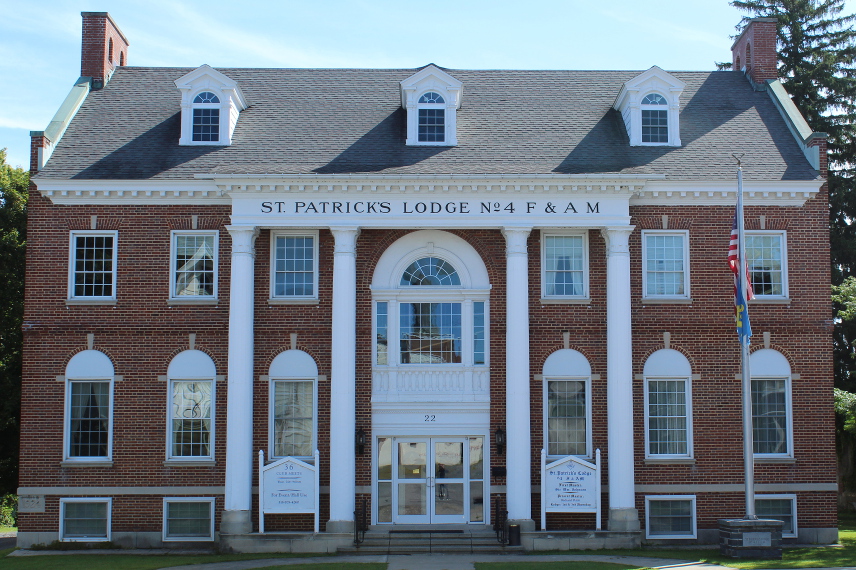
Why did I come back after twenty years? Because of one brother reaching out to another. Bro. Paul Meher is a member at St Patrick’s Lodge 4. Serendipitously, our kids were dating and that led to us meeting. He invited my family to dine with his, and the rest is history.

We began to talk. I told him my situation and he convinced me to give Freemasonry another shot. It was then that I met the greatest bunch of guys I’ve ever known, and they all worked together to bring me into the fold.

The brothers at St. Patrick’s Lodge in Johnstown helped me restart the journey that I had begun so long ago one cold autumn night in 2002 in the hopes becoming a better man. They taught me that through service I can build meaningful relationships both within and without the lodge with my Masonic brothers. They passed me to the Degree of Fellow Craft, and raised me to the Sublime Degree of Master Mason after twenty years! It has been an incredible journey so far, with the brothers of my lodge and the area concordant bodies, and it has only just begun. In the words of my friend and brother, Ill. Peter J Samiec, “Freemasonry is a wonderful experience. Enjoy the journey!” And I have and will continue to do so.

By Bro. Russell W. Dickson

Bro. Dickson is the Senior Deacon in St. Patrick’s Lodge 4 and remains at labor in Collabergh-Radium 859, both in New York. He is a Royal Arch Mason in Hiram Union Chapter 53, and is a 32° Scottish Rite Mason at the Valley of Schenectady, where he serves as Senior Warden of Sigma Council Princes of Jerusalem. He holds a Bachelor of Arts Degree in journalism from the State University of New York at Albany, and has been a freelance journalist for more than twenty-five years. His work has been published internationally, in multiple languages, by both online and print news outlets.

Jason Short
Meeting on the Level

Meeting on the Level

MASONIC LIFE

Meeting on the Level… at the head table

“We are all brothers just trying to do our parts”

While I was initiated into Freemasonry in October of 2002 at Collabergh-Radium Lodge 859 in Nelsonville, New York, I was not passed to the Degree of Fellow Craft and raised to the Sublime Degree of Master Mason for another twenty years, in June 2022, so I consider myself a relative newcomer to the Craft, but I am very eager to learn as much as I can. I serve as Senior Deacon of St. Patrick’s Lodge 4 in Johnstown, NY, where I received the Second and Third degrees, and I am a 32° Scottish Rite Mason and a Royal Arch Mason as well. In my labors and during my travels, there is one fundamental that continually comes up in ritual and is reflected in experience: We meet on the Level and part upon the Square. It is a way we prescribe how Freemasons should treat one another both within lodge and without.

St. Patrick’s 4 is among the four oldest lodges in New York State. It is a lodge with an incredible linage, having been founded by William Johnson in 1766—even before the founding of our country. I consider myself lucky to attend a lodge with numerous Worshipful and Right Worshipful brethren, including our District Deputy Grand Master, and Ill. Peter J. Samiec, 33°, the recently retired Sovereign Grand Commander of the Ancient Accepted Sottish Rite, Northern Masonic Jurisdiction. Other brothers I have had the privilege of meeting, while attending my lodge and various concordant bodies around the Capital Region, include The Most Worshipful Steven Adam Rubin, Grand Master of Masons in the State of New York.

While attending lodge alongside such well-informed brethren, it is hard to resist placing them on a pedestal, but it is those two brothers at the apex of leadership in Freemasonry, M.W. Rubin and Ill. Samiec, who were the first to teach me this Masonic lesson. “We are all brothers just trying to do our parts,” as Grand Master Rubin phrased it. I admit I still struggle with the concept due to my admiration of our fraternity, but it is sinking in as I continue my journey for more Light in Masonry. An experience I had as a new Sublime Prince attending the Valley of Schenectady’s holiday party a couple years back is where a few brothers showed me how we treat each other with humility, respect, and honesty.

It was my first Scottish Rite event. My wife and I were a little nervous. We had some trouble locating the venue, so we arrived just as it started. The room was packed. Every table was full except one, front and center. We walked over and sat down. Right across was Ill. David E. Barnes, Active Member of Supreme Council; Ill. Gerald T. Wright, Commander in Chief of Sigma Consistory at the time; and Ill. Oscar Alleyne. The coup de grâce came when the Sovereign Grand Commander of the Scottish Rite NMJ, Ill. Samiec, with his lovely wife Gail, took the seats next to us. I whispered to my wife “That’s the Sovereign Grand Commander sitting next to you!” as a bead of sweat rolled down my forehead and a chill ran up my spine.

We had mistakenly sat at the head table.

Photo: (L to R: Bro. Dickson w/MW Steven Adam Rubin)

Pictured: (L to R: Bro. Dickson with Ill. Peter J. Samiec, 33°)

I felt so unworthy, as a new Master Mason and Sublime Prince, to be seated accidentally among such great Masons. I whispered to Randy Meschutt, then Most Wise Master of Sigma Chapter of Rose Croix, as he passed, that I mistakenly seated us at the Sovereign Grand Commander’s table, and we would move if he desired. To my surprise, neither he nor anyone else at the table had a problem with us joining them. Long story short: We had a wonderful evening laughing, enjoying great food, and chatting with the Samiecs and the other eminent Masons. We were all truly brothers! The only one concerned that we had sat at that table was me.

The night ended and we said our goodbyes. I drove home feeling blessed that I had, in fact, met on the Level and parted upon the Square. A couple of weeks passed when I received a package in the mail from Supreme Council in Massachusetts. Sovereign Grand Commander Samiec himself sent me the book American Freemasons: Three Centuries of Building Communities by Ill. Mark A. Tabbert. Ill. Bro. Samiec inscribed these words inside: “To my fraternal Brother Russell—Freemasonry is a wonderful experience. Enjoy the journey!”

By Bro. Russell W. Dickson

Bro. Dickson is the Senior Deacon in St. Patrick’s Lodge 4 and remains at labor in Collabergh-Radium 859, both in New York. He is a Royal Arch Mason in Hiram Union Chapter 53, and is a 32° Scottish Rite Mason at the Valley of Schenectady, where he serves as Senior Warden of Sigma Council Princes of Jerusalem. He holds a Bachelor of Arts Degree in journalism from the State University of New York at Albany, and has been a freelance journalist for more than twenty-five years. His work has been published internationally, in multiple languages, by both online and print news outlets.

Religion and Freemasonry: A Third Approach

Religion and Freemasonry: A Third Approach

MASONIC EDUCATION

Religion and Freemasonry:

A Third Approach

Masons are well-known for their conviction that Freemasonry is not a religion. This is well founded, considering how Masonry does not have a specific system of faith, a doctrine, or a unified concept of worship. While Masonry has a strong ritual identity that often is confused with the liturgical actions of a religion, the goals and purposes of Masonry’s rituals are very different from those of worship.

Nonetheless, every Mason must affirm his belief in a higher power; our altar is graced by a Volume of Sacred Law; and we pledge our Obligations upon the honor of our faith. To these ends, even though Freemasonry is not a religion, Masons themselves are fundamentally “religious.”

As a pastor, who spent much of his undergraduate work studying the world’s religions, I have noticed that much inter-faith work and dialogue take two basic (and ultimately unsatisfying) approaches. The first is exemplified by the phrase “to each his own.” This kind of pluralism lies at the root of the American experience. The second is resorting to the “lowest common denominator.” In other words, if we cut out everything that we disagree with in one another’s religions, what is the “lowest common denominator” that we can all agree on? Usually, the answer is something like “love” or “do unto others as you would have them do unto you.”

In my view, Freemasonry takes a third, and very different, approach. Masons don’t just “live and let live” or settle for cutting out the beautiful—and sometimes controversial—aspects of the faith systems we are a part of. Instead, Masonry expects us to be educated in the beliefs of our brothers, sensitive to the unique aspects of their faiths, supportive of their belief systems, and encouraging of their growth and development.

Education is a fundamental aspect of the Masonic life and, I believe, it extends to the topic of religion. Unlike the world around us, we are committed to intelligently and deeply learning about what our brothers’ religions actually teach. This means not relying on media portrayals, political caricatures, or even the (sometimes well-intentioned) descriptions of other religious leaders. For example, as a Protestant pastor, I can do my best to describe Islam or Hinduism with grace and intelligence, but I always would describe it as an outsider, rather than as someone who truly lives and believes them.

As Masons, we are sensitive to the unique aspects of our brothers’ faiths and supportive of their belief systems. For example, we would never require a Sikh or Jewish brother to uncover his head in the lodge. We graciously plan our collation menus to provide options for those whose religions include dietary restrictions. Our rituals, prayers, and music are non-sectarian and—if done correctly—both respect and reflect the diversity of the brotherhood.

Most importantly, Masons encourage one another’s individual growth and development without sacrificing the tenets of our own beliefs. As a Mason, and especially when serving as a chaplain, I have the privilege and responsibility to help my brothers engage the depth and profundity of their faiths, even when different from my own. This is what makes our approach different from the way much “interfaith work” is done.

Masonry doesn’t approach religion with a naïve pluralism or settle for a watered down “lowest common denominator.” Quite the opposite! Even though it is sometimes confusing and complicated (and we are guaranteed to make mistakes in the execution of our well-meaning attempts), it is a beautiful testament to the Craft when brothers stand alongside one another in respect, support, and encouragement of each other’s growth and convictions.

Written by: Bro. Tim TenClay

Bro. TenClay is a Grand Chaplain in the Grand Lodge of New York; Secretary of Jephtha Lodge 494; member of his mother lodge, Pultneyville 159; and an honorary member of San Giacomo 1411 in Palermo, Italy. He a father, pastor, labyrinth facilitator, and life-long learner with a deep calling to walking alongside individuals on the journey toward wholeness in mind, body, spirit, and circumstance.

Jason Short

Masonic Mnemonics

Masonic Mnemonics

MASONIC EDUCATION

Masonic Mnemonics

For millennia, mnemonics have been used by humanity to help cement in the mind information that may otherwise be difficult to retain. Yet, in today’s day and age, mnemonics are often overlooked as many turn to technology to assist and aid with memory. However advanced the profane world becomes outside the lodge, within the confines of the symbolic temple the art and science of memory will continue to be a treasured masonic tradition.

Memorization is a major component of what freemasons do. In 1599, Scotland’s master of works, William Schaw, deemed the art of memory and science thereof to be so essential to the craft that apprentices and fellow craftsmen were tested regularly by the wardens of their lodges. If they failed to demonstrate proficiency, they were required to pay a financial penalty. In modern times brethren might not be held financially accountable for a poor memory, but they may be denied admittance to higher degrees, barred from participation in ritual, or fail to be elected to an officer position in lodge.

For some, memorization work comes easy. For a great many more, the task of memorizing even a single line of masonic text may be daunting. However, having difficulty with memorization doesn’t necessarily mean one has a poor memory. It’s much more likely the individual struggling to remember their catechisms, lecture, or ritual hasn’t been taught how to memorize.

Want to improve your memory? Here are five mnemonic devices any brother can learn to improve their memory, and increase their masonic experience overall.

Acronyms

Most people are familiar with acronyms as they are abundantly present throughout our modern world. Organizations like NASA (national aeronautics and space agency) or elementary concepts such as roy-g-biv are considered to be general knowledge and serve as simple reminders for much more complex sets of information. They may not always be the right application for large portions of text but are great devices to remember bite sized lists of sequential information.

Applying acronyms to freemasonry can help to call to mind things such as the seven liberal arts or the five orders of architecture. Simply pick a list or sequence of information you’d like to remember, examine or arrange the letters corresponding to the starting character of each word into a single representation. For masons familiar with the shorthand cipher, like that used by the grand lodge of the state of New York’s ritual monitor, acronyms can take on a much broader function in their phonetic representation of something that is easier to call to mind.

For instance, the example of the seven liberal arts and sciences is the acronym grlagam, remembered as “gorilla gam.” This may call to mind the picture of a classy gorilla but also serves to represent grammar, rhetoric, logic, arithmetic, geometry, astronomy, and music.

AcrOSTICS

Similar to acronyms, acrostics work great to help recall bite sized chunks, or series of information. They have a home in grade school math and sciences like, cherry pie’s delicious, representing the circumference of a circle is equal to pi times diameter, or my very educated mother just served us nine pizzas to remember the order of the planets (and Pluto). Acrostics become especially useful with information too large or obscure for a simple acronym.

In freemasonry, acrostics may not always be the most effective means to learn ritual, but they are especially useful for remembering important sets of information. For those interested in furthering their esoteric study of the craft, acrostics can contribute to remembering structured information like the ten spheres of the sephiroth, seven chakras, or nine gates of the body.

Here’s an example acrostic that’s especially useful for newly initiated brethren helps to remember the seven officer stations within a lodge of entered apprentices. “just some wise joyful sages discovering secret treasure within,” can assist in calling to mind the junior warden, senior warden, junior deacon, senior deacon, secretary, treasurer, & worshipful master. 

LINK METHOD

The link method of mnemonics basically harnesses the power of visual association by establishing a chain reaction of recall in one’s mind. The process utilizes a string of associated mental images or situations that each serve as a reminder to the underlying information while calling to mind the next. The link, or chain, method becomes especially useful with large series of information, including text.

For Freemasons, link method mnemonics is incredibly useful working tool to master. It lends itself to verbatim, word-perfect, recall which for masonic lecture tradition and ritual excellence, is a big deal. Practice with this method also helps to strengthen one’s own faculty to listen actively and quickly absorb written information.

Take for example this line of scripture from psalm 133:1 behold, how good and how pleasant it is for brethren to dwell together in unity! To use the link method, first visualize an associated image to each word. Often the first image that comes to mind is the best, though the more detailed or unusual a mental image the more immediately it will stick in one’s mind: bees holding hands (behold), a spotted cow (how), the hood of a car (good), sand (and), another spotted cow (how), begging an ant please (pleasant), cousin it from the addam’s family (it), goddess isis (is), fur coat (for), polaroid picture of the brothers of your lodge (brethren), a cartoon number 2 (to), a dewalt power drill (dwell), two feathers (together), a motor inn (in), a circle of people holding each other’s hands (unity). The next step in the process would be to link these visuals together to form a chain or story that logically leads from one image to the next: a bee holding hands with a cow standing on the hood of a car stuck in sand near another cow that is begging an ant please, etc.. The more one practices this technique the more rapidly they will be enabled to create these strings of mental images, aiding in the rapid retention of ritual text.

PEG SYSTEM

Popularized by American magician and a memory-training specialist, Harry Lorayne, the peg system is a popular mnemonic technique that relies on mental imagery and symbolism to remember list information. Like hanging a jacket from the peg of a coat rack, every item that needs to be remembered is associated with a pre-memorized list of “peg words.” Often pegs are associated with numerical values or playing cards whereby a string of data can be rapidly be translated into visual associations of easy to remember scenes or narratives.

For instance, the number 1 might be associated with “sun,” 2 with “shoe,” 3 with “tree,” and so forth. A well-developed peg system may include well over a hundred pegs, but with even a base set of ten, one can design a personal system to aid in the memory of dates, phone numbers, or even grocery lists. The year 2133 could be represented as a shoe atop a sun positioned between two trees. A grocery list of coffee, apples, & toothpaste recalled as a shoe full of hot coffee takes a bite out of the sun like an apple then brushing its teeth with a tree.

For freemasons, the peg system can be a wonderfully useful tool both in and outside of the craft. The building of one’s own peg system based upon freemasonic symbolism is a great exercise in focus, contemplation, and practice of link memory mnemonics.  A well-developed peg system can aid in rapid memorization of ritual, while even a base ten set of symbols can help to cement in one’s mind key historical events or even passages of sacred law. 

To serve as an example of a basic masonic numerical peg system:

0 = point within the circle

1 = all seeing eye

2 = pillars

3 = tapers or candle

4 = square and compass

5 = volume of sacred law

6 = seal of Solomon

7 = father time with a sickle

8 = hourglass

9 = memento mori

Memory palace / system of loci 

Since the 6th century BCE, the memory palace, or system of loci, has been a cornerstone of mnemonic techniques. Popularized by the Greek poet, Simonides of Ceos, a memory palace makes use of our natural visual and spatial memories by mixing in vivid mental images to familiar locations to serve as a reminder for whatever is needed to be recalled. This system is a wonderful device for memorizing lectures, stories, poems, and sequences of information. Being as the memory palace is a place within one’s own mind, this mnemonic technique can be built up to retain endless amounts of information. From something as simple as a single sentence to the complexity of epic poems and entire books.

Where freemasonry is concerned, this mnemonic technique fits so well into the work, it leaves one to wonder if this is the art and science of memory william schaw was so keen on preserving within the craft at the end of the sixteenth century. To begin work with this method is quite simple. First, start with a physical space familiar to you; a house or apartment are good, even a small space like an office, kitchen, or garden can work quite well. Next it’s wise to establish your movement through that space. Imagine observing the area of your location as you preamble around a set course. After the path to traveled and location are fresh in your mind, begin the perambulation again placing mental images as visual associations about the space. These mental images will make up the furnishings of your newly established memory palace and ought to strike the eye as out of the ordinary to make them difficult to forget. Ultimately, to remember the underlying information simply revisit your memory palace and let the arrangement of odd furnishings serve as reminders while you move throughout the space.

A great example of a masonic memory palace would be utilizing the symbolic lodge to remember the catechisms of a degree. Retracing a ritual’s preparations and perambulations while stacking stations and places with easy to recall imagery works great to commit information to mind. As this memory palace is revisited, it also helps illustrate the lessons and symbols of the degree and becomes great for further contemplation.

A note for consideration

Appreciate mnemonic devices and techniques as tools to help retain information but be mindful not to confuse the associated images with the significant teachings imparted in masonic ritual and degrees. Where mnemonics are most effective is in allowing one to retain information in their short-term working memories to be able to continue to revisit the information in spaced increments later on. This process of returning to the over a period of time will help to move it from short term to long term memory. However, in committing something to memory it’s also important to consider and contemplate on what is actually being said. Understanding this is key to bridging the gap between words and wisdom and at the very heart of ritual excellence.

Seeking Light

The following reading course is a wonderful place to begin one’s own journey into mastering masonic mnemonics and training ones mind in the art and science of memory.

Introduction for the uninitiated

Moonwalking with Einstein by Josh Foer introduces its readers to the word of competitive memory, mnemonics, and the mind through an entertaining account of the author’s own non-fiction account of training and then competing in the 2005 u.s. memory competition. This book works to illustrate how it’s possible to improve one’s memory through mnemonics and dedication.

Easy reading for the Entered Apprentice

Solomon’s Memory Palace by Bob Lingerfelt and Memory Palaces and Masonic Lodges by Charles B. Jameux both provide a wonderful crash course on memory palace techniques applicable to freemasons and the craft.

Light work for the Fellow-Craftsman

The Memory Book, Ageless Memory, and How to Develop a Super Power Memory by American magician and memory champion, Harry Lorayne, are fantastic for building upon one’s own memory practice. These books present a variety of mnemonic devices and techniques that can be applied across a countless of situations. These books are great for brethren studying the seven liberal arts and sciences, or improving memory overall.

Further light for the Master Mason

Dive deeper into the art and science of memory and the role it’s played in spiritual and philosophical practices throughout the ages with this collection of more advanced books on the topic. The Art of Memory by Frances Yates explores the history and development of exoteric and esoteric memory techniques and practices. While, de Umbris Idearum (on the shadows of ideas) by Giordano Bruno written in 1582 explores an advanced system of medieval mnemonics that are infused with hermetic mysticism and spiritual philosophy.

Written by: Bro. Jason W. Short

Presently, Jason is the Treasurer of Aurora Grata-Day Star Lodge 647, a Royal Arch Mason with Nassau Chapter 109, and a 32º Sublime Prince of the Scottish Rite Valley of New York City.

.

Jason Short