Moses, the Burning Bush, and the Secret Name of God

Moses, the Burning Bush, and the Secret Name of God

CRAFTSMEN ONLINE PODCAST

Moses, the Burning Bush, and the Secret Name of God

with WB Nathan Schick

Have you ever wondered about the deeper meanings behind the biblical stories woven into Masonic degrees? In a recent episode of the Craftsman Online Podcast, Worshipful Brother Nathan Schick, a Master Ritualist and Lecturer under the Grand Lodge of Arizona, sheds light on the profound connections between the story of Moses, ancient mysteries, and Freemasonry. His insights reveal how these timeless narratives serve as allegories for our personal and Masonic journeys.

The Significance of the “Lost Word”

Brother Schick begins by drawing a parallel between the historical “Mason’s Word” and the concept of a “lost word” in Freemasonry. Historically, stonemasons developed a secret word or cipher system to communicate about labor costs and working conditions, especially during times like the plague when skilled labor was scarce. This secret allowed them to aid each other and maintain fair practices. If a master mason died before the annual communication, the word could be lost, severing that vital communication.

Allegorically, this “lost word” represents a disconnect from the divine. Just as the operative masons lost communication without the word, we, as speculative masons, can lose our “grand communication” or communion with the divine. The pursuit of this lost word, and the subsequent “regaining of the word” in higher degrees like the Scottish Rite and Royal Arch, symbolizes our journey to re-establish that connection.

Divine Madness and the Proofs of Moses

A fascinating concept introduced is “theomania,” or divine madness, as described by Plato. In antiquity, hearing voices or experiencing wonders, like Moses at the burning bush, wasn’t necessarily viewed as mental illness but as a divine gift and an opportunity for profound transformation. This “ecstasy”—being “out of your normal mind”—can lead to beneficial outcomes for an individual or their community.

Moses’ demand for a “name” and “signs” serves as a crucial test to discern genuine divine communion from mere delusion. The revelation of “I am that I am” and the secret four-letter name of God, the Tetragrammaton (Yod-Heh-Vav-Heh), are presented as proofs of legitimate divine communication.

A Legacy of Transformation

Brother Schick emphasizes that the story of Moses, ubiquitous even among those who aren’t religious, speaks to a transformative divine communion that profoundly changed history. Moses’ initial feelings of inadequacy, coupled with his eventual cooperation with his brother Aaron, serve as a model for Masons today.>

Just as Moses and Aaron, with their diverse skill sets, brought about great transformation, so too can Brothers in a Lodge, by working together on community projects, create meaningful change. The story of Moses, therefore, is not just a historical or biblical account, but a timeless allegory that inspires Masons to understand their journey, embrace personal transformation, and collectively impact their communities.

Follow the Craftsmen Online Podcast on Spotify, subscribe on Apple Podcasts, and listen everywhere you hear your favorite shows!

The Craftsmen Online Podcast is the only Masonic podcast endorsed by the Grand Lodge of New York. Hosted by RWB Michael Arce. New episodes available every Monday morning!

Listen early and ad free on Patreon. Start your free 7-day trial and listen to our entire back catalog and bonus content!

Samuel Lloyd Kinsey

William H. Sherer: A Life of Service, Leadership, and Masonry

William H. Sherer: A Life of Service, Leadership, and Masonry

NEW YORK MASONIC HISTORY

William H. Sherer

A Life of Service, Leadership, and Masonry

Most Worshipful William H. Sherer was “an able parliamentarian, impartial and quick in his decisions, conservative, independent, sanguine, cool, but magnetic.”

Originally born in Kentucky in 1837, William H. Sherer moved with his family to Brooklyn, New York at the age of 14, and began volunteering as a fireman with Engine Company No. 17. He later became manager of the New York Clearing House Association, and second vice president of the Metropolitan Savings Bank, where he earned a reputation as “a man of wonderful executive ability.”

During the outbreak of the Civil War, Sherer approached the local recruiting station and signed his name onto the rolls as a volunteer in Company G of the 23rd New York Infantry, serving as commissary sergeant. As Confederate General Robert E. Lee mobilized his forces in Gettysburg, Lee’s Cavalry rode north toward Harrisburg, Pennsylvania, aiming to disrupt and attack union resources. Sherer bravely stood alongside his regiment during the defense of Pennsylvania’s capital city, where the regiment emerged unscathed.

In 1868, at the age of 31, Sherer was entered upon the rolls as a Master Mason of Anglo-Saxon Lodge No. 137, later being appointed District Deputy Grand Master of the Third Masonic District of Brooklyn in 1878.

At precisely 10 o’clock, on June 3, 1891, the hour appointed for the election of Grand Lodge Officers, Grand Master Vrooman retired from the Grand East and called upon Past Grand Master Frank R. Lawrence to preside. Upon taking the gavel, Past Grand Master Lawrence was greeted with immense applause, and after giving a few remarks, the elections began. Right Worshipful William H. Sherer, Deputy Grand Master was nominated, and after running unopposed, was duly elected the 40th Grand Master of the Grand Lodge of the State of New York.

Most Worshipful Sherer was a compassionate man, and a model Mason, who from the podium in the Grand East once exclaimed, “he who doeth all things well will guard the widow and the orphan.”

Sources:
American Legion of Honor. (1891, August 8). The Brooklyn Daily Times.
Grand Master Sherer. (1891, June 3). The Brooklyn Daily Times.
Masonic. (1891, July 12). The Buffalo Sunday Morning News.
Secret Society News. (1891, February 22). The Buffalo Sunday Morning News.

By: W. Bro. Kyle A. Williams

Bro. Williams, a collector of New York Masonic history, is Past Master of Wallkill Lodge 627 in Walden, New York, where he also serves as Historian.

Samuel Lloyd Kinsey

Freemasonry and the American Revolution in New York: A Legacy of Brotherhood and Battles

Freemasonry and the American Revolution in New York: A Legacy of Brotherhood and Battles

NEW YORK MASONIC HISTORY

Freemasonry and the American Revolution in New York

A Legacy of Brotherhood and Battles

New York played an undeniably critical role in the American Revolution. From multiple decisive battles to Westchester County serving as the front line for the majority of the war, the Empire State was a crucible of conflict. Within this intense historical backdrop, a fascinating and often overlooked aspect is the significant involvement of Freemasons – on both sides of the fight.

As a fraternity, Freemasonry famously took no official stand on the American Revolution, allowing its members the freedom to follow their consciences. This led to a unique situation where Brothers found themselves on opposing sides, embodying the profound complexities of loyalty during wartime. Thanks to the meticulous research of RW Gary Heinmiller, we now have an invaluable record of hundreds of Masonic Brothers, their ranks, units, and lodge affiliations, who participated in this pivotal conflict.

Many of the lodges these Revolutionary-era Masons belonged to are, remarkably, still in existence today, standing as enduring testaments to over 250 years of history. Special attention is due to lodges such as Holland Lodge No. 8, Independent Royal Arch No. 2, St George’s, St John’s No. 1, St Patrick’s Lodge No. 4, and Mount Vernon Lodge No. 3 (known as Union Lodge during the Revolution). These venerable institutions, along with others like Solomon’s Lodge No. 1 in Poughkeepsie, saw their members go off to fight for what they believed was the “Glorious Cause.”

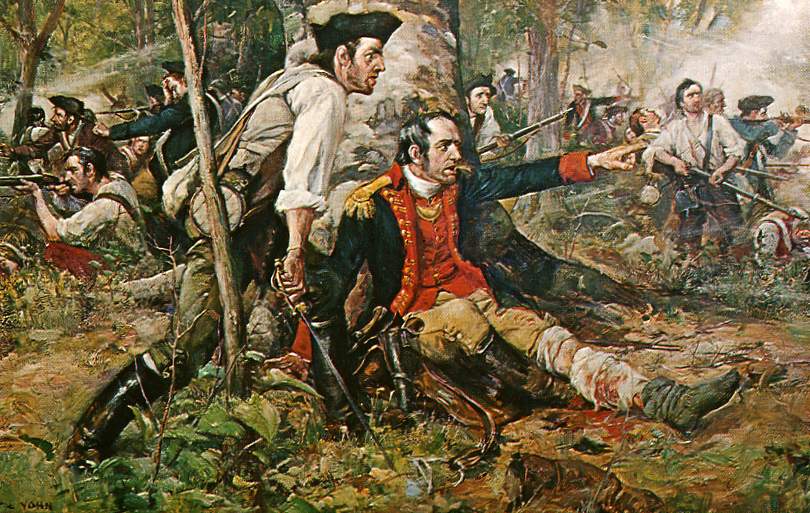
General Nicholas Herkimer at the Battle of Oriskany.
Photo Courtesy of Utica, NY Public Library

While luminaries like George Washington, Benjamin Franklin, and the Marquis de Lafayette are widely recognized for their Masonic ties and contributions to the Revolution, countless other Brothers played equally vital, though lesser-known, roles. Figures such as MW Mordecai Gist, W John Glover, and Henry Knox deserve significant recognition for their service. Just like the great State of New York, these Brothers’ contributions are ripe for deeper exploration. We encourage all Brothers to delve into their stories, and to remember the fidelity to Masonic obligation even among Loyalist Brothers like Joseph Brant.


No discussion of Freemasonry in Revolutionary New York would be complete without acknowledging the profound and poignant events of the Battle of Oriskany. Here, Brothers from Saint Patrick’s Lodge No. 4 found themselves fighting against each other, a stark reminder of the war’s personal cost. Tragically, General Nicholas Herkimer, a Brother in arms, gave his life on that battlefield.

The America 250 celebration is a unique opportunity to illuminate the story of Freemasonry’s profound importance to our Founding Fathers – not just the famous few, but the many lesser-known heroes who fought right here in our own state. Thanks to the research of RW Gary Heinmiller and the work of RW Samuel Lloyd Kinsey, the Grand Lodge of New York has produced an “American 250 Festive Board” script for our Lodges to use at dinners this year.

As we reflect on our rich history, let us particularly call attention to the enduring principles of Brotherhood, Citizenship, and Fellowship that continue to resonate within Freemasonry and Masons today.

Across the country, Freemasons are planning unique and exciting ways to celebrate the 250th anniversary of the signing of the Declaration of Independence of the United States. The Grand Lodge of New York has compiled upcoming milestones and opportunities to get engaged and ensure that all New York Lodges can find ways to commemorate this historic moment in our nation’s history.
See our events and get involved here.
Samuel Lloyd Kinsey

What is Masonic Leadership

What is Masonic Leadership

CRAFTSMEN ONLINE PODCAST

“What is Clear Leadership”

with RWB Michael Arce

In this Craftsmen Online Podcast episode, RWB Michael Arce discusses what constitutes effective leadership, exploring whether leaders are naturally inclined or developed through experience and training. He highlights key elements of leadership, including the importance of communication, vision, delegation, and receiving feedback. Bro. Arce emphasizes that successful leadership is often learned through observation and mistakes and underscores the crucial role of understanding and engaging with the people being led. He specifically connects these leadership principles to practices and roles within Freemasonry, advocating for a greater focus on leadership development within lodges alongside traditional areas like ritual and history.

RWB Arce’s insights on leadership themes:

  • Defining Leadership: The source explores the question of whether leaders are born, made, or a combination of both, arguing for a combination. It emphasizes that observing poor leaders can be a valuable learning experience.
  • Leadership in Freemasonry: A significant portion of the discussion focuses on how leadership manifests within Masonic lodges, particularly through the progressive line of officer roles and the transition into leadership positions.
  • The Transition to Leadership: The speaker highlights the changes that occur when someone moves into a leadership role, including physical changes (attire), how they are addressed, increased responsibility, and exposure to information beyond the average member.
  • Key Responsibilities of Leaders: The briefing outlines several core responsibilities of leaders, such as leading from the front, motivating others, clear communication, and project management

Follow the Craftsmen Online Podcast on Spotify, subscribe on Apple Podcasts, and listen everywhere you hear your favorite shows!

The Craftsmen Online Podcast is the only Masonic podcast endorsed by the Grand Lodge of New York. Hosted by RWB Michael Arce. New episodes available every Monday morning! Listen early and ad free on Patreon. Start your free 7-day trial and listen to our entire back catalog and bonus content!
Samuel Lloyd Kinsey
Freemasons in the White House – Lessons from History’s Trying Times

Freemasons in the White House – Lessons from History’s Trying Times

CRAFTSMEN ONLINE PODCAST

“Freemasons in the White House: Lessons from History’s Trying Times”

with Bro. Chris Ruli, 33°

On this episode, historian and Assistant Grand Historian of the Scottish Rite Southern Masonic Jurisdiction, Chris Ruli, 33°, took us on journey into the fascinating intersection of famous Freemason presidents and the trying times they faced in American history. The conversation offered a unique perspective on how Masonic values may have influenced these leaders and how historical perceptions often differ from reality.

Setting the Historical Stage: Perceptions and Precedents

Ruli emphasized that every generation often feels it’s living in the most divisive times, a notion quickly dispelled by a look back at history. “I don’t think, I think it has been a pretty crazy couple of decades since 9-11. I’ll say that. I think that’s probably the most certainly for my generation, the Millennial generation, that is absolutely the Pearl Harbor of the events of that.” He highlighted the ebb and flow of economic and social shifts throughout American history, from the Gilded Age to the Civil War, and the early 19th-century economic crashes.

A key theme was the shifting perception of history itself. Ruli noted, “Our perception, and this is an issue in Masonry, our perception is we’ve been taught something, we assume that that is accurate and true. And then as we grow up, we find through education, through experiences, through perhaps just living life, that we find that the things that we’re taught were not necessarily true, or perhaps there’s a shift or a turn or a tinge that’s off.” He views Freemasonry as an undercovered “arm of American history.”


George Washington and the Whiskey Rebellion

The discussion kicked off with Brother George Washington, the most famous Freemason and the nation’s first president. Washington’s decision to use a large militia to quell the Whiskey Rebellion in 1794 was a pivotal moment. Ruli explained that Washington knew “everything he would do would set a precedent moving forward.” He also noted that Freemasonry’s principles were “very fashionable, it was very hip, it was very modern” at the time, attracting respectable gentlemen who contributed to public welfare.

On the issue of presidential pardons, initiated by Washington, Ruli pointed out that criticism was inherent, regardless of the decision. “Even George Washington had detractors, right? Even, Harry S. Truman had detractors. Whoever the best presidents, know, of course, obviously Lincoln had his own distractors.”

Manifest Destiny and the Charge of Citizenship: James K. Polk

The conversation then jumped to James K. Polk, the 11th president and also a Freemason, known for popularizing the concept of Manifest Destiny. While Masonic lodges emphasize being good citizens and respecting the law, Ruli argued that Manifest Destiny is not inherently a Masonic idea. “Where in Masonry does it say we must accumulate all of our resources? We must… contribute, we must pool our resources together, we donate 10 % of our income to the Lodge, we must have Masonic buildings, we must have all of these things. There’s nothing in Masonry that says about the idea of wealth generation, of political generation, certainly of political capital. There is nothing in Masonry that explains this. There’s nothing that validates it.” He concluded, “Manifest Destiny is based on Masonic principles, because to me it’s inherently a political action. And what do we say? Don’t get involved in politics, and yet, be a good citizen.”


The Competitive Landscape of Fraternalism: Andrew Jackson and Theodore Roosevelt

The post-Civil War era saw a “massive influx of fraternal organizations, societies, benefit societies, insurance-based organizations.” This was due to the lack of social safety nets like the VA or Social Security. To compete, Freemasonry made dues cheaper, offered more benefits, and focused on its unique “ritual” as its competitive advantage. They also began to “ramp up mysticism” and “hype up patriotism.”

The conversation highlighted Theodore Roosevelt, a truly “fascinating character.” Despite his boundless energy and myriad accomplishments, he wasn’t a Mason who attended every meeting or joined all the appended bodies. Yet, his “curiosity” led him to become a Master Mason during his vice presidency.

The Power of Pardon and Quiet Engagement: Gerald Ford

The podcast concluded with Brother Gerald Ford, the only man to serve as president without being elected to the office, and his controversial pardon of Richard Nixon. Ruli believes Ford, a product of a Masonic family, embodied a “Masonic politician” trying to balance contemporary views with traditional practices.

Ford’s statement that his pardon aimed “to change our national focus” and that the American people “have a long record of forgiving even those who have been our country’s most destructive foes” resonated with Masonic principles of reconciliation. Ruli stated, “I think that level of reconciliation is important in Freemasonry. I’ve seen it personally. I’ve seen situations where we could make a big deal about this, but maybe we don’t. And maybe we find ways to privately deal with this. when we do privately deal with it, it turns out to be the best thing to do.” He emphasized the “benefit of quiet engagement, of engaging with brothers quietly,” a skill learned through the Masonic journey, particularly in the First Degree which emphasizes silence and listening.

Follow the Craftsmen Online Podcast on Spotify, subscribe on Apple Podcasts, and listen everywhere you hear your favorite shows!

The Craftsmen Online Podcast is the only Masonic podcast endorsed by the Grand Lodge of New York. Hosted by RWB Michael Arce. New episodes available every Monday morning!

Listen early and ad free on Patreon. Start your free 7-day trial and listen to our entire back catalog and bonus content!

Samuel Lloyd Kinsey